
New space measurements reveal electrical discharges on Jupiter 100 times greater than those on Earth

Thorough analysis of atmospheric information captured in deep space identified extreme meteorological dynamics on the largest planet in the solar system. Medições recent studies indicate that the electrical discharges recorded in the gas giant have an energy capacity vastly superior to the phenomena known to humanity. The data were obtained using a microwave radiometer attached to a spacecraft in continuous orbit.
This specialized equipment allowed direct observation of radio emissions generated by storms, bypassing the visual barrier imposed by dense cloud layers. The investigation focused on large atmospheric systems that form in the celestial body’s northern equatorial belt. Essas gigantic weather structures remain active for long periods.
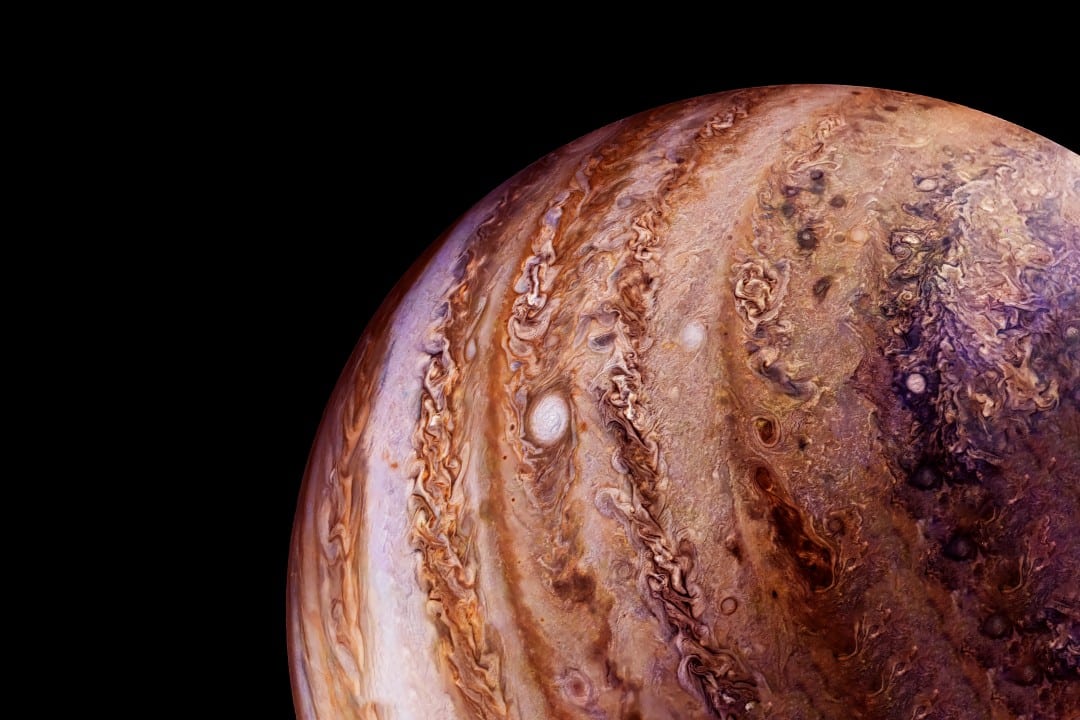
The observed dynamics presents unique characteristics that redefine the understanding of current interplanetary meteorology:
– Formação of very high intensity electromagnetic pulses in isolated regions.
– Manutenção of the physical and electrical structure for several consecutive months.
– Taxa detection with peaks of three light flashes per second during orbital approaches.
– Liberação abrupt and massive amount of accumulated energy breaking atmospheric resistance.
The meteorological formations analyzed were classified as stealth superstorms due to their isolated and long-lasting behavior. Elas significantly alter the dynamics of the gases around them, creating an environment of extreme volatility. Continuous monitoring of these areas provides an unprecedented overview of plasma physics.
Differences in chemical and structural composition
The discrepancy in the power of the electrical discharges is directly linked to the chemical composition of the two planets in question. The Jovian atmosphere is predominantly formed by hydrogen, an element that changes the weight of humid air substantially. Essa characteristic requires a colossal amount of thermal and kinetic energy for the ascending currents to be able to form and sustain the charged clouds.
When this accumulated energy finally breaks the local atmospheric resistance, the release occurs abruptly and highly destructive in energetic terms. Esse mechanical and chemical process explains in detail why lightning generated in these conditions exceeds the maximum strength recorded in terrestrial storms by up to a hundred times. The constant friction between ice particles and water droplets in a supercooled state acts as the main engine for this extreme electrification.
Detailed mapping of radio emissions
The use of microwave technology represented a definitive milestone in modern interplanetary meteorological observation. Diferente Unlike traditional optical sensors, which rely on visible light and are blocked by thick clouds of ammonia and water, the radiometer can penetrate deep into the gaseous layers. Essa deep scanning capability eliminates visual limitations that have restricted space research in previous decades.
This penetration capability allowed scientists to accurately map the three-dimensional origin of each electrical discharge detected by the instruments. The records showed that the events do not just occur on the visible surface of the clouds, but extend across vast vertical columns within the storm’s core. The internal structure of these systems reveals a thermodynamic complexity that challenges traditional climate models.
The precision of the data collected provided an unprecedented statistical distribution on the frequency and intensity of electromagnetic pulses. The values captured varied from discharges with a force equivalent to common lightning to explosions of gigantic proportions with no known parallels. Continuously mapping these emissions creates a vital catalog for understanding energy dissipation in gas giants.
Isolated observations during periods of low activity
To ensure the absolute accuracy of the measurements, the researchers selected specific temporal windows where the planet’s global meteorological activity was reduced. Essa rigorous methodological strategy avoided the overlap of radio signals from multiple simultaneous storms. The isolation of events ensured that each recorded pulse could be attributed to a single generating source.
The focus on isolated systems allowed for much finer calibration of the detection instruments aboard the orbiting spacecraft. With less background noise interfering with the recordings, it was possible to identify even the lowest intensity electrical pulses that would normally go unnoticed. Essa enhanced sensitivity revealed a complex network of microdischarges that precede large light events.



Integrating these radio measurements with images captured by space telescopes validated the exact location of stealth superstorms. Systematic data crossing confirmed that the most powerful electrical discharges coincide perfectly with areas of greatest visual turbulence in the upper clouds. The synchrony between visual and invisible data solidifies the accuracy of atmospheric mapping.
Essa combined methodology revealed that the cloud towers of these storms have relatively modest heights, despite the vast horizontal area they occupy. This peculiar characteristic contrasts sharply with the immense amount of electrical energy that they are capable of generating and sustaining over time. The density of the material condensed in these flat formations acts as a natural capacitor of planetary proportions.
Advances in understanding planetary meteorology
Deepening knowledge about Jovian atmospheric dynamics offers valuable tools for understanding meteorological phenomena on a much broader universal scale. By studying in detail how air masses composed of different chemical elements interact under conditions of extreme pressure and gravity, scientists are able to create more accurate and comprehensive climate models. Esses Advanced mathematical models not only explain the behavior of gas giants within our solar system, but also provide crucial clues about the evolution of atmospheres on newly discovered exoplanets. The ability to predict the behavior of supercritical fluids in extraterrestrial environments represents a qualitative leap in contemporary astrophysics. The exchange of information between different scientific disciplines accelerates the decoding of the climate patterns that govern the formation of complex planetary systems.
Continuity of space probe operations ensures a constant flow of unprecedented information about the deep processes that govern long-term interplanetary climate. With the extension of the mission beyond its original planning cycle, the equipment on board continues to operate at maximum efficiency, mapping new regions of the planet and recording seasonal variations in storm formation. Esse Continuously expanding database allows the global scientific community to test new hypotheses about plasma physics and the generation of electromagnetic fields in extreme environments. Prolonged observation reveals activity cycles that last Earth years, demonstrating that the gas giant’s atmosphere has its own rhythm of energy accumulation and release. Compiling these historical records will form the basis for future deep atmospheric exploration missions.
Direct correlation with terrestrial electrical phenomena
Although the magnitude scales are vastly different and almost incomprehensible by human standards, the fundamental physical principles that govern the separation of electrical charges and the subsequent formation of lightning bear striking similarities between the two celestial bodies. Detailed analysis of stealth superstorms clearly demonstrates that friction between ice particles and water droplets in a supercooled state acts as the primary driver for cloud electrification, regardless of the prevailing composition of the surrounding gas. Na Terra, this process occurs in the troposphere and is driven primarily by the heat radiated from the surface heated by the sun, creating the ascending currents we know. In contrast, in the gas giant, thermal energy comes from deep within the planet’s core, generating massive convection currents that push moist material into the upper layers of the atmosphere. Compreender These mechanical and thermodynamic variations help meteorologists refine algorithms for predicting severe storms on our own planet. Improving these mathematical calculations results in a direct improvement in early warning systems for extreme weather events that depend on fluid dynamics and cloud thermodynamics. The transfer of technology and knowledge from space exploration to terrestrial meteorology exemplifies the practical value of interplanetary investigations for the safety of urban and rural populations.
Continuous recording of spatial data
Continuous observations reinforce the fundamental importance of prolonged missions for collecting robust and reliable statistical data. Uninterrupted monitoring of the equatorial bands ensures that long-term variations in electrical activity are properly documented by research centers. Essa constant surveillance expands understanding of macroscale meteorology and sets the stage for future technological innovations.
Technological expansion and future monitoring
The development of new microwave sensors promises to further increase the resolution of images captured in the next phases of space exploration. Engenheiros aerospace companies are already working on designing instruments capable of measuring electromagnetic fluctuations with millimeter precision from orbit. Essa instrumental evolution will allow dissecting the anatomy of an extraterrestrial ray in real time.
The consolidation of these discoveries establishes a new paradigm for the observation of high-energy atmospheric phenomena. Rigorous cataloging of superstorms creates an invaluable historical archive for generations of researchers to come. The continuous advancement of scientific instrumentation ensures that the mysteries hidden beneath the thick clouds continue to be unraveled systematically and objectively.
Veja Tambem em News (EN)

Research reveals that parents are unaware of how their children use artificial intelligence

Samsung releases new system update with new features for Galaxy Watch 4 users

Digital retail reduces the value of the Galaxy S25 5G smartphone with bank bonuses and device exchange

Amazon’s wireless CarPlay adapter has a 50% discount and high approval ratings from drivers

Zach Cregger’s new Resident Evil ignores games and focuses on an unprecedented story with new characters

Rumor suggests that Nintendo is preparing a special edition of the Switch 2 with a remake of Ocarina of Time

Apple accelerates production of the iPhone 17e and develops new Air model with dual camera system

Epic Games platform releases twelve high-budget games at no permanent cost for PC users

PlayStation 5 Pro price drop accelerates digital retail sales and eliminates global stocks

New Galaxy Watch 9 firmware appears on server and confirms progress in software development

Apple’s commemorative project tests cell phone with 1.1 millimeter edge and curved screen for 2027
