
New telescopes map the 95% of the universe dominated by invisible dark matter and energy

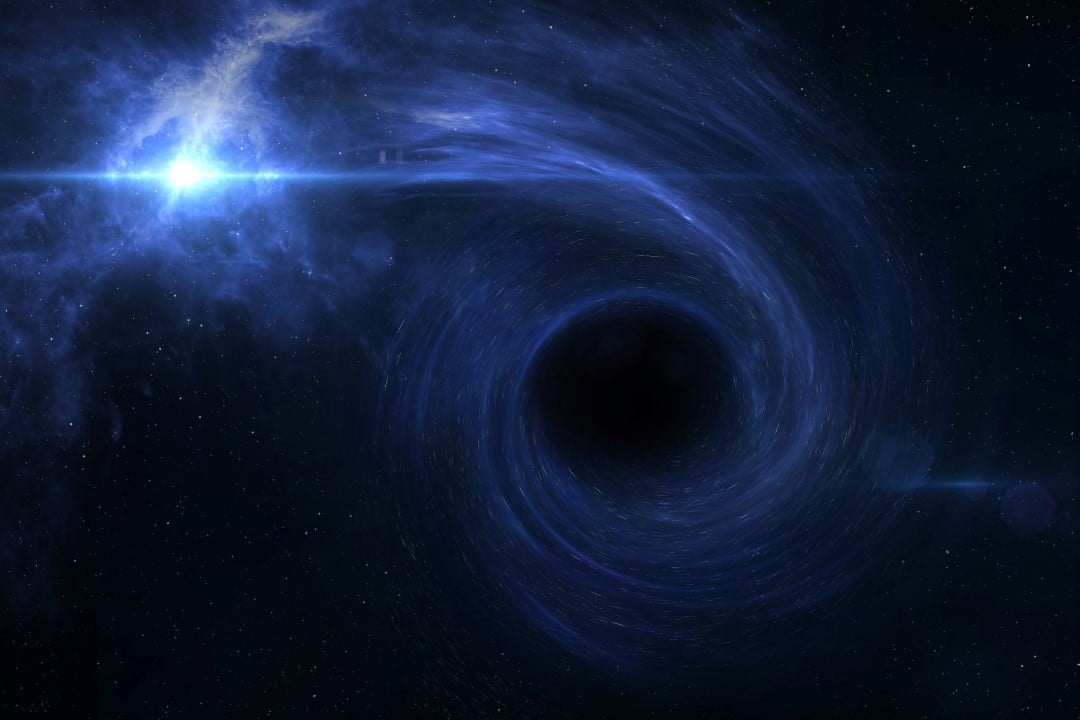
The most recent astronomical measurements consolidate the premise that the visible portion of the cosmos represents a tiny fraction of physical reality. Cosmological surveys indicate that only 4.9% of the entire universal composition consists of common matter, formed by the atoms that structure planets, stars and living beings. The rest of the space is filled by components that escape direct detection by traditional optical instruments.
The vast hidden portion of space is divided into two fundamental categories that dictate the behavior and evolution of galaxies. The existence of these elements is proven indirectly through observation of the gravitational effects they exert on light and luminous matter. Sem the action of these invisible forces, the laws of classical physics would not be able to justify the structural cohesion observed in the night sky.
Researchers focus their efforts on building highly sensitive detectors to try to capture any sign of interaction between these entities and baryonic matter. The methodological challenge lies in the difficulty of isolating particles that do not emit, reflect or absorb any type of known electromagnetic radiation. Overcoming this technological barrier has become the main goal of particle physics laboratories around the world.
First observations of the gravitational anomaly in space
The historical record of this scientific anomaly began in 1933, following the Swiss astronomer Fritz Zwicky’s analyzes of Aglomerado Coma. Durante measuring the speed of the galaxies that make up this group, the scientist noticed a severe mathematical discrepancy between the luminous mass and the orbital movement. The speed of displacement of celestial objects was too high for the amount of visible matter present in the region. Zwicky concluded that galaxies should disperse throughout space unless there was a massive amount of invisible material exerting enough gravitational pull to hold them together.
The scientific community greeted the Zwicky calculations with skepticism during the first few decades, treating the idea of a hidden mass as an isolated statistical anomaly. The scenario changed only when new orbital surveys confirmed that the phenomenon was repeated in several other regions of outer space. The difference between dynamic mass and luminous mass forced theorists to review the cosmological models in force at the time. Hoje, astrophysicists use supercomputers to simulate the distribution of this invisible mass, revealing a complex cosmic web that connects large galactic clusters through dark filaments.
Velocity measurements in spiral galaxies
Astronomer The laws of celestial mechanics predicted a drop in orbital speed proportional to the distance from the nucleus, a behavior that was not confirmed in practical observations.
The uniform rotation pattern showed that the galactic structure had an extensive halo of non-luminous matter surrounding the visible disk. Rubin’s detailed work demonstrated that gravity generated by stars and gas alone was not enough to stop spiral galaxies from disintegrating due to centrifugal force. From these precise measurements, the search for the fundamental particle responsible for this extra attraction has become the central focus of extragalactic astrophysics.
Structural division of known cosmic components
The distribution of mass and energy in the universe follows a proportion rigorously calculated by recent space missions. Cosmological data establishes three fundamental pillars that make up the entirety of observable and unobservable space.
– The first component is dark matter, which accounts for approximately 26.8% of the total and acts as the gravitational basis necessary to maintain the cohesion of galaxies and star clusters.
– The second and most abundant element is dark energy, which represents around 68.3% of the cosmic composition and acts as the main engine of the accelerated expansion of the space fabric.
– The third pillar consists of baryonic matter, which comprises only 4.9% of the universe and forms absolutely everything that optical instruments can detect, including stars, planets and gas clouds.
Searches for massive particles in underground laboratories
The most accepted theoretical models suggest that the invisible mass of the universe is formed by weakly interacting massive particles, known by the acronym in English WIMPs. Para try to record the passage of these particles, international consortia built installations in deep mines, isolated from the cosmic background radiation. Equipamentos like LUX-ZEPLIN and XENONnT use tanks of liquid xenon at cryogenic temperatures, awaiting a rare collision between a WIMP and an atomic nucleus.
Despite the extreme accuracy of these underground detectors, scientists have not recorded any confirmed collisions after years of continuous monitoring. The lack of positive results generates intense debates about the validity of models based exclusively on WIMPs. Theoretical physicists are beginning to expand the search parameters to include much lighter hypothetical particles, which would require detection technologies based on quantum sensors.
Another line of research investigates the possibility that primordial black holes, formed fractions of a second after the origin of the universe, are responsible for this extra mass. The lack of direct detection in the laboratory drives the development of new experimental approaches, forcing science to diversify its investigation strategies. The improvement of sensors promises to scan energy ranges that were previously inaccessible to human equipment.
Physical evidence in the collision of large clusters
The astronomical event known as Aglomerado Bala provided some of the most robust evidence for the physical separation between ordinary matter and invisible mass. Durante the colossal collision between two galaxy clusters, X-ray telescopes recorded the violent collision and slowing of hot gas clouds. Simultaneamente, mapping carried out by gravitational lenses revealed that most of the system’s mass crossed the impact zone without suffering any type of friction or loss of speed.
The distinct behavior between the luminous gas and the system’s center of gravity demonstrated that the main mass does not interact electromagnetically. The invisible matter behaved in a ghostly manner, crossing the collision area independently of the baryonic matter. Astrophysicists consider this observation to be unquestionable fact, validating the premise that the universe contains a substance fundamentally different from conventional atoms.
Repulsive force and the accelerated separation of galaxies
The discovery of the acceleration of the universe in 1998, through the observation of distant supernovae, introduced the concept of a repulsive force acting in opposition to gravity. Essa invisible entity fills the vacuum of space and exerts constant negative pressure on the cosmic structure. Diferentemente of ordinary or dark matter, the density of this energy does not decrease as space expands. Cosmologists note that this peculiar feature keeps the rate of repulsion at a level that completely dominates the current dynamics of the cosmos. The predominance of this component in the total composition indicates that it will dictate the behavior of space on immense time scales. Mathematical calculations suggest that, if the acceleration maintains its current pace, the most distant galaxies will surpass the observable horizon of Terra. Esse process will result in a gradual isolation of local structures, leaving Via Láctea and its neighbors in a dark and lonely region of space. The exact nature of this force remains one of the most complex open problems in modern physics, requiring constant revisions to current theoretical models.
Thermal mapping of primordial radiation
The Planck satellite provided definitive confirmation of cosmic proportions by mapping the cosmic microwave background radiation with millimeter precision. The temperature fluctuations in this luminous echo from the early universe act as a fossil record of the initial distribution of energy. The analysis of these thermal patterns corroborates the model of a flat universe, where the sum of invisible matter and energy reaches the exact mark of 95.1%, discarding alternative mathematical formulations that attempted to explain gravity without the need for hidden components.
State-of-the-art instruments for scanning the sky
The next phase of cosmological exploration depends on the activation of observatories specifically designed to map the invisible sector of space. The Nancy Grace Roman space telescope has the mission to measure the expansion of the universe with unprecedented precision, tracking the distribution of galaxies in immense volumes of the cosmos. Large-scale data collection will allow scientists to test whether the repulsive force of the vacuum remains constant over time or whether it varies in different cosmic epochs.
On the Earth’s surface, the Observatório Vera C. Rubin is preparing to perform high-resolution panoramic scans of the night sky. The equipment will record subtle distortions in the light of background galaxies, a phenomenon caused by the presence of halos of invisible mass in the foreground. The combination of space and ground-based observations will provide a three-dimensional map of the large-scale structure of the universe, offering rigorous tests for the theory of general relativity at intergalactic distances.
Hypotheses about unique interactions in the invisible sector
The accumulation of observational data encourages the emergence of theories that propose the existence of a highly complex dark sector. Instead of a single static particle, physicists consider the possibility that the invisible mass is made up of several families of unknown particles. Essa theoretical formulation suggests the presence of unique fundamental forces that operate only between these hidden elements, without affecting the traditional protons and electrons.
The hypothesis of a diverse invisible ecosystem changes the way science plans its future detection experiments. Particle accelerators adapt their protocols to look for decay signatures that indicate the momentary transition of energy between the visible and hidden sectors. The identification of a dark photon, for example, would represent the first confirmed communication bridge between the two physical realities that share the same space.
The ongoing effort to decipher the exact nature of this 95% of the cosmos mobilizes technological resources on a global scale. The convergence between observational astrophysics and quantum mechanics creates an environment ripe for discoveries that could rewrite the science textbooks. The systematic mapping of the invisible universe is consolidated as the final frontier of contemporary physics, requiring increasingly sophisticated instruments to translate the silence of space into concrete data.



