Samsung’s new artificial intelligence technology optimizes routine for smartphone users
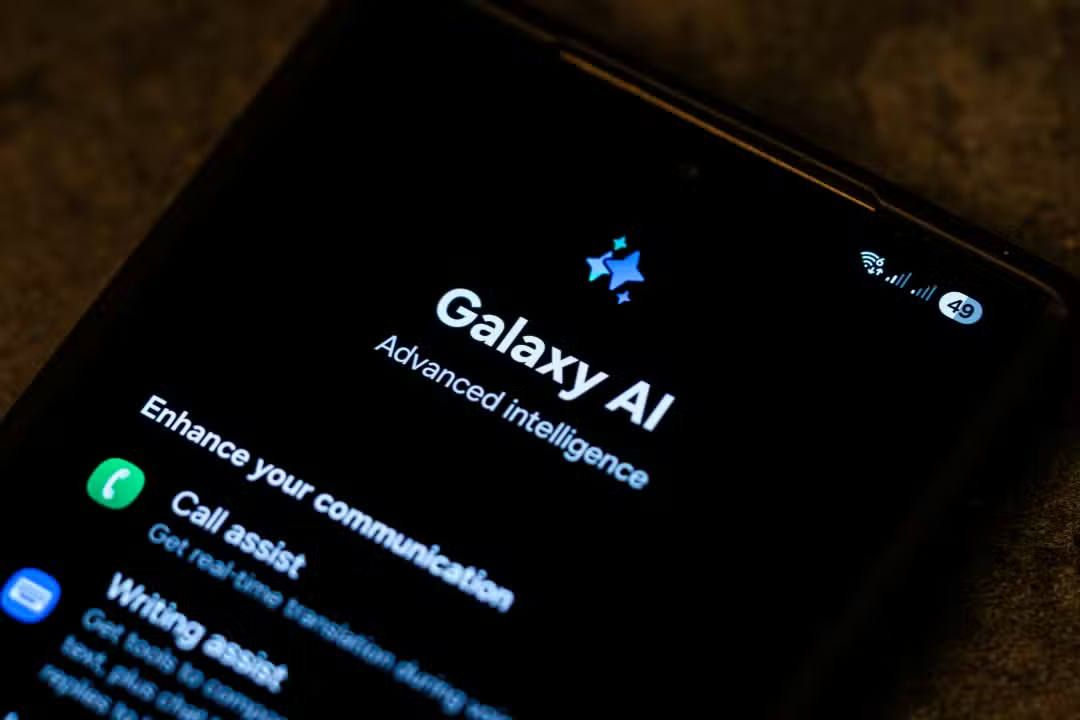
The integration of advanced data processing systems into mobile devices changes the dynamics of using cell phones in everyday life. South Korean manufacturer Samsung implemented a set of tools based on machine learning, called Galaxy AI, to act directly on the operating system of its recent equipment. The central goal of this software update is to automate repetitive actions and provide immediate contextual support to technology consumers.
The development of this intelligent interface began to gain prominence with the launch of the Galaxy S24 line, establishing a new standard for the mobile telephony category in the global market. Engenheiros software designed the system to operate proactively, analyzing device owner behavior patterns to suggest shortcuts and quick solutions. The technology processes information locally and in the cloud to ensure speed in executing complex commands that previously required the use of desktop computers.
Unlike virtual assistants from previous generations, which relied on specific and rigid voice commands, today’s artificial intelligence architecture understands natural language and visual context. Essa technical paradigm shift transforms the phone into an autonomous productivity center, capable of composing texts, organizing calendars and interpreting images without the need for third-party applications or subscriptions to external services.
Practical features applied to daily routine
The practical application of these innovations directly impacts time savings when performing corporate and personal tasks. The operating system modified by artificial intelligence can read extensive documents in PDF format or web pages and generate structured summaries in a few seconds. Profissionais who deal with high volume of daily reading use this function to extract the main points from financial reports, legal contracts or complex academic articles.
The manufacturer’s native note-taking application received a complete overhaul of its source code to house the Note Assist feature. Quando the user types information in a disorganized way during a business meeting, the software reorganizes the text, applies appropriate formatting with topics and corrects any grammatical errors instantly. The tool also automatically categorizes notes, making it easier to search later using specific keywords typed in the search bar.
To better structure the information captured by the user, the system uses simple and direct visual markers to format the documents generated:
– Automatic Identificação of dates and times for creating events in the native calendar.
– Separação of subjects by blocks of text with logically machine-generated headings.
– Sugestão of short titles based on content written by the user during the use session.
This textual processing capability occurs in fractions of a second, ensuring that the workflow is not interrupted by loading screens or system crashes. Optimizing the use of smartphones’ RAM memory allows these artificial intelligence functions to run silently and efficiently in the background, preserving fluid navigation between different applications open simultaneously.
Breaking language barriers in real time
International voice communication has received a significant technical upgrade through the Live Translate feature, which operates natively within the phone’s calling app. Durante a connection between people who speak different languages, the smartphone’s processor captures the audio, translates the content and synthesizes a voice in the recipient’s language almost instantly. The process occurs bidirectionally, allowing fluid dialogues during business trips, hotel reservations abroad or when serving foreign customers.
All speech-to-text and text-to-speech translation processing is carried out within the device itself, without the need to send call data to external processing servers. Essa local processing architecture guarantees absolute privacy of conversations and allows the tool to work even in areas with an unstable cellular network connection or in airplane mode, using language packs previously downloaded into the device’s internal memory.


Advanced visual search on your device screen
The search for information on the internet was redesigned through a strategic partnership with Google, resulting in the function Circle to Search, which changes the way of interacting with the display. The mechanism eliminates the need to open an internet browser, type keywords on the keyboard or upload images to traditional search engines. The user just needs to press the home button for a long time and draw a circle with their finger over any visible element on the screen, be it a social media video, a photograph received via a messaging app or a text in a foreign language. The computer vision algorithm identifies the object, cross-references the data with the global image bank and displays the results in an overlay window at the bottom of the screen.
This deep integration between the operating system and the search engine changes the journey of product discovery and digital information consumption. If a consumer watches a music video and wants to know the brand of footwear used by the artist, the gesture of circling the item on the screen provides direct links to online stores, price comparisons and reviews from other buyers in real time. The technology eliminates intermediate steps, retaining the user’s attention on the original content while providing the requested additional data in a non-intrusive and highly accurate way.
Photo editing based on generative fill
The image capture department of smartphones has been improved with the introduction of Photo Assist, an editing engine driven by synthetic pixel generation algorithms. The tool allows the device owner to select unwanted objects in the background of a photograph, such as posts, trash cans or unknown people, and delete them with a simple tap on the screen. The empty space left by the removal is automatically filled by the software, which analyzes the textures, colors and lighting of the surrounding environment to create a continuous and realistic background, imperceptible to the naked eye.
In addition to removing visual elements, the system can resize people or objects within the image frame and reposition them in different areas of the photographic composition. If a photo is taken with the horizon crooked or at an unfavorable angle, artificial intelligence rotates the image and generates the missing parts at the edges of the frame, avoiding the need to crop the original photograph and lose resolution or important details of the scene captured by the camera lens.
Audio transcription for corporate environments
Documenting board meetings, academic lectures and journalistic interviews has become an automated process thanks to Transcript Assist, an intelligent voice recorder built into the operating system. When capturing audio from an environment with multiple people speaking alternately, the software uses advanced vocal pattern recognition to separate speech and identify different speakers in the transcribed text, assigning labels such as “Speaker 1” and “Speaker 2”. The algorithm’s accuracy handles varying regional accents and moderate background noise well, delivering a text document ready for review soon after recording ends. Imediatamente after converting the audio into plain text, the user can request that the artificial intelligence generate an executive summary of the points discussed, highlighting decisions made, established deadlines and tasks assigned to each meeting participant. Essa functionality drastically reduces the time spent by administrative professionals decoupage audio materials, transforming hours of raw recording into organized minutes in a matter of minutes, ready to be exported and shared via email or team management platforms.
Textual correction and tone adjustment
The writing of electronic messages receives direct support from Chat Assist, which works integrated with the standard virtual keyboard of the mobile device. Antes of sending a corporate email or an instant message, the user can ask the system to rewrite the original text to make it more formal, strictly professional or casual, depending on the degree of intimacy with the recipient. The tool also performs an advanced spelling and grammar check in real time, ensuring that written communication maintains a high quality standard, free from typing or agreement errors, in any text application used on the device.
Expansion of technology to the brand’s ecosystem
The distribution strategy for these artificial intelligence tools was not limited to the Asian manufacturer’s most recent and expensive launches. The company began a schedule of software updates via the internet to bring the function package to previous generation models, democratizing access to cutting-edge technology. Aparelhos from the Galaxy S23 line, past edition foldable screen devices and high-performance tablets have been upgraded by downloading the latest One UI.
This backward compatibility demonstrates a move by the hardware industry to extend the useful life of electronic equipment, adding practical value to products that have already been in consumers’ hands for more than a year. Massively updating older devices requires a continuous code optimization effort on the part of developers, as processors from previous generations need to handle the workload required by machine learning algorithms without compromising device heat or daily battery life.
The large-scale adoption of these tools indicates a structural change in technology consumer behavior, which begins to demand higher levels of automation and assistance on their personal devices. Development of new neural processing capabilities continues apace in the manufacturer’s research labs, indicating that upcoming operating system updates will bring even deeper integrations between the phone’s physical components and cloud-based artificial intelligence models.
Veja Tambem em News (EN)

Research reveals that parents are unaware of how their children use artificial intelligence

Samsung releases new system update with new features for Galaxy Watch 4 users

Digital retail reduces the value of the Galaxy S25 5G smartphone with bank bonuses and device exchange
Amazon’s wireless CarPlay adapter has a 50% discount and high approval ratings from drivers

Zach Cregger’s new Resident Evil ignores games and focuses on an unprecedented story with new characters

Rumor suggests that Nintendo is preparing a special edition of the Switch 2 with a remake of Ocarina of Time

Apple accelerates production of the iPhone 17e and develops new Air model with dual camera system

Epic Games platform releases twelve high-budget games at no permanent cost for PC users

PlayStation 5 Pro price drop accelerates digital retail sales and eliminates global stocks

New Galaxy Watch 9 firmware appears on server and confirms progress in software development

Apple’s commemorative project tests cell phone with 1.1 millimeter edge and curved screen for 2027