
Snowslide buries vehicles on Srinagar-Leh highway in India and leaves two dead
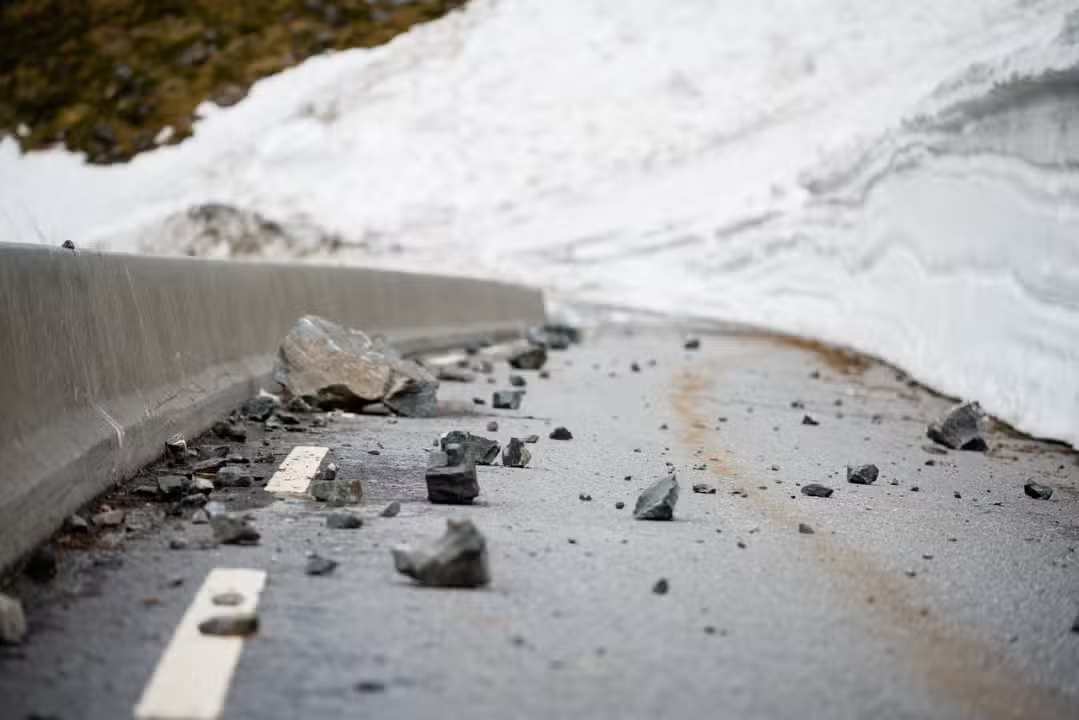
A large mass of snow slid over the Srinagar-Leh highway, located in the territory of Jammu and Caxemira, resulting in two fatalities confirmed by local authorities. The incident occurred in a high-altitude mountainous section, where weather conditions are often severe during the coldest months of the year.
The sudden accumulation of ice and debris completely blocked the road, affecting between six and eight vehicles that were passing through the area at the time of the landslide. Equipes emergency services were called immediately to begin the search for occupants of passenger cars and cargo trucks that were trapped under the thick white layer.
The traffic interruption temporarily isolated terrestrial communication between Vale of Caxemira and the region of Ladakh. Militares and security forces work together to remove the accumulated material, using heavy machinery and trained canine units to locate people buried on the road.
Ice search and removal operation
The rescuers’ work requires technical precision due to the instability of the terrain affected by the landslide. The thickness of the snow exceeds several meters at critical points on the road, forcing teams to use excavators and drilling equipment to gradually and safely clear the way.
Each stage of the excavation is monitored to prevent the vibration of the machines from causing new detachments on the upper slopes. Rescue professionals operate in round-the-clock shifts, prioritizing areas where sniffer dogs indicate the possible presence of metal structures or victims beneath the frozen surface.
Weather conditions and visibility on the mountain
The cold fronts that act over the Himalaia mountain range drastically reduce the visibility of ground teams. Ventos at high speeds lift ice particles, creating a dense fog that makes it difficult to operate machinery and visual communication between rescue coordinators.
Temperatures remain well below freezing, placing a strict physical limit on workers and shrinking the viable window of time to find survivors. The rapid freezing of newly fallen snow turns soft blocks into solid barriers, requiring specific cutting tools for terrain progression.
The logistics of transporting new equipment to the blockage point are also facing delays due to the formation of black ice on secondary access lanes. Veículos support personnel must travel at reduced speed and with tire chains to avoid skidding on steep slopes.
Geological history and terrain characteristics
The Srinagar-Leh highway section crosses one of the youngest and most dynamic geological formations on the planet. The steepness of the slopes, combined with the fragmented rock composition, creates an environment naturally conducive to the movement of large volumes of mass during periods of intense precipitation.
Meteorological records in the region indicate that thermal fluctuations between day and night weaken the cohesion of the snow layers accumulated in the highest parts. Quando the base of this layer melts slightly and freezes again, forming a slippery surface that facilitates the sliding of the entire upper block towards the asphalt.



– Red Zonas: Engenheiros of traffic classify specific sectors of this route with this term, indicating places where topographic monitoring needs to be constant and uninterrupted.
– Ausência of vegetation: The lack of large trees at higher altitudes eliminates natural barriers that could slow down or divert the course of the ice before it reaches the runway.
Slope monitoring and control strategies
Geology and disaster management departments maintain a network of telemetry stations installed along the mountain range to measure humidity, wind speed and the depth of the white layer. Esses sensors transmit data via satellite to control centers, allowing meteorologists to calculate the calving risk index in real time. Quando critical thresholds are reached, preventive road closure protocols are activated to prevent civil and military convoys from entering the danger zone, guaranteeing the physical integrity of drivers.
Another tactic employed by authorities involves mechanically inducing small slides before the ice load reaches uncontrollable proportions. Especialistas in explosives carry out calculated detonations on mountain peaks, releasing accumulated tension on the slopes in a supervised manner. Esse method requires total isolation of the area and specific climatic conditions to ensure that the shock wave does not affect unmapped sectors, being an essential tool for maintaining road safety during the harsh winter months.
Logistical importance and regional supply
The Srinagar-Leh highway serves as the main supply corridor for the territory of Ladakh, transporting everything from perishable foodstuffs and medicines to fuels and construction materials. The prolonged blockage of this road artery forces the government to ration local stocks and plan alternative supply routes, which generally involve air bridges with high operational costs. Comboios military personnel also depend exclusively on this route to rotate troops and resupply bases positioned in border areas. The interruption of the flow of trucks generates a cascade effect on the economy of adjacent municipalities, paralyzing wholesale trade and delaying the distribution schedule of basic inputs to populations residing in the most remote valleys. Administradores regions need to coordinate with the armed forces the gradual release of vehicles as soon as the road is partially cleared, prioritizing ambulances and tanker trucks to avoid the collapse of essential services in hospitals and power generation plants.
Mobilization of government resources
The central emergency management command authorized the deployment of additional engineering battalions to speed up the cleaning of the asphalt. Helicópteros of heavy transports have been placed on standby at the nearest air bases to carry out aeromedical evacuations as soon as the cloud ceiling allows safe flight operations over the mountain valley.
Road maintenance and containment works
Civil engineering projects are underway to build new reinforced concrete galleries over the most vulnerable sections of the highway. Essas structures function as artificial roofs that allow ice to slide over the road without hitting vehicles, ensuring traffic flow even during severe storms.
Drilling deep tunnels through the massive rock is also part of the local infrastructure modernization plan. Embora require high investments and years of excavation, these underground passages completely eliminate exposure to surface phenomena, representing the definitive solution for uninterrupted connectivity in the region.
Veja Tambem em News (EN)

Research reveals that parents are unaware of how their children use artificial intelligence

Samsung releases new system update with new features for Galaxy Watch 4 users

Digital retail reduces the value of the Galaxy S25 5G smartphone with bank bonuses and device exchange

Amazon’s wireless CarPlay adapter has a 50% discount and high approval ratings from drivers

Zach Cregger’s new Resident Evil ignores games and focuses on an unprecedented story with new characters

Rumor suggests that Nintendo is preparing a special edition of the Switch 2 with a remake of Ocarina of Time

Apple accelerates production of the iPhone 17e and develops new Air model with dual camera system

Epic Games platform releases twelve high-budget games at no permanent cost for PC users

PlayStation 5 Pro price drop accelerates digital retail sales and eliminates global stocks

New Galaxy Watch 9 firmware appears on server and confirms progress in software development

Apple’s commemorative project tests cell phone with 1.1 millimeter edge and curved screen for 2027
