
Space probe detects lightning a hundred times more powerful in superstorms in Jupiter’s atmosphere

Continued exploration of the deep solar system has brought new data about the meteorological dynamics of the largest gaseous planet in our cosmic neighborhood. High-precision Instrumentos on board an orbiting spacecraft recorded electrical discharges with an energetic capacity up to a hundred times greater than the maximum force observed in similar phenomena on our planet. The discovery redefines the known parameters for the formation of extreme weather systems in high pressure and gravity environments.
The survey focused on large atmospheric formations located in the northern equatorial band of the celestial body. Essas gigantic structures remain active for long periods, changing the dynamics of the surrounding gases and generating electromagnetic pulses of very high intensity. Capturing this information was only possible thanks to the use of advanced cloud penetration technologies, which overcame the limitations of traditional optical telescopes.
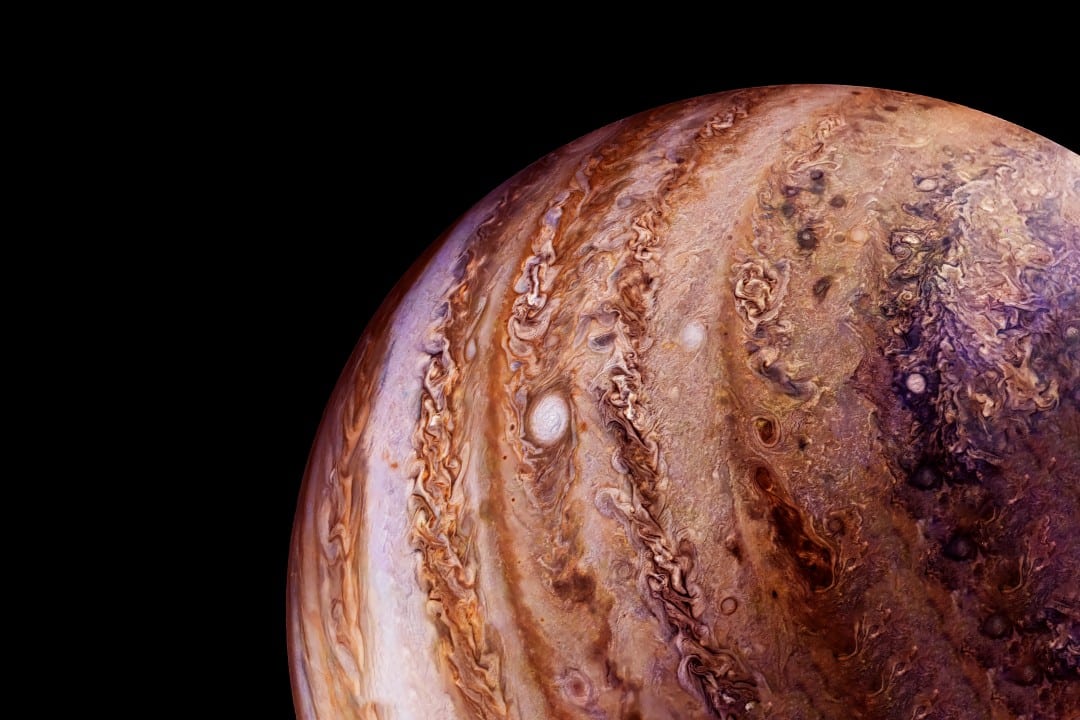
Historically, weather observation on this planet was restricted to the upper layer of clouds, limiting understanding of what was happening deep within its turbulent atmosphere. With the introduction of new sensors, researchers were able to map electrical activity in three dimensions, revealing a chaotic environment where the thermal energy of the core interacts violently with the cold gases at the surface.
The detailed records offer unprecedented insight into fluid behavior and thermodynamics in atmospheres predominantly composed of hydrogen. Continuous analysis of this data allows scientists to better understand not only local climate, but also the atmospheric evolution of other worlds spread across the universe, providing a solid foundation for interplanetary meteorology.
Microwave technology breaks visual barriers
The use of a microwave radiometer attached to the space probe represented a milestone in interplanetary observation. Diferente Traditional optical sensors, which depend on visible light and end up blocked by thick layers of ammonia and water clouds, this equipment can penetrate deeply into gaseous masses. Essa technical capacity overcame the main historical difficulty in studying the Jovian climate.
The precision of the radiometer allowed the exact mapping of the three-dimensional origin of each electrical discharge recorded during the orbital approaches. The data revealed that light and electromagnetic events do not just occur on the visible surface of clouds, extending across vast vertical columns within the storms. Essa in-depth visualization provided an unprecedented statistical distribution of pulse frequency and intensity.
During the closest passes, the detection rate reached impressive peaks of three bright flashes per second. The values captured by the instruments ranged from discharges with strength equivalent to common lightning to electromagnetic explosions of gigantic proportions. The ability to measure these extreme variations cements the effectiveness of microwave technology for long-term deep space missions.
Chemical composition and strength of discharges
The huge discrepancy in the power of electrical discharges is directly linked to the different chemical composition between the two planets. The gas giant’s atmosphere is predominantly made up of hydrogen, an element that significantly changes the weight of humid air. Essa characteristic requires a colossal amount of thermal and mechanical energy for ascending currents to be able to form and rise through the atmospheric layers.
When the accumulated energy finally manages to break the resistance imposed by the density of the gases, the release occurs abruptly and massively. Esse specific physical and chemical process explains why lightning generated under these extreme conditions exceeds the maximum strength recorded in any terrestrial storm by up to a hundred times. The friction between ice particles and water droplets in a supercooled state acts as the main engine for the electrification of these colossal clouds.
Isolated dynamics of stealth formations
The meteorological structures analyzed received the technical classification of stealth superstorms due to their highly isolated and long-lasting behavior. Elas develop in very specific regions of the atmosphere and manage to maintain their physical and electrical integrity for several consecutive months.
Unlike weather systems that dissipate quickly after releasing energy, these formations sustain a continuous cycle of recharge and discharge. The vast horizontal extent of these storms contrasts with the relatively modest height of their cloud towers.



This peculiar feature challenges traditional meteorological models, which generally associate large vertical development with severe storms. The immense amount of electrical energy generated and sustained by these flatter clouds indicates a unique thermodynamic efficiency.
Cross-referencing radio data with images captured by space telescopes validated the exact location of these anomalies. The most powerful electrical discharges coincide perfectly with areas of greatest visual turbulence observed at the edges of these stealthy formations.
Observation strategies during periods of low activity
To guarantee the absolute precision of the measurements and avoid interference, the researchers selected specific temporal windows where the planet’s global meteorological activity reduced. Essa methodological strategy avoided the overlap of radio signals from multiple storms occurring simultaneously at different latitudes. The focus on isolated systems allowed for much finer calibration of the detection instruments onboard the spacecraft.
With the drastic reduction of background noise, it became possible to identify even the lowest intensity electrical pulses that, under normal conditions of high global activity, would go completely unnoticed by the sensors. The integration of these pure measurements ensures that long-term variations in electrical activity are properly documented, expanding the catalog of data on macroscale meteorology and ensuring the scientific integrity of the findings.
Data processing and scientific validation
The colossal volume of information transmitted by the probe requires rigorous processing on the ground, where research centers use supercomputers to decode the microwave signals and transform them into understandable three-dimensional models. Esse decoding work eliminates signal anomalies caused by the cosmic background radiation and focuses exclusively on emissions generated within the planet’s atmosphere. The validation of these models occurs through constant comparison with thermodynamic simulations created in the laboratory, where scientists insert the variables of temperature, pressure and chemical composition into advanced fluid dynamics software.
The results of these simulations have surprisingly corresponded to the raw data captured in space, confirming the precision of the measuring instruments and removing any margin of error in interpreting the strength of the lightning. The finding that the discharges are a hundred times more powerful than terrestrial ones underwent multiple independent reviews before being integrated into the mission’s official database. Essa methodological transparency and analytical rigor strengthen the credibility of discoveries before the international astronomical community, establishing a new standard for the analysis of extraterrestrial meteorological data.
Physical similarities with terrestrial meteorology
Although the magnitude scales and chemical composition are vastly different, the fundamental physical principles that govern the separation of electrical charges and the subsequent formation of lightning bear striking similarities between the two celestial bodies. Na Terra, the electrification process occurs in the troposphere and is driven by heat radiated from the surface heated by the sun. In the gas giant, thermal energy comes from deep within the planet’s own core, generating massive convection currents that push moist material into the upper layers in an environment without a solid surface. Compreender these mechanical variations in a natural laboratory of gigantic proportions help meteorologists refine algorithms for predicting severe storms on our own planet. Detailed study of how air masses interact under extreme pressure conditions provides valuable parameters to improve early warning systems for extreme weather events that depend on fluid dynamics and cloud thermodynamics.
Continuity of space exploration
The extent of the space probe’s operations ensures a constant flow of unprecedented information about the deep processes that govern interplanetary climate. Onboard equipment continues to operate at peak efficiency, mapping new regions and recording seasonal variations in storm formation. Esse constantly expanding database allows the global scientific community to test new hypotheses about plasma physics and the generation of electromagnetic fields in extreme environments, consolidating understanding about the evolution of atmospheres on newly discovered exoplanets and ensuring continued advances in the exploration of the deep universe.
Veja Tambem em News (EN)

Research reveals that parents are unaware of how their children use artificial intelligence

Samsung releases new system update with new features for Galaxy Watch 4 users

Digital retail reduces the value of the Galaxy S25 5G smartphone with bank bonuses and device exchange

Amazon’s wireless CarPlay adapter has a 50% discount and high approval ratings from drivers

Zach Cregger’s new Resident Evil ignores games and focuses on an unprecedented story with new characters

Rumor suggests that Nintendo is preparing a special edition of the Switch 2 with a remake of Ocarina of Time

Apple accelerates production of the iPhone 17e and develops new Air model with dual camera system

Epic Games platform releases twelve high-budget games at no permanent cost for PC users

PlayStation 5 Pro price drop accelerates digital retail sales and eliminates global stocks

New Galaxy Watch 9 firmware appears on server and confirms progress in software development

Apple’s commemorative project tests cell phone with 1.1 millimeter edge and curved screen for 2027
