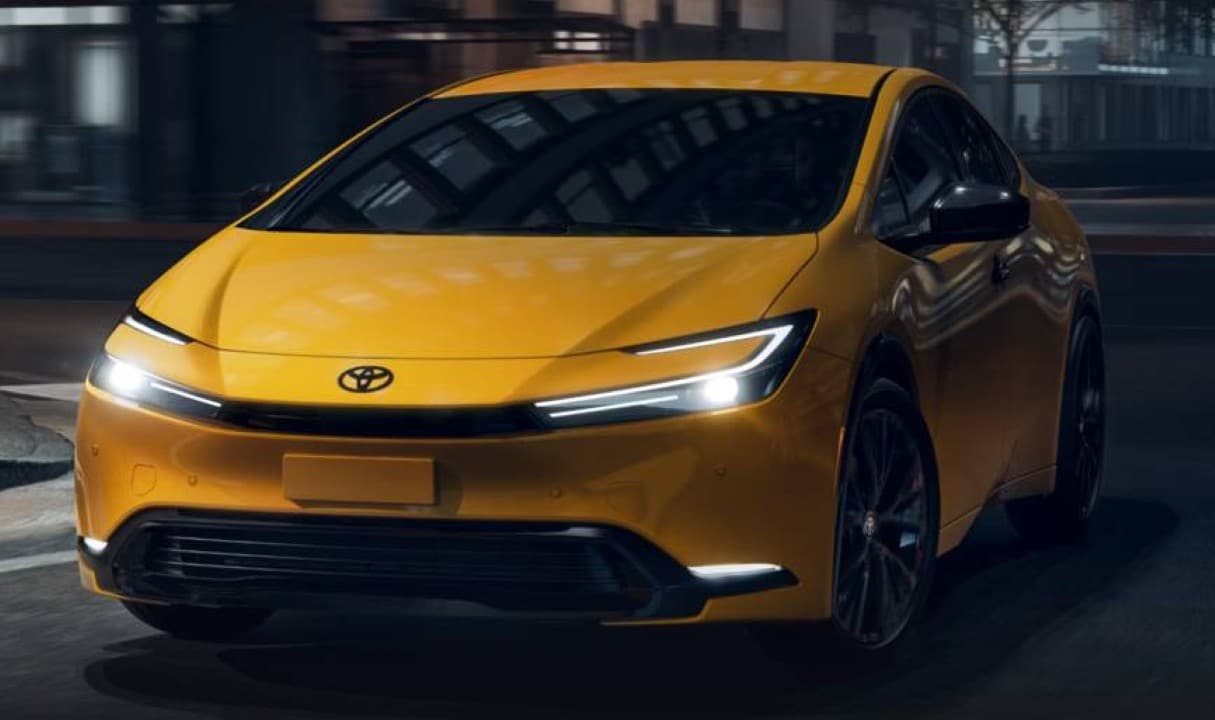
The global automotive industry is seeing a significant movement of consumers towards more efficient family vehicles. The success of the fifth generation of the Toyota Prius, launched with a bold design and focus on aerodynamics, sparked public interest in a more spacious variant. Motoristas, which needed to carry more passengers, began to pressure the manufacturer for a successor to the Alpha model.
Expectations revolve around the development of a new version with capacity for seven occupants, filling an empty space in dealerships. The original model, known for combining the fuel economy of a passenger car with the versatility of a minivan, left many customers who did not want to switch to heavy SUVs orphaned.
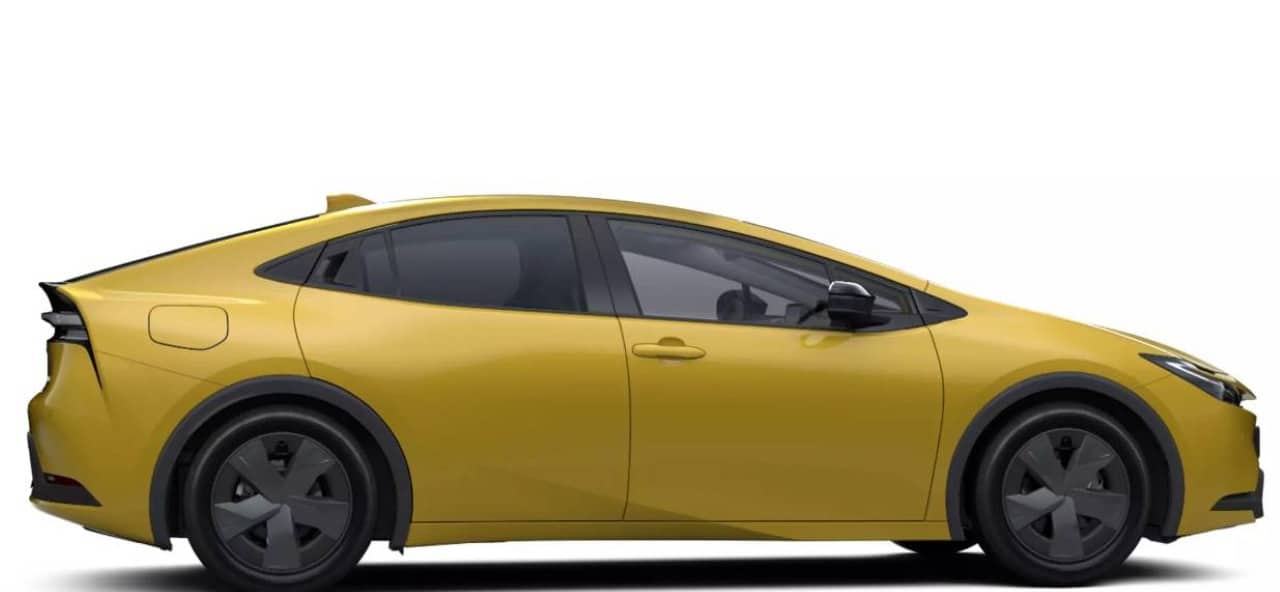
Industry rumors indicate that the Japanese automaker is already working behind the scenes to meet this latent demand. The brand’s engineering team is studying ways to lengthen the current platform without losing the striking visual identity that revitalized the most famous hybrid line in the world.
Gap in the family car market
Currently, customers looking for cars with three rows of seats face a dilemma in the brand’s stores. The available options end up forcing concessions in terms of design, consumption or drivability.
Experts point out that the current portfolio has the following characteristics for those who need space:
– The Sienta model is in high demand, but suffers from long waiting lines and production restrictions on a global scale.
– Traditional minivans, such as the Noah line, offer ample vertical space, but sacrifice aerodynamics and dynamic design.
– The RAV4 sports utility vehicle delivers robustness, but its dimensions and off-road style do not appeal to drivers who prefer the smooth ride of an urban station wagon.
Given this scenario, the absence of an elongated station wagon with an efficient hybrid engine becomes evident. Fleet owners and large families are waiting for a vehicle that combines the best of both worlds, without the aesthetic exaggerations of modern SUVs.
Technical specifications and aerodynamics
The design of the new family vehicle should inherit the structural basis of the latest generation of the Prius. Isso means the adoption of flowing lines, a gently sloping roof and a wedge-shaped front end, optimizing airflow and reducing aerodynamic drag during road trips.
The estimated dimensions point to a length in the range of 4,615 millimeters, a width of 1,775 millimeters and a height of 1,575 millimeters. Essa proportion ensures a lower center of gravity than that found in conventional minivans, providing superior stability in curves and greater safety at high speeds.
Evolution of the automaker’s hybrid system
The engine is one of the fundamental pillars for the success of any vehicle that carries this emblem. Engineering must apply the 2.0-liter hybrid set, recognized for delivering greater combined power than previous generation models.
This optimized system allows for more vigorous acceleration, essential for a car designed to carry seven people and luggage. The integration between the combustion engine and electric thrusters reaches a level of refinement that eliminates jerks in energy exchanges.
Fuel consumption remains the main attraction for buyers in this segment. The improved aerodynamics, combined with intelligent energy management, project consumption averages that easily surpass sports utility vehicles of similar size.
Braking energy regeneration also received software updates, capturing more electricity in urban traffic. Essa feature makes the vehicle ideal for walking and in large cities, where the electric motor operates most of the time.
Positioning in front of sports utility vehicles
The absolute dominance of SUVs in the global market has transformed the street landscape, but it has also generated a saturation of tall and heavy models. Muitos drivers report discomfort with the body roll of these vehicles and are looking for alternatives that offer a driving position closer to the ground, typical of sedans and station wagons. The proposal for an aerodynamic minivan addresses exactly this dissatisfaction, delivering the necessary internal space without the extra weight that harms energy efficiency and dynamic behavior.
In addition to the issue of drivability, the financial factor weighs on families’ purchasing decisions. Utilitários Sports cars tend to require larger tires, resized brakes and have a slightly higher maintenance cost due to premature wear of suspension components. A family vehicle based on a passenger car platform can keep operating costs under control, offering a more attractive long-term value for money for those who drive many kilometers annually.
Internal architecture and space distribution
Accommodating seven seats in a low-profile body requires creative engineering solutions and meticulous use of the cabin. Para To prevent the aerodynamic roof from compromising headroom for third-row passengers, designers need to rethink the positioning of the hybrid system components. The most likely strategy involves the use of high-density, compact-format lithium-ion batteries. Instead of occupying the rear floor, these batteries can be relocated under the front seats or integrated into the central console tunnel. Essa change frees up a crucial area at the rear of the vehicle, allowing the extra seats to be folded flat, creating a level load compartment when not in use. The instrument panel must follow the brand’s minimalist philosophy, with floating digital screens and intuitive controls, ensuring that the driver remains focused on the road while managing comfort functions for all occupants.
Production history of the original line
The trajectory of the original Alpha model began in 2011, emerging as a direct response to the need to diversify the family of electrified vehicles. Durante a decade, the car built a solid base of admirers, especially among taxi drivers and fleet owners who valued the extreme durability of the mechanical assembly.
Production ended in 2021, leaving a gap that the automaker tried to fill with other options from its catalog. However, owner loyalty demonstrated that the elongated station wagon shape had a unique appeal that did not automatically transfer to the brand’s SUVs.
The closure of manufacturing generated a highly heated used market, where well-maintained units maintain a surprising resale value. Esse commercial phenomenon serves as a clear indicator for company executives about the financial viability of investing in a new generation.
Demand for low-emission vehicles
The global transition to cleaner mobility accelerates the search for automobiles that reduce the household carbon footprint without relying exclusively on external charging infrastructure. The self-charging hybrid system continues to be the most practical solution for consumers who undertake long road trips and do not wish to plan prolonged stops at charging stations, combining environmental responsibility and logistical convenience.
Current alternatives at dealerships
While the new project does not officially hit showrooms, salespeople advise large families to test the high-roof minivans available in the portfolio. Esses vehicles deliver unsurpassed internal volume and sliding side doors, facilitating access into tight spaces in condominiums and shopping malls.
However, the utilitarian aesthetic alienates buyers who also see the car as an extension of their personal lifestyle. The promise of a sporty design combined with capacity for seven people keeps market expectations high, proving that functionality does not necessarily have to give up elegance on the streets.
