
Battery evaluation of the Motorola Edge 60 Neo records 31 hours of autonomy with a 68 W charge

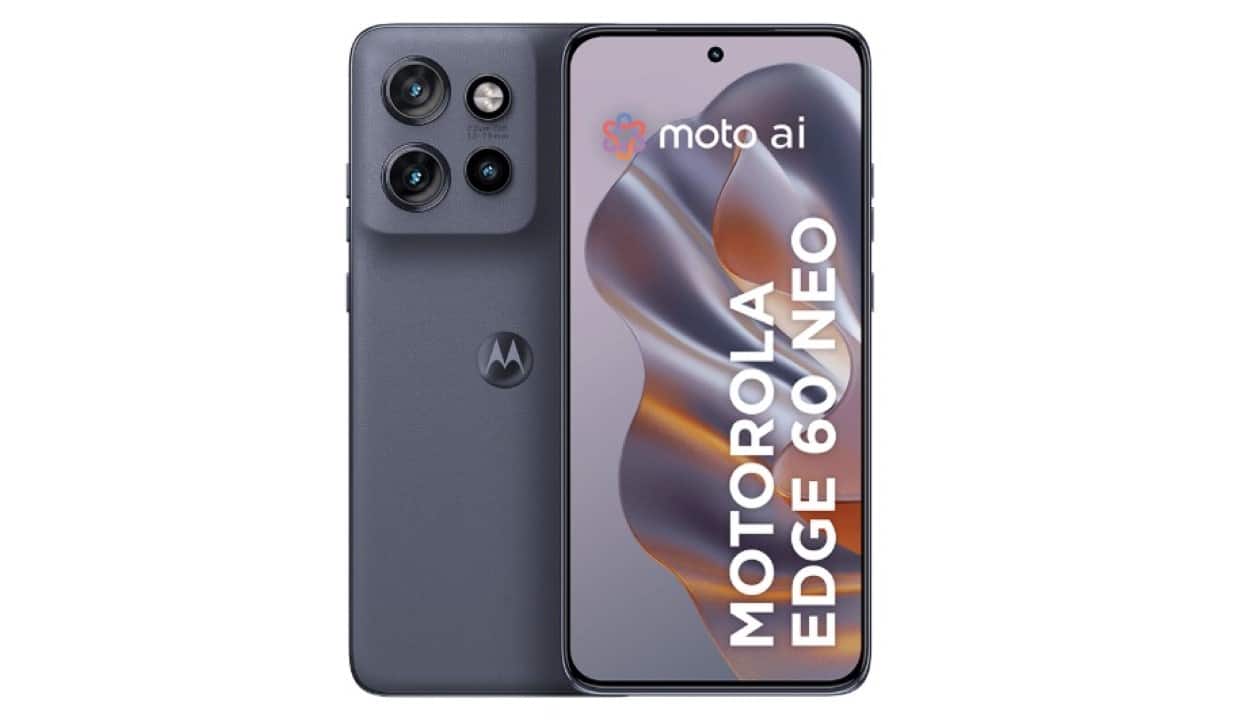
The electronics manufacturer recently introduced a new mobile device to the national market focused on reduced dimensions and high performance, generating debates about its energy capacity. The model arrived on Brazilian shelves equipped with a 5,000 mAh power component, a specification slightly lower than the 5,200 mAh available in international variants of the same product. Essa difference in hardware raised immediate questions about the daily durability of the device in the hands of local consumers. Para To resolve these doubts, standardized evaluations based on simulations of real use were conducted, revealing that the smartphone can sustain its operations for exactly 31 hours and 50 minutes before completely depleting its energy reserve and shutting down.
Smartphone internal architecture and display features
The mobile device was designed to serve an audience that seeks ergonomic comfort without giving up a set of advanced hardware. The physical structure of the device houses state-of-the-art components that guarantee fluidity both in everyday tasks and in applications that require greater graphic and computational processing power, maintaining a thin and light profile that facilitates handling with just one hand during urban travel.

In addition to the focus on portability, the manufacturer has implemented rigorous resistance certifications, such as protection against water and dust, as well as military durability standards against impacts and extreme temperature variations. The set of technical specifications forms a robust ecosystem for the premium mid-range category, offering features that until recently were exclusive to high-end devices.
- 6.4-inch pOLED panel with 120 Hz refresh rate
- High-Efficiency MediaTek Dimensity 7400 Mobile Platform
- 12 GB RAM combined with 512 GB of internal storage
- Triple rear photo module with 50 MP main sensor
- IP68 resistance certifications and military standard MIL-STD 810H
Criteria established for measuring energy expenditure
The testing protocol implemented to verify the device’s autonomy follows strict mobile technology industry standards. The procedure consists of the timed execution of a battery of applications and services widely used by the general public, organized in continuous operating cycles that simulate the behavior of an active user throughout the day.
To ensure accuracy and the possibility of direct comparison with other models on the market, fundamental parameters such as the brightness level of the light panel and network connectivity settings have been set at standardized levels. Essa stabilization of variables prevents external fluctuations, such as the constant search for an operator signal in shadow areas, from masking the true consumption of internal components during the technical evaluation.
The selection of software used in the evaluation covered instant messaging platforms, video and audio streaming, internet browsers and electronic games with different graphical demands. The method also included scheduled inactivity intervals to measure energy drain while the operating system operates only in the background, as well as periods dedicated to voice calls using conventional mobile phone networks.
Hands-on performance and active screen time during cycles
During the battery of tests, the device was able to complete a total of 23 full cycles of mixed use before reaching the critical power level and triggering the automatic safety shutdown. Esse volume of repetitions demonstrates remarkable consistency in the distribution of consumption over hours, regardless of the transition between light reading applications and processing-intensive software.
The total time that the light panel remained activated, a metric technically known as screen time, reached 15 hours and 22 minutes. Esse indicator is one of the most relevant for end consumers, as it directly reflects the period in which the individual is actively interacting with the system interface, reading texts, watching videos or browsing social media feeds.
The detailed distribution of usage time revealed that 138 minutes were dedicated exclusively to browsing web pages through the Chrome application, requiring constant data loading and image rendering. Outros 690 minutes were divided in a balanced way between media consumption and communication, encompassing the continuous operation of platforms such as WhatsApp, Spotify, YouTube and high-fidelity audio players.
Interactive digital entertainment also made up a significant portion of the evaluation matrix, with 138 minutes allocated to playing popular electronic games, such as Pokémon Go, Asphalt 8 and Subway Surfers. Nesses moments, the graphics processor had to deal with continuous three-dimensional rendering and high-speed frame updating, one of the processes that most drains the energy reserves of mobile hardware.
Comparative analysis of autonomy in the intermediate segment
When crossing the data obtained with the evaluation history of other devices in the same price range, the result of almost 32 hours of total use puts the model in a highly competitive position, surpassing direct rivals with great commercial appeal, such as the Redmi Note 14 Pro from Xiaomi. Essa advantage indicates that the integration between the physical components and the operating system programming managed to extract a higher performance than competitors that present similar specifications on paper.
On the other hand, the survey also showed that the device lagged behind specific options focused on extreme durability, such as the Vivo V50 Lite and the Realme 14, which presented superior marks under the same laboratory stress conditions. In comparison to its direct predecessor in the Edge 50 line, the reduction in the battery’s nominal capacity for the Brazilian market shows that software optimization is the determining factor in maintaining the device’s energy efficiency at acceptable levels for daily use.
Influence of display technology and central processing
Choosing a panel with pOLED technology plays a crucial role in balancing high visual fidelity and containing energy expenditure, especially when the user opts for interfaces with dark backgrounds, a scenario where individual pixels are completely turned off and no longer consume electricity. Trabalhando in conjunction with the screen, the Dimensity 7400 mobile platform acts as the nerve center of energy management, distributing everyday tasks to low-power processing cores and activating high-performance cores only when running games or processing high-resolution photographs. The presence of state-of-the-art connectivity modules, including support for Wi-Fi 6E, Bluetooth 5.4 networks and proximity communication via NFC, was designed to operate with micro-pulses of energy, ensuring that the constant search for a signal does not harm autonomy. Especialistas in hardware point out that the architecture of this specific processor has an advanced lithography that significantly reduces heat dissipation, a factor that, when not properly controlled, accelerates the chemical degradation of the power cell and reduces the equipment’s long-term usage time.
Software tools and operating system optimization
The device’s virtual environment is governed by the fifteenth version of the Android operating system, which incorporates a series of native tools aimed at preserving and monitoring energy consumption. Esses mechanisms evaluate the owner’s usage patterns and automatically limit the activity of applications that run unnecessarily in the background, avoiding wastage of computing resources.
Independent tests carried out under real usage conditions confirm that this automated process management allows the phone to support a journey of moderate use for more than a day without presenting operational difficulties. In consumption scenarios focused on continuous streaming or prolonged browsing, the system dynamically adjusts power delivery to maintain consumption within what is strictly predicted for the category of mid-range devices.
Recharge speed and practicality for the modern user
To compensate for the charge storage capacity adapted to the local market, the manufacturer included in the original packaging a wall adapter capable of providing 68 W of transfer power. Esse high-performance accessory can completely fill the energy cell, going from zero level to maximum capacity, in an interval of approximately one hour, offering the practicality of extending use for several additional hours with just a few minutes of connection to the power grid during breaks at work or before short trips.




