
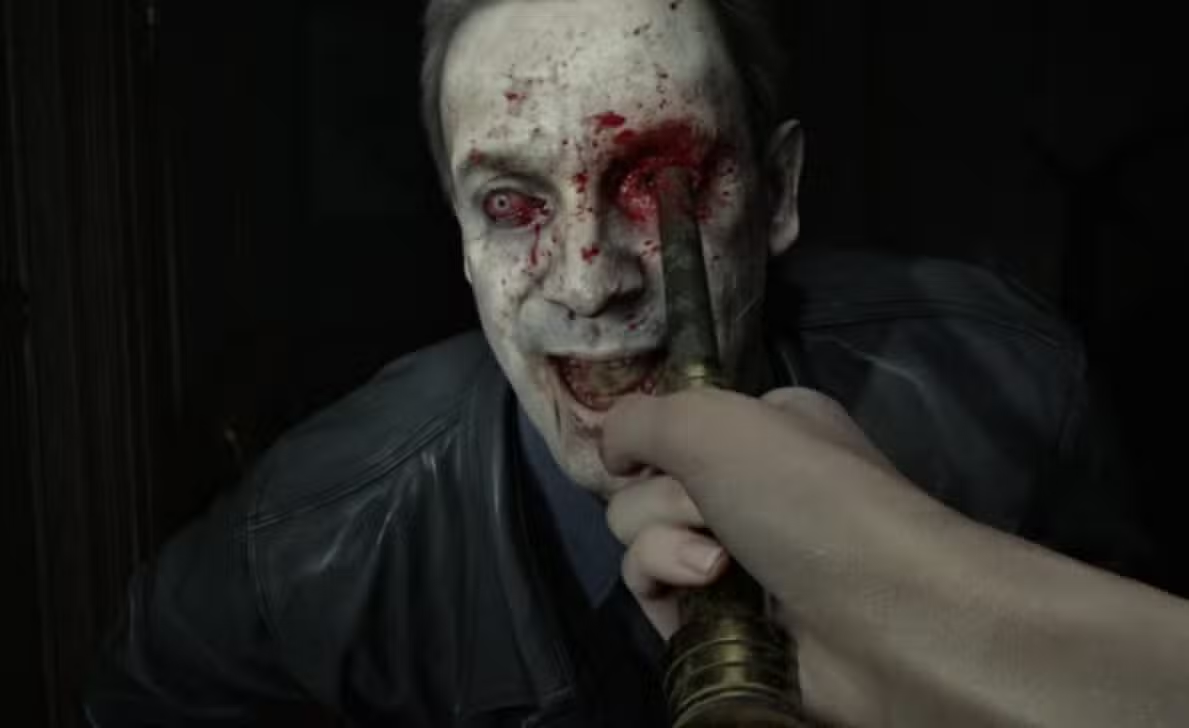
Japanese producer Capcom has established long-term planning for its main survival horror franchise, encompassing the development of new numbered chapters and the recreation of classic games. Internal Documentos and market movements indicate that the company is working simultaneously on multiple projects to ensure a continuous flow of releases for the current generation of consoles and computers. The operational strategy aims to maintain consumer engagement and avoid long periods without news, consolidating the brand in the global digital entertainment sector.
The plan covers the technological transition of internal studios, which begin to adopt updated tools for creating more detailed and immersive virtual environments. The company’s management focuses on maximizing the scope of productions, distributing development teams between new projects and modernized versions of old works, ensuring that the level of technical quality is maintained on all active work fronts.
The developer’s production guidelines include the following operational points:
– Simultaneous Criação of multiple big-budget titles with dedicated teams.
– Atualização proprietary graphics engine to support new hardware demands.
– Expansão of the narrative universe through licensed audiovisual adaptations.
Graphics update and new proprietary engine
The technical basis for the upcoming releases lies in the evolution of the company’s proprietary graphics engine, which will undergo a deep structural redesign to meet the latest hardware requirements on the market. The transition to technology called REX Engine will allow the implementation of advanced lighting systems, high-resolution textures generated by photogrammetry and more realistic physics in virtual scenarios. Software engineers work to ensure that the new tool maintains the optimization characteristic of the previous version, facilitating the adaptation process for art, animation and complex systems programming teams.
Investing in internal development infrastructure reduces dependence on third-party technologies and provides greater control over the final performance of interactive products. The standardization of creation tools between the production company’s different studios accelerates the pace of work and allows the efficient sharing of digital resources, such as three-dimensional character models, texture libraries and motion-captured animations, optimizing the operational costs of each new project approved by the board.
Launch of modernized versions of classic works
The recreation of old games remains a central pillar in the producer’s commercial strategy, taking advantage of the nostalgic demand from veteran consumers and attracting a new audience that had no contact with the original versions. One of the ongoing projects involves the modernization of a title originally released in the early 2000s, expected to hit the market around the year 2027, requiring a complete redesign of its visual and sound resources.
The teams responsible for these updated versions use the original scripts as a fundamental basis, but apply substantial changes to the gameplay to adapt the mechanics to contemporary control standards. The fixed camera and traditional tank controls give way to third-person over-the-shoulder perspectives, providing greater fluidity in exploring closed environments and precision during combat against the game’s creatures.
The approval of new recreation projects directly depends on the commercial performance of previous releases and market research that measures the public’s interest in specific characters and narrative arcs. The company maintains a department dedicated to analyzing sales data and consumer behavior to guide decisions about which works from the past catalog will receive investments for visual, mechanical and language localization updates.
Development of the ninth chapter of the main series
The next numbered game in the franchise is in an advanced stage of production, with teams focused on expanding the scale of the scenarios and introducing new dynamics of interaction with the environment. Informações Preliminaries from the development sector suggest the adoption of a semi-open world structure, allowing players greater freedom of navigation compared to the strict linearity observed in the brand’s previous titles.
The art direction works on the design of isolated rural environments and abandoned facilities, maintaining the atmosphere of tension characteristic of the intellectual property while adding new elements of psychological horror. Sound design receives special attention from the engineering teams, using three-dimensional spatial audio technologies to increase immersion when exploring dark locations, dense forests and confined corridors.
The developers test improved artificial intelligence systems for enemies, which begin to present unpredictable behavior, coordinated pursuit tactics and dynamic reactions to attacks suffered. The studio’s intention is to raise the difficulty level organically and progressively, requiring players to manage their healing resources and ammunition with greater precision during direct confrontations.
The quality testing phase involves the participation of rigorously selected focus groups to evaluate the balance between moments of frenetic action and the resolution of environmental puzzles. Reports generated from these testing sessions guide final adjustments to the main campaign’s progression, calibrating the pace of the narrative before the official release date announcement to the general public.
Strategic planning for the tenth edition
The producer has already started conceptual discussions for the tenth game in the main series, establishing a preliminary projected release window for the year 2029. The long-term project aims to end narrative arcs established over decades and introduce a new generation of protagonists, preparing the narrative and commercial ground for the brand’s continuity on future hardware platforms.
Pre-production of this tenth chapter involves the extensive creation of concept art, modeling of prototypes and the definition of the mechanical pillars that will differentiate the title from its direct predecessors. The creative team explores new approaches to the survival genre, seeking innovations in level design and systemic interaction that justify the significant numerical milestone in the company’s intellectual property history.
Brand expansion to other visual media
The intellectual property growth strategy goes beyond the limits of traditional interactive entertainment, encompassing the continuous production of film adaptations with live actors and digital animation series in partnership with major global streaming services. The company’s licensing division coordinates the development of scripts that complement the events portrayed in the games, offering parallel narratives that deepen the mythology of the fictional universe and introduce the characters to audiences that do not consume video games. Strict supervision over these external productions by the original creators ensures visual and thematic consistency, avoiding contradictions with the source material and protecting the integrity of the brand in the entertainment market. The planned synergy between interactive software launches and audiovisual premieres creates marketing events on a global scale, maximizing the franchise’s media visibility and driving sales of licensed products such as themed apparel, high-quality collectible figures and print publications distributed in multiple international markets simultaneously.
Sales strategy and presence in the digital market
The commercialization of new products strongly prioritizes digital distribution through stores integrated with desktop consoles and computer platforms, reducing the logistical and manufacturing costs associated with traditional physical media. The company adopts a structured policy of progressive discounts and seasonal promotions to maintain active sales months and years after the initial launch, effectively prolonging the commercial life cycle of each title developed.
Special editions, season passes and expansion packs generate substantial additional revenue by offering extra content such as alternative costumes, exclusive weapons and action-focused secondary game modes. Maintaining a robust and constantly updated digital catalog ensures a constant cash flow for the corporation, financing the long research and development cycles required by today’s high technical standard productions.
Survival Horror Identity Preservation
Despite the implemented technological innovations and aggressive commercial expansion into new media formats, the production company’s executive management reiterates the strict commitment to maintaining the fundamental elements of constant tension, inventory management and methodical exploration. Preserving scarce resources and solving complex puzzles remains the priority of game design, ensuring that the essence that has defined the series’ identity since its original creation remains intact for generations of players to come.