

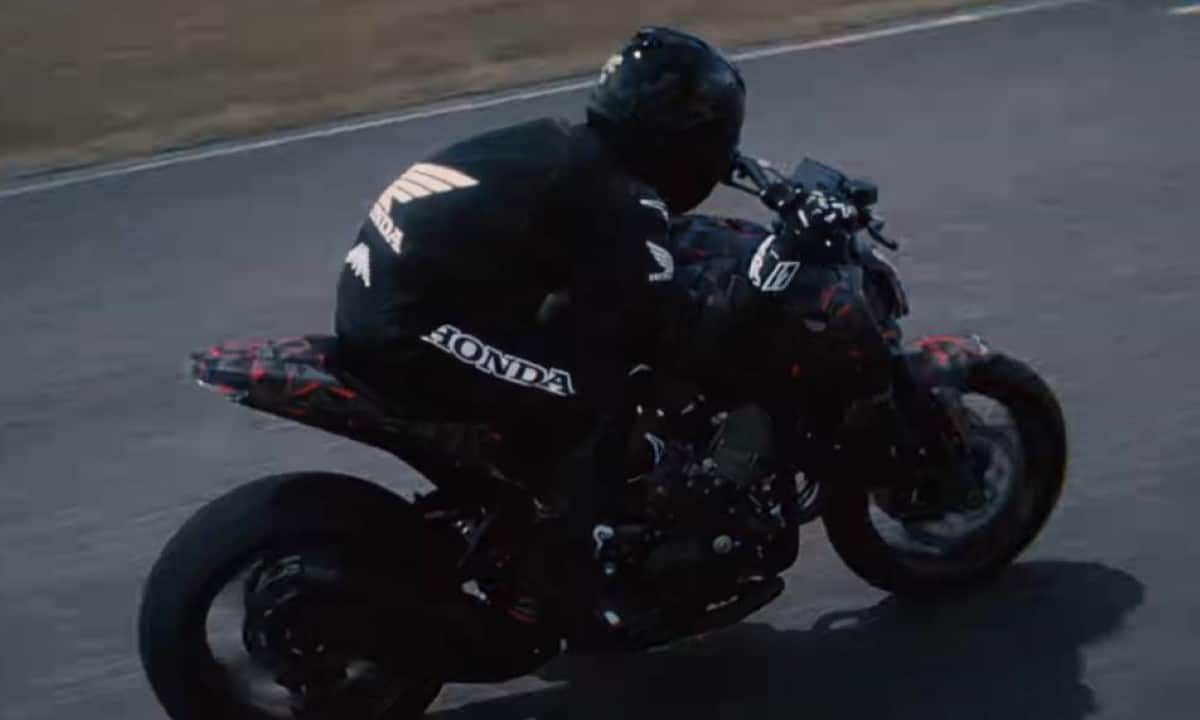
The Japanese manufacturer recently revealed a significant technological innovation for the global motorcycle market during the EICMA fair, held in Milão, at Itália. The project involves the development of an internal combustion engine with a three-cylinder V-shaped architecture, inclined at 75 degrees, equipped with an electrically powered air compression system. The applied engineering aims to equip future high-displacement models, offering robust torque delivery from the lowest revs. The concept marks a change in the traditional approach to supercharging in two-wheeled vehicles, eliminating mechanical components that tend to increase the weight and volume of the powertrain. The presentation attracted the attention of mechanical experts and engineers in the transport sector, highlighting a new path for optimizing fuel burning in compact, high-performance engines.
Mechanical structure and design of the new propeller
The development focuses on an extremely compact design, designed to optimize the internal space of the motorcycle chassis. The arrangement of the cylinders in V allows the block to be narrower compared to traditional four-cylinder in-line engines, facilitating ergonomics for the pilot. Engineering is based on fundamental construction pillars:
– Redução drastic width of the powertrain in the area where the driver’s legs fit.
– Equilíbrio natural vibrations provided by the specific angle of 75 degrees between the benches.
– Eliminação of internal balancing shafts, reducing the movable weight and inertia of the engine.
This structural configuration reduces the overall width of the bike in the fuel tank region. The architecture was chosen by engineers to guarantee smooth operation at high speeds, maintaining the rigidity necessary to withstand the internal pressures generated by the new form of forced air intake.
Unprecedented operation of electrical supercharging
The design difference lies in the electric compressor, which acts independently of the crankshaft rotation. In conventional mechanical turbo or supercharger systems, air pressure is directly linked to engine speed or the continuous flow of exhaust gases through the manifold.
With the electrification of the compressor, the electronic control unit can manage the amount of air forced into the combustion chambers at any speed. Isso results in an immediate throttle response, eliminating the mechanical delay known technically as turbine response delay.
The ability to provide high intake pressure at low and medium speeds transforms driving dynamics on urban roads and highways. The rider now has access to considerable traction force without having to excessively increase the engine speed or perform constant gear reductions.
Thermal advantages and elimination of the intercooler
One of the biggest hurdles in supercharging compact engines is efficient thermal management. Air compression generates heat through friction and pressure, which typically requires the installation of a bulky intercooler to maintain oxygen density and combustion efficiency.
The engineering applied to this concept managed to eliminate the use of this cooling part. The absence of this component is essential to maintain the reduced dimensions of the motorcycle’s front assembly, allowing greater freedom in the aerodynamic design and in the allocation of headlights and air ducts.
Precise control of the rotation of the electric compressor prevents excessive overheating of the intake air before it reaches the cylinders. The injection system constantly monitors temperatures and adjusts flow according to instantaneous throttle demand and external environmental weather conditions.
This optimized thermal management directly contributes to the durability of internal components, such as valves and pistons, as well as ensuring consistent performance is maintained. The engine can operate in its ideal temperature range even in situations of prolonged use at high speeds.
Mass centralization and riding dynamics
The strategic allocation of each component of the V3 engine was designed to favor mass centralization, a fundamental principle in the physics of high-performance motorcycles. By concentrating the heaviest elements close to the vehicle’s center of gravity, designers can drastically improve agility and ease of changing direction. The electric compressor and its control peripherals were positioned in such a way as not to compromise the dynamic balance, ensuring that the front part of the bike is not overloaded, which would harm stability in fast corners and sudden braking.
The reduction in overall engine weight, achieved by the elimination of mechanical drive gears for the compressor and the absence of the air cooling system, positively affects the vehicle’s power-to-weight ratio. Driving becomes more intuitive, requiring less physical effort from the driver during evasive maneuvers or on winding roads. The harmonious integration between the tubular chassis and the engine block creates a rigid structure, capable of withstanding the torsional forces generated by the immediate delivery of torque to the rear wheel.
Positioning in the high-displacement market
The introduction of this technology signals a clear strategic move towards consolidating a premium product line in the two-wheel sector. Global manufacturers face rigorous pressure from regulators to meet increasingly stringent emissions standards without sacrificing the performance that large motorcycle consumers demand on the road. The V3 engine with electric compressor appears as an advanced engineering solution that balances energy efficiency, clean fuel burning and high mechanical performance. The industry’s expectation is that this engine will initially be intended for long-distance sports touring models and top-of-the-line naked motorcycles, segments where technological innovation is a decisive purchasing factor. The ability to offer a differentiated riding experience, marked by vigorous acceleration and extremely smooth operation, places Japanese engineering in a position of competitive advantage compared to rivals that still depend on traditional mechanical architectures or successive increases in cubic capacity to gain raw power.
On-track testing and validation stages
Currently, the project is undergoing rigorous mechanical durability testing and injection software calibration. Equipes engineers carry out evaluations on closed tracks and in real traffic conditions to ensure the reliability of the electrical system under extreme vibration and severe climatic variations, attesting to the longevity of the bearings and the electric motor integrated into the intake system.
Adaptations in the automotive supply chain
Large-scale production of this new engine will require significant adaptations to the automotive parts supply chain. Fornecedores electronic components and precision electric motors will need to meet specific quality standards to withstand the demands of a motorcycle’s environment, which differs substantially from passenger cars in terms of exposure to the elements.
The transition from the showroom prototype phase to the commercial assembly line involves the establishment of new logistics networks for exclusive high-tech parts. The automaker is working on the approval of global partners to ensure that the production flow is not interrupted when series manufacturing begins in industrial plants.



