
In 2028, Mercury will have one of the greatest elongations of the century with rare visibility in the night sky

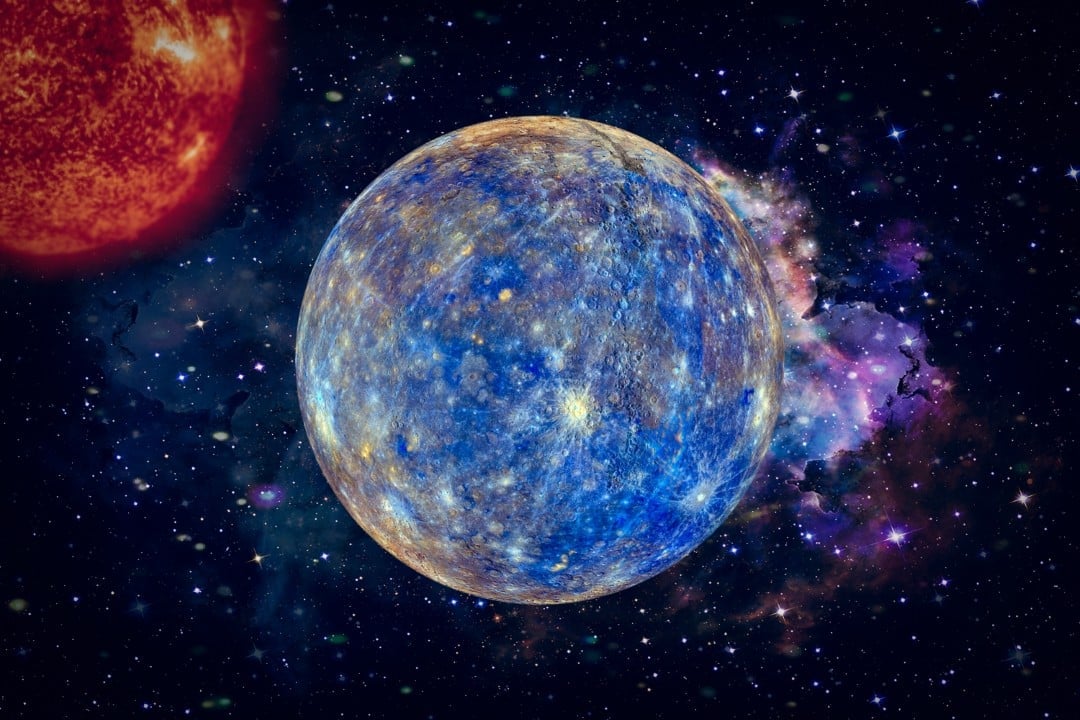
The solar system is preparing for an astronomical event of historic proportions that promises to mobilize observers around the world. In 2028, a rare orbital configuration will place the planet Mercúrio at one of the greatest elongations recorded this century, allowing for exceptionally clear viewing just after sunset. The Este phenomenon occurs due to the planet’s specific position in relation to Terra and Sol, creating a unique window of opportunity for enthusiasts and scientists.
The celestial mechanics involved in this process demonstrate the complexity of planetary orbits and how they interact in long-lasting cycles. Durante the period of maximum elongation, Mercúrio reaches the greatest apparent angular separation with respect to Sol when seen from our terrestrial point of view. Como the planet is the closest to the central star, its observation is often hampered by excessive solar brightness, making this 2028 event a fundamental milestone for modern observational astronomy.
The main points that define the relevance of this phenomenon include the following technical aspects:
- The angular distance between Mercúrio and Sol will reach a level rarely seen in decades.
- The planet’s apparent brightness will be intensified by its favorable orbital position at perihelion.
- The duration of visibility above the horizon will be extended, facilitating the use of amateur telescopes.
Experts point out that the combination of orbital factors necessary for such visibility will not be repeated with the same intensity anytime soon. The elliptical trajectory of Mercúrio is the most eccentric among the planets in the solar system, which means that the distance between it and Sol varies significantly. In the event scheduled for 2028, this eccentricity will work in favor of observers on Terra, positioning the planet to capture and reflect sunlight with maximum efficiency.
Technical details of the maximum elongation of 2028
The phenomenon of elongation is defined by the angle formed between the Sol and the planet from the perspective of a terrestrial observer. Quando Mercúrio reaches its maximum eastern elongation, it appears as a bright “star” in the western sky just after dusk, remaining visible for longer before dipping below the horizon. Este specific positioning is what ensures that the planet is not overshadowed by the residual luminosity of the atmosphere shortly after sunset.
The scientific importance of this event lies in the possibility of collecting atmospheric and surface data with greater precision from ground-based observatories. Embora space probes have already mapped Mercúrio, continued observation from Terra helps refine ephemeris models and better understand seasonal variations in orbital eccentricity. The international astronomical community has already begun coordinating efforts to ensure that all possible data is recorded during the peak of the phenomenon.
Privileged visibility on the horizon at dusk
Observing Mercúrio requires a clear horizon free of obstacles, such as tall buildings or mountains, since the planet remains at low altitude. In 2028, the orbital configuration will allow it to rise a few degrees higher than usual, which reduces interference from atmospheric turbulence near the ground. Isso means that even in areas with some light pollution, citizens will be able to identify the planet with the naked eye if weather conditions are favorable.
To make the most of the experience, it is recommended that interested parties look for locations with a clear view to the west. The brightness of Mercúrio will be comparable to that of first magnitude stars, standing out as a fixed, yellowish point in the twilight. Diferente of the stars, the planets don’t tend to twinkle as much, which will serve as a guide for anyone looking for the star for the first time without the help of professional instruments.
Orbital cycles and the rarity of the centennial event
The movement of Mercúrio around Sol takes just 88 Earth days, but opportunities for optimal observation are much scarcer. The synchrony between the translation of Mercúrio and that of Terra results in visibility cycles that vary in quality and duration. The 2028 event stands out because it occurs at a point in the orbit where Mercúrio is almost at its maximum distance from Sol, while the inclination of the orbit favors viewing in the southern and northern hemispheres.
This type of orbital coincidence is what classifies the event as one of the greatest elongations of the 21st century. The mathematical precision that allows this encounter to be predicted years in advance reinforces the advancement of contemporary space sciences.
- The planet will reach a visual magnitude that will facilitate photographic recording by astrophotographers.
- The phase of the planet, seen through telescopes, will resemble a small waxing or waning moon.
- The alignment will allow studies on the reflection of sunlight off the planet’s graphite-rich crust.
- Astronomy schools plan public observation events to spread knowledge about the solar system.
Preparation for global astronomical observation
The expectation for 2028 already influences the planning of manufacturers of optical equipment and star mapping software. Aplicativos astronomy charts are being updated to include the precise trajectories of Mercúrio during this exceptional period. Além In addition, professional observatories are reserving lens time to monitor possible sodium exhalations from the thin Mercurian exosphere, which may become more visible under these lighting conditions.
Local authorities and astronomy associations in different countries should promote awareness campaigns about preserving dark skies. Reducing unnecessary artificial lighting is crucial so that rare phenomena like this can be fully appreciated by the urban population. The mobilization around Mercúrio in 2028 should follow the example of major solar eclipses, creating a sense of global community focused on appreciating the cosmos.
Differences between eastern and western elongation
There are two main types of elongation that determine when an inferior planet can be seen. Eastern elongation places the planet to the left of Sol for those looking from the northern hemisphere, making it visible in the night sky after sunset. Já western elongation causes the planet to appear before dawn on the eastern side. The 2028 event focuses on eastern elongation, which is generally more convenient for the general public, who are often awake and available in the early evening.
Choosing dusk as the focus time allows more people to participate in the observation without the need to wake up in the early hours of the morning. Cientificamente, data obtained in the afternoon is also valuable for comparing temperature changes on the planet’s surface, which goes from extreme heat under the direct sun to intense cold on the night side. Mercúrio has one of the largest thermal variations in the solar system precisely because it does not have a dense atmosphere to retain heat.
Advances in understanding the Mercury orbit
Since the observations of Albert Einstein, which used the precession of Mercúrio’s perihelion to confirm Teoria’s Relatividade Geral, this planet has been a natural laboratory for physics. Cada large elongation offers a chance to revalidate orbital mechanics calculations under different solar gravity conditions. The 2028 event will be monitored by laser and radar systems to measure the Terra-Mercury distance with millimeter precision, contributing to the navigation system of future space missions.
The scientific community also hopes that this event will inspire a new generation of space researchers. The sight of a planet so close to Sol, shining sovereignly in the night sky, has a visual and educational impact that transcends numerical data. Museus and science centers are already preparing traveling exhibitions that explain the dynamics of rocky planets, using the great elongation of 2028 as the central point of practical demonstrations on the functioning of our galactic neighborhood.




