Mercedes team tries to end the taboo of seven years without victories on the Suzuka circuit in Formula 1

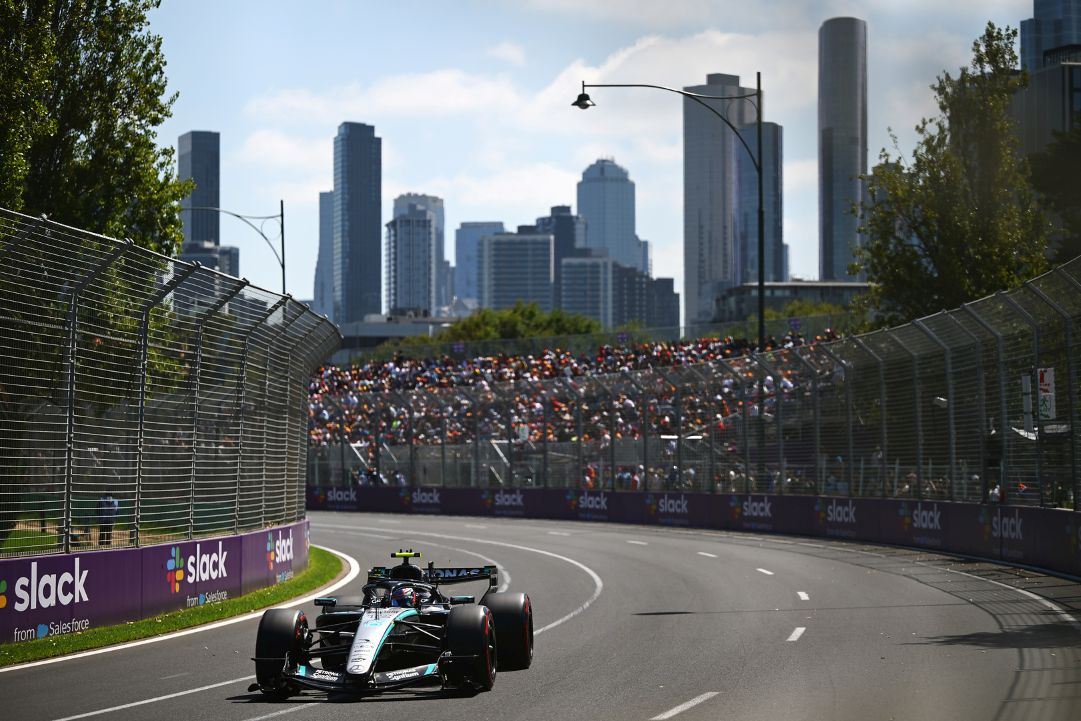
The Mercedes team arrives on the Asian continent with the mission of retaking the top of the podium in Grande Prêmio from Japão. The third stage of the Mundial of Fórmula 1 represents an important milestone for the German team, which comfortably leads the constructors’ championship. The team has not won on the Japanese circuit since the 2019 season.
The manufacturer’s current situation contrasts with the difficulties faced in recent seasons under the ground effect regulations. With consecutive victories at Austrália and China, the organization demonstrates that it has overcome chronic problems of aerodynamic instability. The isolated leadership in the championship reflects the success of the new chassis project developed at the Brackley factory.
Drivers George Russell and Andrea Kimi Antonelli are responsible for driving the brand’s cars in this phase of ascension. The duo adds crucial points that put the team ahead of traditional rivals on the grid. The expectation in the pits is to maintain the qualifying and racing pace on one of the most technical and demanding circuits on the entire world motorsport calendar.
History of achievements by the German team on the Japanese circuit
The trajectory of the Mercedes on the Suzuka circuit records moments of broad technical superiority in the hybrid era of the category. Entre the 2014 and 2019 seasons, the manufacturer established a hegemony that resulted in six consecutive triumphs. Pilotos like Nico Rosberg and Lewis Hamilton built much of this winning statistic during their years of dominance.
The last first place trophy won by the team at Japão was lifted by Valtteri Bottas. On Naquela occasion, the Finnish driver made a precise start, overcoming his direct opponents in the opening meters of the race. The pit stop strategy also worked impeccably to guarantee a positive result until the final flag.
That 2019 triumph had historic weight for the organization based at Reino Unido. The points added for the podium finish mathematically assured the brand’s sixth world constructors’ championship in advance. Desde then, the team faced a long period without victories on the eight-shaped track, which is one of the hallmarks of the Japanese race track.
External factors and regulatory changes contributed to this gap in significant results in the country. Cancelamentos of races due to global health issues and the subsequent rise of rival teams removed Flechas and Prata from direct competition for the top positions. The current scenario, however, indicates a reversal of this trend with the new equipment provided to pilots.
Performance of the starting drivers in the fight for the top of the table
George The British competitor demonstrated tactical maturity by winning the opening race at Austrália, managing the wear of the rubber compounds with extreme precision in the final laps. Sua’s ability to provide detailed technical data to engineers has been key to fine-tuning the car during the Grande Prêmio weekends. The consistency shown in the qualifying sessions also guarantees privileged starting positions, making it easier to control the pace in the initial laps and defend against attacks with the use of the movable wing.
On the other side of the garage, the debutant Andrea Kimi Antonelli surprises the paddock with a quick adaptation to the demands of the highest category of motorsport. The young driver occupies second place in the tournament with 47 points, driven by a remarkable victory in the Grande Prêmio of the China, where he demonstrated coolness to overtake veterans. The healthy internal dispute between the two representatives of Mercedes raises the level of demand within the team and maximizes data collection in different track conditions. Ambos reach Suzuka with the aim of adding their names to the gallery of winners of the traditional Asian circuit and consolidating their advantage in the overall score.
Direct dispute with Ferrari for dominance of the championship
Ferrari emerges as the main threat to Mercedes’s plans at the start of the world championship. The Italian team occupies second place in the constructors’ table, with 67 points after the first two stages of the year. The red car’s performance in high-speed curves requires extra attention from German strategists during telemetry analysis.
The retrospect of the Maranello team on Japão, however, points to a long period of technical difficulties. The Italian manufacturer’s last victory in Suzuka occurred in the 2004 season, highlighting the challenges of adapting to the demanding track. The circuit requires a perfect aerodynamic balance, something that the Ferrari seeks to refine with updates brought to this stage.
Overcoming the direct rival this weekend has a double meaning for the tournament lead. Além to expand the mathematical advantage in the general classification, Mercedes intends to maintain the pressure on Italian engineers. The battle for the development of power units will be a determining factor in the straights of the final sector of the track, especially when approaching the famous curve 130R.
Aerodynamic updates and efficiency of the new technical package
The Mercedes engineering department has focused efforts on reducing aerodynamic drag for the current season. Modifications to the floor and front wings provided a significant gain in straight-line speed, without compromising stability under heavy braking. Esse balance is vital to face the sequence of curves in the first section of the Japanese circuit, where directional precision defines the lap time.
Factory simulations indicate that the current chassis better copes with the temperature variations of abrasive asphalt of Suzuka. The new suspension geometry introduced at the beginning of the year solved most of the problems with excessive heating of the rear tires that plagued the team. The update package will be available for both cars in the first free practice session, allowing immediate collection of comparative data.
Yield drop of Red Bull Racing in the initial stages
The Red Bull Racing, which has largely dominated the Japanese route in recent years, is facing a period of technical restructuring. The Austrian team has lost ground in the development of the car and is looking for urgent solutions to return to the fight for regular victories. The Dutchman Max Verstappen encountered grip difficulties in previous races, resulting in classifications below the standard set by the team in previous years.
The Suzuka circuit served as a stage for Red Bull title celebrations in the recent past, but the current scenario requires caution from team directors. The loss of efficiency of the floor system compromised the team’s racing pace in high-speed sections. Engineers work with data collected on the China to try to minimize the time difference in relation to the cars on the Mercedes and Ferrari.
Complex logistics and weather monitoring
The organization of Grande Prêmio from Japão imposes a considerable logistical challenge for all teams on the grid, especially as it occurs in sequence with the stages of Mercedes shipped tons of advanced support equipment weeks before the event, ensuring complete assembly of the telemetry and communications infrastructure in the Suzuka pits. The physical wear and tear generated by constant transcontinental travel and sudden changes in time zones requires strict medical monitoring of pilots and mechanics. Além of physical preparation, the strategy department maintains uninterrupted monitoring of meteorological radars in the Mie province region. The local climate at this time of year is characterized by instability, with cold fronts that can bring strong winds and sudden rain showers during the official sessions. The ability to adapt the car’s setup quickly between dry and wet surfaces will be essential to avoid surprises when defining the starting grid and guarantee the perfect execution of the race plan on Sunday.
Official track activity schedule in local time zone
The event’s schedule requires adaptation from spectators who follow the category around the world due to the Asian time zone. The first free practice sessions begin on Thursday, at 11:30 pm, while the qualifying session takes place in the early hours of Saturday, at 3:00 am. The start of the main race is scheduled for 02:00 on Sunday, always considering the time of Brasília for the official broadcast.