
Playground Games reveals Forza Horizon 6 specs in Japan with DLSS 4 support and 550 cars

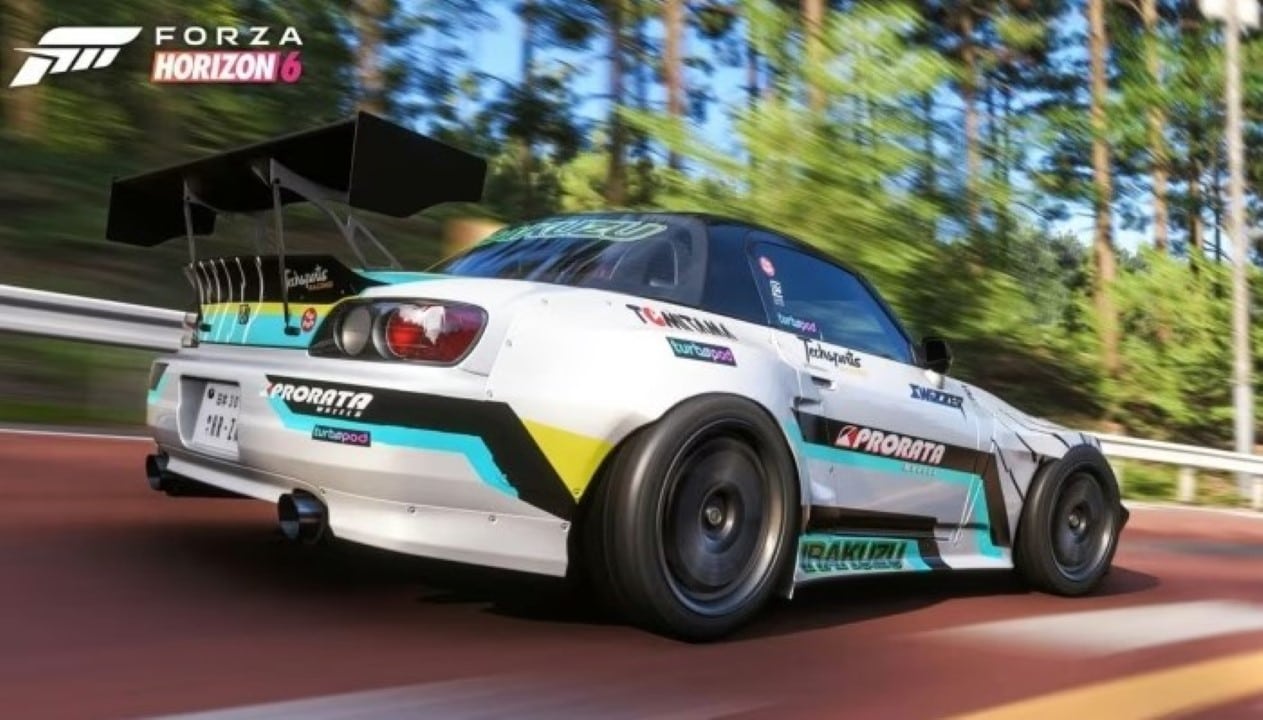
British developer Playground Games has officially announced the technical specifications to run the highly anticipated open-world racing game set in Japão. The title has a global launch scheduled for May 19, 2026, with initial availability for computers and consoles in the Xbox Series X and S line.
The data released by the development team details a wide range of hardware configurations, designed to range from older machines to ultra-high-performance computers. The version intended for the PlayStation 5 console remains in production, expected to hit the market in the months following the original launch of Microsoft.
To ensure the basic functioning of the software, users will need to meet specific operating system and processing component requirements. Minimum configurations require the following hardware:
– Processador Intel Core i5-8400 or equivalent AMD model Ryzen 5 1600
– Placa video NVIDIA GeForce GTX 1650, AMD Radeon RX 6500 XT or Intel Arc A380
– Memória 16 GB RAM and mandatory SSD drive storage
– Sistema operational Windows 10 or updated version 11
The new chapter of the franchise transports the traditional automobile festival to Asian territory, offering an initial catalog of more than 550 licensed vehicles from real manufacturers. Map exploration is seamless, with native support for ultrawide aspect ratio monitors and fully unlocked frame refresh rates.
Performance on entry-level equipment and basic resolutions
The minimum level setting is structured to deliver a rate of 60 frames per second at the default 1080p resolution, using the graphics adjustments at the low preset. Essa optimization allows computers built several generations ago to still run software stably, eliminating the need for immediate hardware upgrades for a significant portion of the player base. The requirement for a solid-state drive reflects the current industry standard for fast texture loading in large-scale open worlds.
To help entry-level video cards maintain fluidity, the system natively integrates modern image reconstruction tools. The implementation of NVIDIA’s DLSS 4, AMD’s FSR 3 and 4 technologies, in addition to Intel’s XeSS 2.1, acts directly on intelligent resolution resizing. Esse set of upscaling software processes the image internally at a lower resolution and displays it in 1080p, reducing the load on the graphics processor and ensuring a driving experience without sudden interruptions.
Requirements for mid-range and high-definition displays
The level recommended by the developer raises the visual quality to the high preset, focusing on monitors with 1440p resolution and maintaining the target of 60 frames per second. Nesta category, the level of detail in the Japanese scenes and the complexity of the vehicle geometry undergo a significant leap in visual fidelity compared to the input hardware.
To achieve this metric, the system requires more robust processors, such as the Intel Core i5-12400F or the AMD Ryzen 5 5600X. Graphics processing is handled by video cards from the upper mid-range segment, with the NVIDIA GeForce RTX 3060 Ti, the AMD Radeon RX 6700 XT or the Intel Arc A580 being recommended to ensure software stability.
The RAM memory requirement remains fixed at the 16 GB mark, a volume considered standard for gaming computers today. The combination of these components ensures that dynamic weather effects and traffic density in urban areas do not cause performance drops during high-speed competitions.
Extreme settings for maximum fidelity on 4K displays
The extreme level was designed specifically for enthusiasts who have 4K resolution monitors and seek to run the software with all graphics settings at the ultra level. The performance objective continues to be the 60 frames per second mark, guaranteeing fluidity in very high image definition.
The processing load at this stage requires high-end components, such as the Intel Core i7-12700K processor or the AMD Ryzen 7 7700X. The required RAM memory undergoes a substantial increase, requiring 24 GB of total system capacity to allocate all visual resources.
In the graphics department, demands follow the leap in resolution, demanding cutting-edge video cards such as the NVIDIA GeForce RTX 4070 Ti or the AMD Radeon RX 7900 XT. Storage also requires NVMe SSDs, which offer much higher read and write rates than traditional SATA models.
This specification allows for the rendering of textures at their maximum quality, high-resolution shadows, and an extended draw distance on the Japanese horizon. The continuous use of upscaling technologies becomes essential in this range to stabilize the frame rate in moments of high density of elements on the screen.
Full ray tracing and cutting-edge hardware
The Extreme RT preset represents the technological pinnacle of the project, enabling the full ray tracing system for physically accurate lighting, shadows and reflections in 4K resolution. To support this massive computational load while maintaining 60 frames per second, the computer must be equipped with 32 GB of RAM and newly released video cards on the market, specifically the NVIDIA GeForce RTX 5070 Ti or the AMD Radeon RX 9070 XT. The required processor remains the same as the extreme level, but the requirement on the graphics processing unit reaches the limit of consumer hardware. The implementation of ray tracing transforms the visual presentation of the virtual Japão, calculating the behavior of light in real time on puddles of water on coastal roads, the glass of skyscrapers in metropolitan areas and the polished bodywork of the more than 550 vehicles available. The perfect synchronization between cutting-edge hardware and image reconstruction algorithms, such as DLSS 4 and FSR 4, is what makes this technology possible without compromising the responsiveness necessary for an open-world arcade racing simulator.
Ecosystem of portable devices and simulation peripherals
In addition to traditional desktop computers, the software engineering team has dedicated resources to optimizing the game’s code for modern handheld devices. The title has native compatibility and specific performance profiles for devices such as the Steam Deck and ROG Ally, allowing the main campaign to be run in a mobile format with adjusted frame rates.
Support for external peripherals covers an extensive list of racing wheels, pedals and gearshift systems from the main manufacturers in the simulation market. The integration of these accessories provides an additional layer of physics, translating the irregularities of the Japanese asphalt and the loss of traction from the tires directly to the force feedback system of the connected equipment.
Distribution strategy and access to servers
The software will be sold simultaneously through the Microsoft Store and Steam platforms in the computer environment. Subscribers to the Game Pass Ultimate and PC



