
SETI Institute researchers prove that stellar winds alter extraterrestrial radio signals

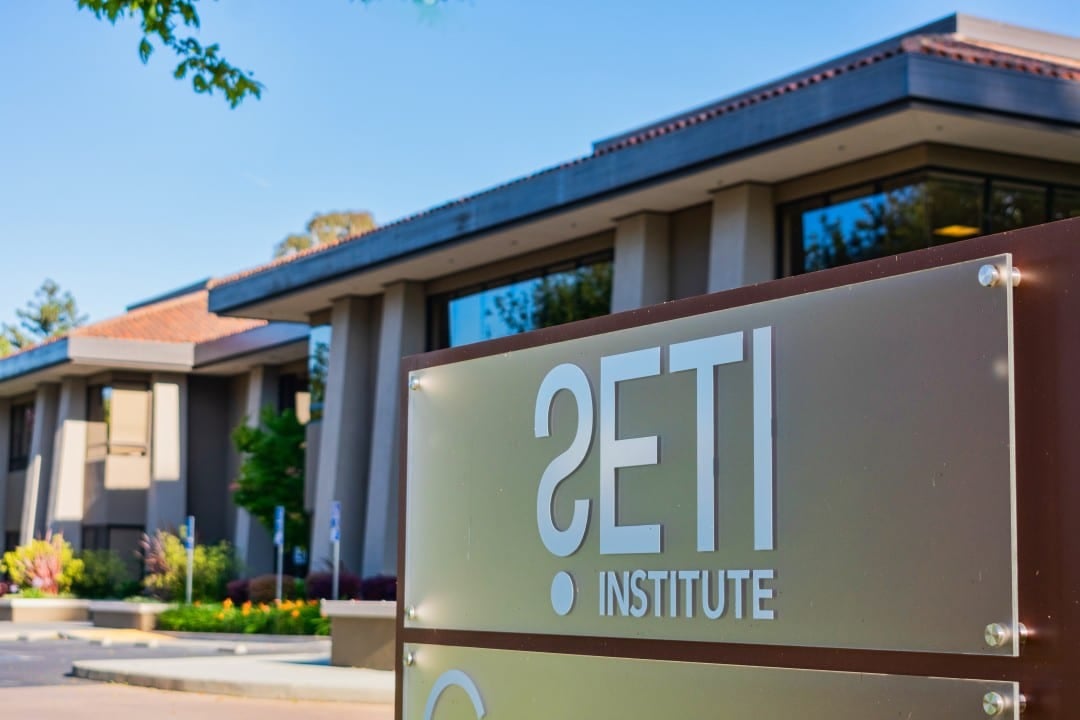
Researchers linked to Instituto SETI have identified a physical obstacle that compromises traditional strategies for searching for extraterrestrial intelligence in the universe. A detailed survey demonstrates that the space weather present around distant star systems has the ability to drastically alter ultra-narrowband radio signals. Essa interference happens long before the hypothetical transmissions are able to leave their home planetary systems toward Terra.
The distortion of the signals is caused directly by the turbulent plasma generated by stellar winds and intense coronal mass ejections. Esses astrophysical events are natural and constant dynamics, functioning in a very similar way to the solar storms that hit our own system. The study quantifies this scattering effect to propose a radical change in the way ground-based radio telescopes currently operate.
The scientific work, led by astronomer Vishal Gajjar in collaboration with Grayce C. Brown, uses a vast database of past space missions to support the findings. The analysis proves that artificial transmissions, which would originally come out of their source as sharp and concentrated peaks, end up spreading across different frequencies due to the turbulence of the interstellar medium.
Historical data from interplanetary probes validate the new astrophysical model
To understand the magnitude of space weather interference, the team of scientists turned to radio records sent by pioneering space missions, launched between 1964 and 1976. The analyzed collection includes vital information collected by the probes Mariner 4, Pioneer 6, Helios 1, Helios 2 and Viking. Esses historical equipment provided direct measurements of how electromagnetic waves behave when crossing the interplanetary medium of Sol, revealing that the spectral broadening of the signal occurs continuously and worsens considerably during periods of intense solar storms.
The most crucial observations came from the Helios series probes, which operated in orbits extremely close to the Sol and recorded plasma variations in real time. The data indicated a direct correlation: the closer a radio signal passes to the emitting star, the greater the rate of distortion suffered by the wave. Based on these empirical and direct measurements of our own cosmic backyard, researchers were able to build complex computational simulations, capable of predicting the behavior of transmissions in other stellar systems and in different radio frequency bands.
Red dwarfs represent the biggest obstacle to capturing messages
M-type stars, popularly known in the scientific community as red dwarfs, make up approximately 75% of the entire stellar population of Via Láctea.
These stars are characterized by being smaller and colder than Sol, but paradoxically they present much more violent and unpredictable magnetic and stellar activity.
This constant instability creates space environments where the broadening effect of the radio signal tends to be substantially more pronounced, making it difficult for clean waves to propagate.
Although the statistical probability of a coronal mass ejection coinciding exactly with the moment of a transmission is less than 3%, when this event occurs, signal distortion can multiply by more than a thousand times compared to normal conditions.
Higher radio frequencies emerge as a viable alternative
Given the scenario of constant interference, the survey recommends that astronomers start prioritizing the monitoring of higher radio frequencies.
In these upper bands of the electromagnetic spectrum, the destructive impact of stellar plasma and solar winds is significantly lower, preserving the integrity of the wave.
The adoption of this new guideline allows searches to consider with greater precision the real format of the signal that actually reaches radio telescopes at Terra after crossing the interstellar void.
Direct impact on detection algorithms and cosmic silence
The traditional algorithms used by Instituto SETI have been programmed over decades to focus exclusively on extremely narrow frequency peaks, based on the premise that such patterns are nearly impossible to produce by natural astrophysical processes. However, the new mathematical model proves that intentional artificial signals, even if generated with extreme precision by an advanced civilization, inevitably lose this narrowband characteristic when trying to escape the heliosphere of their home system. Embora This discovery does not offer a definitive resolution to the famous Paradoxo of
Simulations reveal the proportion of spectral broadening in the universe
Calculations carried out by the astronomy team indicate that signals emitted in the 100 megahertz range can undergo a broadening of up to 100 hertz even under space conditions considered typical and calm.
Projections also indicate that, in more than 60% of simulated planetary systems, the use of lower frequencies produces an even greater distortion that is more harmful to communication.
Most star systems cause changes in technosignals
The research details that around 70% of star systems cause a slight broadening in transmissions, while the remaining 30% cause a severe distortion that makes detection using current methods unfeasible.
Monitoring strategies require immediate technological updates
To overcome this barrier imposed by the nature of the cosmos, scientists suggest expanding the detection criteria of current scanning software.
The idea is to train systems to include and analyze slightly broader and more diffuse signals, which in previous configurations were automatically discarded as background noise.
The future of radio astronomy depends on adapting to natural phenomena
The work carried out by the researchers contributes decisively to refining the search for technosignals, adjusting theoretical expectations to the physical and turbulent reality of stellar environments. The understanding that the empty space between stars is not a passive vacuum, but rather a dynamic medium filled with plasma and radiation, forces the scientific community to rethink the foundations of interstellar communication. Next-generation radio telescopes will need to incorporate these space weather variables into their data processing filters to avoid false negatives.
Currently, researchers remain focused on collecting an even greater volume of data to test the mathematical model’s predictions in future observations. The expectation is that, with the continuous improvement of capturing instruments and the updating of artificial intelligence algorithms aimed at scanning the sky, it will be possible to isolate these extended signals from natural cosmic noise. Essa methodological adaptation represents a fundamental step to ensure that, if a real signal crosses Earth’s orbit, humanity has the correct tools to identify and decode it properly.



