
Collaborations on Mel Bibson’s ‘The Passion of the Christ’ reinforce redemptive vision of faith

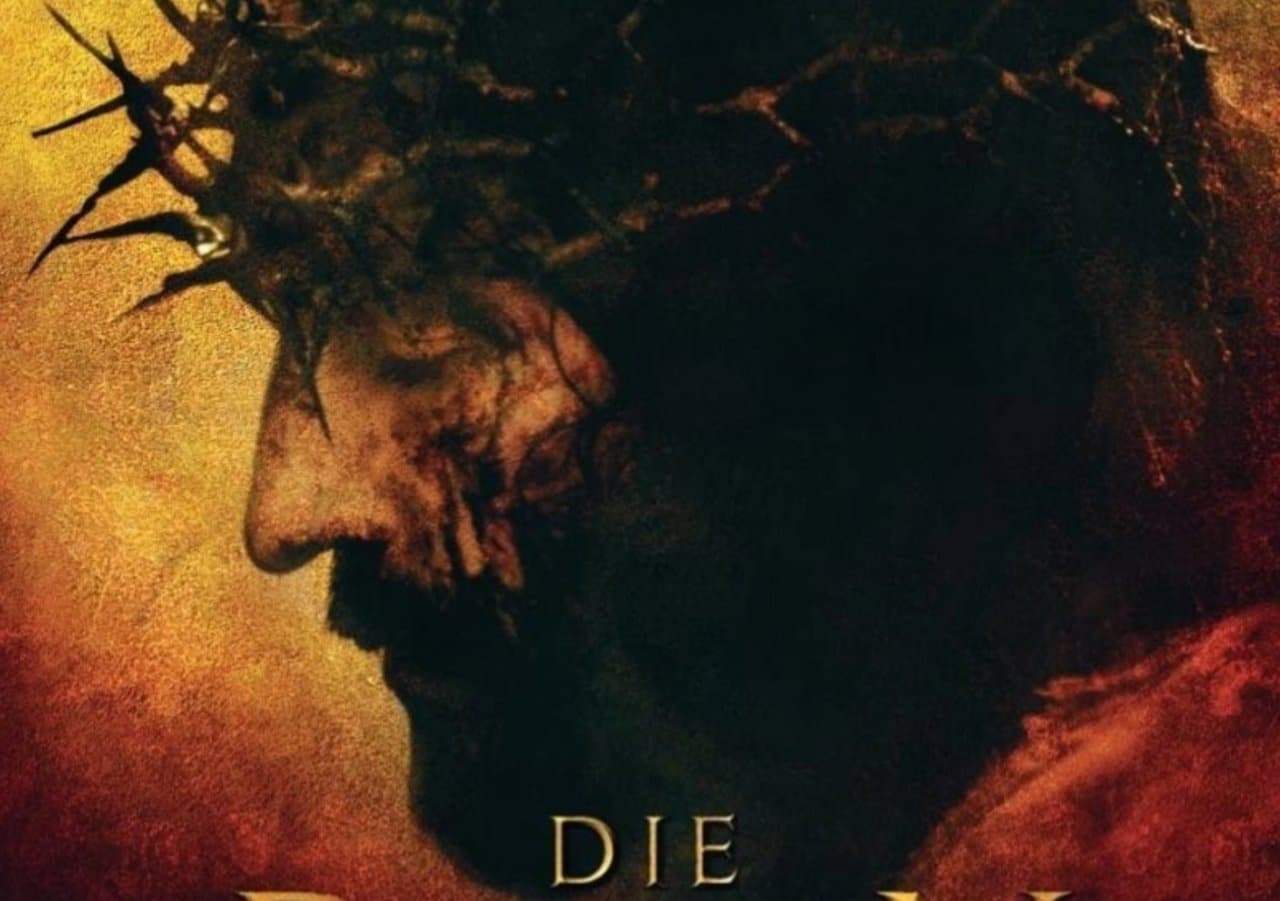
The film “The Paixão of Cristo”, directed by Lançada in 2004, the cinematographic work is notorious for its graphic and intense representation of the last moments of Cristo’s life, leading the public to reflect on faith, sacrifice and love.
The complexity of Christianity, a religion that transcends races and ethnicities, being embraced indiscriminately by different peoples, including Arabs, Latins, Anglo-Saxons, Indians and Hebrews, is a central point in understanding the film’s message. Este universalism emphasizes that the crucifixion is not attributable to a specific group, but rather, from the Christian perspective, to the sins of all humanity.
Mel Gibson, to symbolize this collective responsibility, included a dramatic personal scene in the film, where he himself holds the nail that pierced Cristo’s hand. Essa’s visual and visceral approach seeks to reinforce the idea that Jesus’s sacrifice is a direct consequence of human failings, inviting viewers to deep introspection into their own actions and faith.
Theological depth and representation of sacrifice
The film by Gibson provides an in-depth view of the purpose of Cristo’s death, interconnecting moments from Essa interconnection highlights that Jesus gave his life voluntarily, offering body and blood for the remission of humanity’s sins, as prophesied by Isaías. The biblical passage “He was pierced for our transgressions, He was crushed for our iniquities; by His stripes we are healed” serves as a robust theological foundation.
This representation challenges secularized interpretations that sometimes reduce the death of Pelo On the contrary, the film elevates the event to a confession of faith in the redemptive meaning of Paixão, highlighting the divine and sacrificial character of the act, essential for the Christian understanding of salvation.
The spiritual struggle and the role of Mary
Fully understanding the drama of Cristo is inseparable from the relentless temptation of Satanás, an aspect magnificently portrayed by Mel Gibson in the film. The devil uses every effort to divert Cristo from obedience to the will of Deus Pai, aware that the salvation of humanity is at stake in this spiritual conflict. Como the culmination of Catholic theology, the work interweaves the discreet but constant presence of Maria, presented as the guardian of the mystery of redemption. One of the most striking scenes is that of Maria collecting the blood spilled by his Filho during the flagellation on white cloths, an insurmountable representation of devotion and participation in suffering.
The intensity of the scenes and the historical veracity
It is understandable that some scenes in “The Paixão of Cristo”, in particular the flagellation and crucifixion, may be considered extremely graphic by the audience. However, when considering the existing historical records of brutal Roman torture methods, it is clear that the film maintains a line of veracity that avoids exaggeration.
It is noteworthy that only a portion of the injuries documented in Sudário of Turim, approximately 40%, were reproduced in the main actor’s makeup. A complete transposition would have resulted in an excessively brutal representation, which demonstrates careful consideration in the production. The intention of Esse love is eternally inscribed in spilled blood.
Reflections on faith and comparisons with other works
The production of Mel Gibson stands out even more when compared to other cinematographic works of its time. For example, the on-screen competition between Almodóvar and Gibson, with “Bad Educação” and “The Paixão of Enquanto the first delves into the depths of human depravity, often leading to a distancing from faith, the second also explores the extreme humiliation of the human condition, but with the purpose of redeeming and bearing sin, offering a message of hope.
Gibson’s film, therefore, is a true hymn to hope, reinforcing the belief that, if Deus trusts in humanity, human beings must also trust in each other and in divine providence. In an important reflection, Papa João Paulo II, in his book of interviews with Vittorio Messori in 1994, addressed Deus’s silence in the face of human suffering. Sua answer remains relevant: “If that agony on the cross had not existed, the truth that Deus is Amor would still need to be proven”, underlining the central role of Cristo’s sacrifice in the revelation of divine love.
The liturgical calendar and the culmination of Christ’s mission
The Igreja, with its ancient wisdom, established the liturgy of the Quaresma and the Páscoa to coincide with the end of winter and the beginning of spring. Essa synchrony with natural cycles allows nature itself to accompany the Christian in a process of death to sin, in carrying with Jesus Cristo his own cross until the Gólgota, and in the flowering of a new life through participation in the fruits of his glorious The rhythm of time and the alternation of seasons unite fraternally for the benefit of humanity, its happiness and its eternal destiny, integrating the spiritual experience into the cycle of life.
The Paixão of Jesus Cristo is the culmination and the most dramatically significant moment of the entire existence of Jesus of Toda the life of Nazareno, whether at its slow or accelerated pace, converges inexorably towards Getsêmani and Calvário. The Paixão, therefore, represents the culmination of a divine plan, a predestined mission, and its natural context encompasses the entire life and teachings of Jesus of Nazaré, from birth to the cross.
Historical context and uniqueness of the gospels
The events surrounding Paixão of Jesus of Nazaré are historically unique and unrepeatable. Eles took place in Jerusalém and its surroundings during the empire of Tibério, under the government of Pôncio Pilatos in Judeia, and with Caifás serving as high priest. Tais specific circumstances are unique in history and will never be repeated. Esses events form the Evangelho of Paixão, the Boa Nova of salvation, which has become a source of joy and consolation for sinful humanity throughout the centuries.
This Evangelho of Paixão was narrated by four evangelists in the canonical texts of Novo Testamento. Embora many episodes are common to all, each evangelist offers a unique perspective, and even in shared scenes, there are subtle differences in circumstantial details. Nenhum of the evangelists was present at all the events, nor did he seek to narrate them as an exhaustive journalistic chronicle, with the aim of satisfying curiosities or evoking mere human emotions.
They narrated with a heart steeped in faith, reporting what they saw and heard not as simple occurrences, but as a mysterious code in the language of Deus Pai and Redentor, intended for those who would be conquered by faith in Jesus Cristo. Evangelists are the messengers of Evangelho in and through events, empowered by the virtue and power of faith that discovers in them the salvation of Deus, incarnated in the person of the suffering and bleeding Nazareno.
The interpretation of faith and the power of the spirit
The evangelists, each with their uniqueness of plan, style and personality, recorded the most intense hours in the history of humanity: the most profound, passionate, tragic, tumultuous, magnificent, moving, unforgettable and heroic, essential to tear humanity from itself and transplant it to Deus. Eles have recognized that the mystery of the Paixão vastly transcends all human expression, and their narratives, although inspired by the
Mystery and the recreation of passion in the heart
The Evangelhos of Paixão, faced with such inhumanity inflicted on Jesus Cristo in a few hours, present sober and discreet writing. Eles uses few words, allowing Espírito Santo to resonate through the text. Inúmeras scenes follow one another quickly, as if the evangelists wished to avoid dwelling on any of them, approaching the events of the drama with the frankness of novices, dazzled by the light of Ressurreição. Estavam convinced, through faith in Ressuscitado, that a single drop of Redentor’s blood would have been enough to save the world. Não it is the wounds alone that provide salvation, but the supreme fidelity of Cristo, even in the face of wounds, to the plan of Pai, and the unconditional love to the sovereign and most holy Devemos confess that the deepest aspects of Paixão — divine suffering, adherence to the plan of salvation, infinite love for Pai — escape our full understanding, like water running through a basket. Parte of the message is retained, but most of it is lost in the immensity of the mystery. Can Quem truly penetrate Jesus’s soul during Paixão? Can Quem search your heart in those terrible hours? Can Quem adequately glimpse the heart of Pai and the attitude of Espírito Santo towards the sublime drama of Paixão? The Paixão of Jesus, composed of living events and real episodes, is both history and mystery — something unprecedented, supramental: the Paixão of The evangelists narrate it so that it reaches the depths of humanity, where mystery finds its nest, making the Paixão of




