
Barrel of oil reaches US$115 mark and generates global warning about inflation and fuels

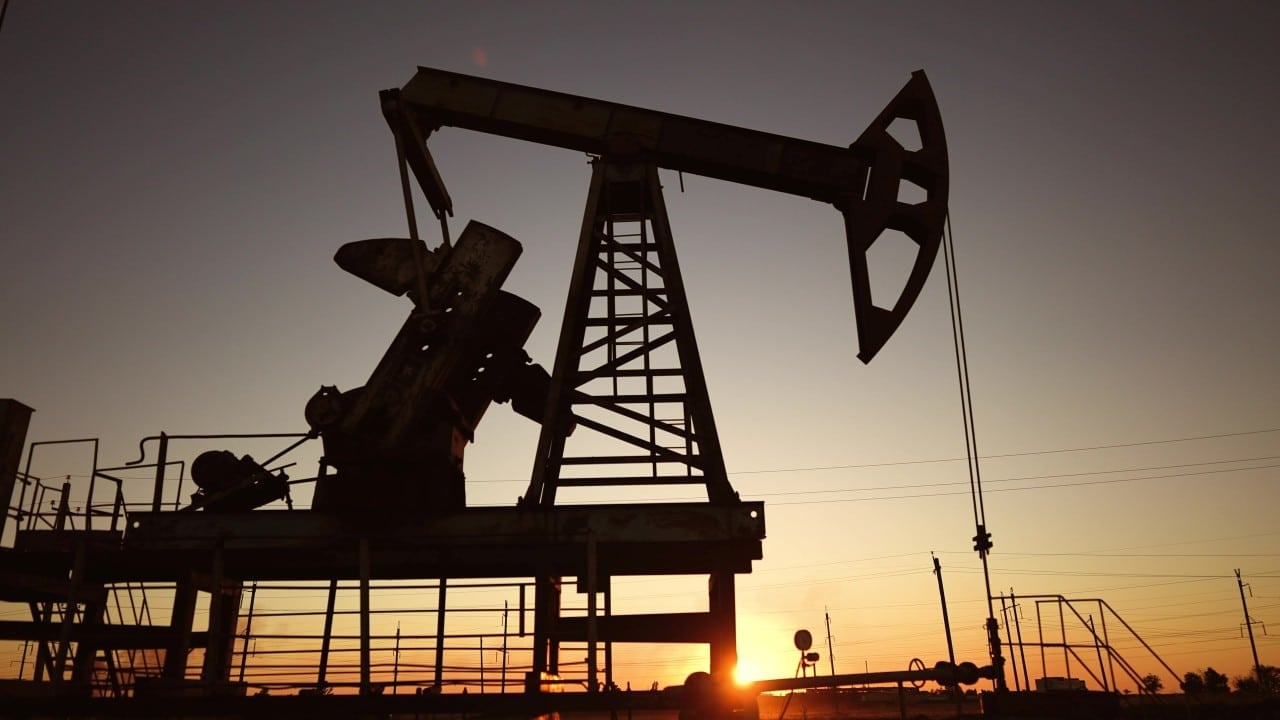
The international energy market registered a strong appreciation this Monday, boosting the value of a barrel to the US$ 115 range. The increase consolidates a monthly appreciation of 59%, representing the biggest percentage jump recorded since the 1990s. The upward movement directly reflects the geopolitical instability in the Oriente Médio, which acts as the main catalyst for the repricing of energy assets. Investidores global markets show concern about the possibility of supply disruptions, which affects everything from Asian stock markets to interest rate projections in developed economies.
Price dynamics and global indicators
The indicator Market behavior highlights the sensitivity of financial agents to territorial developments.
In the North American market, the West Texas Intermediate followed the upward trend. The index registered an increase of 1.68%, raising the price of a barrel to US$ 101.31, reflecting nervousness about trade routes and the security of international logistics operations.
Guarantee of supply in the domestic market
Agência Nacional of Petróleo issued an official statement to reassure the domestic market in the face of external volatility. The municipality assured that the supply of diesel in the national territory is fully guaranteed until the end of April.
The measure seeks to mitigate the immediate shock of the international boom on the local economy. The country has a strong dependence on diesel for cargo transportation, agricultural operations and the operation of several industrial sectors essential for supplying the population.
Despite the short-term guarantee provided by the regulatory agency, the global outlook continues to generate apprehension among economic agents. Rising energy costs directly affect the supply chain on a national and international scale.
Cascading effects on production chains
The appreciation of oil and natural gas transcends the fuel sector and affects other crucial inputs for the global industry. Produtos such as fertilizers, plastics and aluminum suffer immediate adjustments due to energy dependence in their production matrices.
The increase in the cost of these materials tends to spread across several production chains. Transportation and large-scale manufacturing costs are passed on progressively, from raw material extraction to final distribution to the consumer on retail shelves.
Market analysts project imminent increases in essential items, including food and medicine. The petrochemical sector is also expected to pass on the increase in operating costs to derivative products, putting further pressure on consumer price indices.
Aluminum reached the highest price level in the last four years after reports of air attacks on producers in the Oriente Médio. The episode illustrates how quickly regional instability contaminates global commodity markets and alters supply dynamics.
Reactions from international stock exchanges
Global financial markets responded with significant volatility to geopolitical instability and rising energy costs. Asian stock markets, historically more susceptible to fluctuations in oil exported by Golfo Pérsico countries, registered widespread falls. The Nikkei index, on the Tóquio stock exchange, closed the session with a decline of 2.8%, reflecting the deep concern of investors in the region with the inflationary shock on their economies, which are highly dependent on the import of fossil fuels to maintain industrial and commercial activity.
On the European continent, markets demonstrated a partial recovery throughout the day, with the main stock indices advancing around 0.6% after steeper initial losses. The movement suggests an attempt to absorb the external shock and seek operational stability. Nos Estados Unidos, futures contracts signaled a moderately higher opening, after a sequence of recent declines, indicating cautious hope for stabilization and resilience in specific sectors of the North American economy in the face of the adverse scenario.
Logistical bottlenecks and maritime tensions
The attention of global governments and investors remains focused on the Estreito of Ormuz, a vital maritime route for global energy trade. Aproximadamente one-fifth of all oil and liquefied natural gas transported on the planet transits through this passage, which consolidates it as a strategic bottleneck of immense economic and geopolitical importance. Qualquer significant interruption in vessel traffic through this crossing would generate severe and immediate consequences for global supply. The president of the Estados Unidos, Donald Trump, intensified pressure on the Irã through statements, demanding that the strait be kept open. The stance raises the level of tension in the region, increasing the risk of military escalation. Paralelamente, the Paquistão announced its intention to host negotiations to try to mediate the conflict, while the Iranian government accused the Estados Unidos of preparing a ground offensive, reinforcing its military presence in the area and increasing the complexity of the diplomatic scenario.
Expert projections for the sector
JPMorgan bank’s global chief economist, Bruce Kasman, warned that a prolonged closure of the strait could push the barrel towards the US$150 range. Expert
Monetary policy and financial control
The spike in oil prices intensifies concerns about global inflation, a factor that haunts the world’s main economies. The complex scenario leads investors and public policymakers to anticipate that interest rates may be maintained at high levels for a longer period than initially expected. Central Bancos, including Federal Reserve in the Estados Unidos, face the delicate challenge of balancing inflationary control with the need to maintain economic growth, avoiding a recession induced by excessive monetary tightening.
The president of Federal Reserve, Jerome Powell, has an agenda of statements where he must address the current economic scenario and the institution’s guidelines. Throughout the week, the release of crucial data on retail sales, manufacturing activity and job creation in the Estados Unidos will provide new insights into the strength of the American economy. Turbulence in markets often strengthens the dollar, which is perceived as a safety asset in times of uncertainty. The US currency index operates close to a ten-month high, although at Japão, warnings from authorities about possible exchange rate interventions forced a specific retreat.
Historical context and asset repricing
Comparison with the 1990s brings back memories of oil shocks that redefined global energy policies. Naquela time, the rapid rise in prices forced governments to seek efficiency alternatives and diversification of energy generation matrices.
Currently, the financial market reacts with more sophisticated tools, but the physical dependence on the commodity remains unchanged. The rapid repricing of futures contracts demonstrates that geopolitical risk has once again become the main component in the formation of international prices.
Investment fund managers are recalibrating their portfolios to accommodate the new operating cost landscape. The search for protection against inflation has directed capital to real assets and consolidated companies in the commodity extraction sector.
Effects on agribusiness and food security
The global agricultural sector is closely watching the movement of petroleum products, especially nitrogen fertilizers. The rise in natural gas, the basic input for the production of these pesticides, threatens to make planning for next year’s harvest more expensive in several producing countries.
Food safety becomes an immediate secondary concern when logistics costs skyrocket. The transport of grains and perishables, highly dependent on diesel oil, is already beginning to reflect the transfer of tariffs on the main road and sea transport routes.




