
Behind the scenes of the creation of God of War on PlayStation 2 reveals exhausting workdays

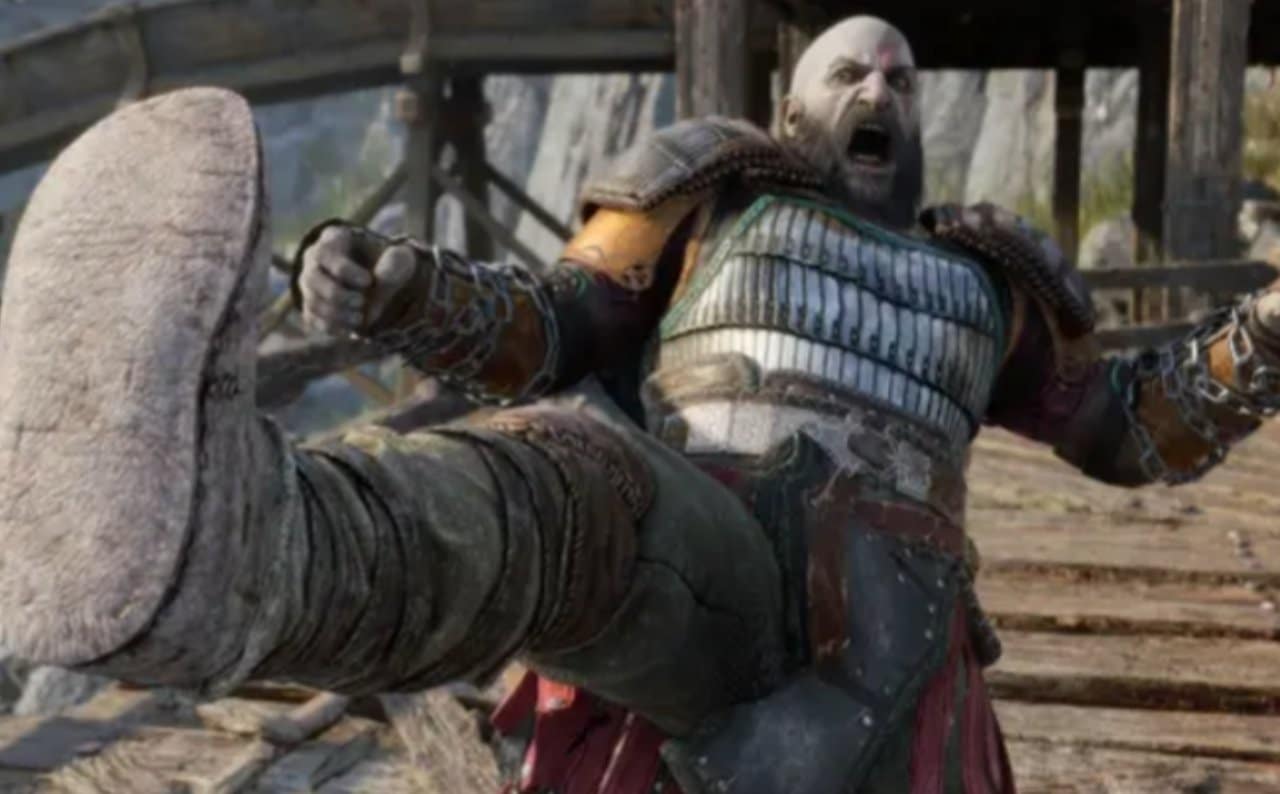
The launch of the first title in the franchise starring the Spartan Kratos, which took place in 2005, represented a technical and narrative milestone for the sixth generation of consoles. The Santa Monica Studio team operated under the direction of David Jaffe to realize an ambitious vision that blended visceral combat with the epic scale of Greek mythology. The commercial and critical result established a new quality standard for digital entertainment at the time.
Behind the fluid movements and the grandeur of the virtual scenarios, the production required an extreme level of dedication from all professionals involved. The need to extract maximum power from available hardware forced engineers, artists and programmers to go beyond the conventional limits of a corporate routine. The production cycle lasted for years, characterized by constant pressure for innovation and technical polish.
In the original God of War game, Kratos ended up pale because of a simple mistake.
Early concept artist Charlie Wen drew him on plain white paper before adding skin color.
Director David Jaffe saw the unfinished drawing and said it looked “really cool.”pic.twitter.com/IH4m8hfKdr
— Pirat_Nation 🔴 (@Pirat_Nation)March 30, 2026
The search for visual and mechanical excellence has resulted in a work environment where overtime is no longer an exception but has become the daily rule. Profissionais in the technology field often report that the construction of large-budget projects carries a high human cost. The original design of Kratos has become one of the most notorious examples of how the pursuit of technical perfection can generate an environment of severe exhaustion.
Limitations of hardware and software engineering
The PlayStation 2 architecture, launched in the early 2000s, had severe memory and processing restrictions when compared to the management team’s ambitions. Para To circumvent these barriers, Santa Monica Studio engineers had to program a graphics engine practically from scratch. The goal was to render vast environments and highly detailed character models without the need for constant loading screens, something rare by the standards of that period. Creating this proprietary technology required months of stress testing and fundamental code rewriting.
Software optimization became a daily obsession to ensure the frame rate remained stable during the most chaotic action sequences. Quando multiple enemies appeared simultaneously on the screen, the console’s processor reached its maximum capacity. The programming team spent entire nights adjusting memory allocation and compressing visual textures. Cada megabyte saved allowed the addition of a new lighting effect or an extra animation for the protagonist’s attacks, requiring relentless mathematical precision.
Work routine and the culture of burnout
The phenomenon known in the technology industry as “crunch” defines prolonged periods of intense work, generally applied in the final phases of a project. Durante the conception of the Spartan adventure, this phase was not limited to a few weeks, but extended for months on end. The pressure to meet the release deadlines set by the publisher forced the team to adopt an unsustainable pace.
Behind-the-scenes reports indicate that 12- to 16-hour days became the standard within the studio. Work routinely progressed over weekends, eliminating the separation between developers’ professional and personal lives. The office structure often served as a makeshift dormitory for programmers and artists who did not have time to return home between production shifts.
Physical and mental exhaustion, clinically recognized as burnout, affected a large part of the core team. Sleep deprivation and high stress have resulted in documented health problems among employees. The extreme dedication took a heavy toll, generating family distance and profound psychological stress on professionals who were trying to deliver the best possible version of the software.
In that decade, the digital entertainment market often romanticized this absolute dedication, associating physical suffering with true passion for the craft. The internal culture of many global studios validated personal sacrifice as a necessary rite of passage for creating a masterpiece. Esse institutionalized behavior masked failures in time management and project scope.
Visual design and Greek mythology
The art direction established strict guidelines to differentiate the title from other action games available on the market. The protagonist’s design, with his gray skin covered in his family’s ashes and iconic red tattoo, was meant to instantly convey fury and tragedy. The team of artists studied Grécia Antiga’s iconography in depth, subverting classical elements to create a dark, violent and visually oppressive atmosphere.
The scale of the antagonists is designed to make the player feel dwarfed by divine power. The famous opening battle against the Hidra required the simultaneous collaboration of animators, sound designers, and camera programmers to function properly. The colossal creature occupied a large part of the screen and dynamically interacted with the scenery, a technical feat that consumed a significant portion of the total development time.
The narrative followed the visual density, exploring themes of revenge, divine manipulation and irreparable guilt. The Spartan warrior’s journey was structured with dramatic arcs that gave weight to each act of violence committed by the player. The integration between the story told and the game mechanics elevated the product to a prestigious level, proving that the digital medium could accommodate mature and complex scripts.
Combat mechanics and fluidity
The combat system was the central core of the experience and required the majority of the gameplay design team’s attention. As Lâminas of Caos, weapons attached to the protagonist’s arms by chains, needed to convey a feeling of weight, reach and lethality. To achieve the desired fluidity, the programmers created an animation cancellation system that allowed the player to mix light and heavy attacks without sudden interruptions. Cada hit had an accurate animation frame count, and hitboxes were fine-tuned to ensure combat was fair and responsive. The physics of the chains rotating around the character required complex real-time calculations to prevent the polygons from crossing the stage unintentionally. Esse level of mechanical polish required thousands of hours of quality control testing, with developers repeating the same fight sequences exhaustively to identify and correct any faulty responses in the controls.
Changes to global studio guidelines
The exposure of extreme working conditions in high-budget productions generated profound debates about the sustainability of the technology sector. Awareness about human limits forced large corporations to review their internal people management policies. The adoption of more realistic schedules has become a requirement of unions and worker associations in the digital area.
Modern management practices seek to mitigate burnout through preventative measures. Entre The tactics currently adopted are: – Modular task planning to avoid bottlenecks in the final stretch; – Outsourcing of secondary visual assets to support studios; – The implementation of strict limits for the approval of overtime. The preservation of the physical integrity of teams began to be treated as a risk factor for investors.
Commercial success and franchise consolidation
The title’s arrival on shelves in March 2005 was met with unanimous acclaim from specialized critics and massive sales around the world. The final product won the industry’s main awards, justifying, from a corporate point of view, the financial investment and time spent. The intellectual property quickly became one of the pillars of support for the PlayStation brand, generating direct sequels and expansions of the narrative universe.
Evolution of creation tools
The original team’s monumental effort left a technical legacy that facilitated the work of subsequent generations of programmers. The pressure-built graphics engine served as the architectural foundation for the sequel released two years later, allowing the studio to focus more on content than basic engineering. The foundation established in the first game proved to be robust enough to support significant visual improvements without breaking the core programming logic.
Today, software creation tools offer more user-friendly interfaces and automated processes that reduce manual workload. Motores Modern commercial graphics handle physics and lighting natively, saving engineers from rewriting basic systems. The story of 2005’s production remains a historical record of an era where brute force compensated for the technological limitations of available hardware.



