
Full Pink Moon of April 2026 peaks on April 1 with sunset view

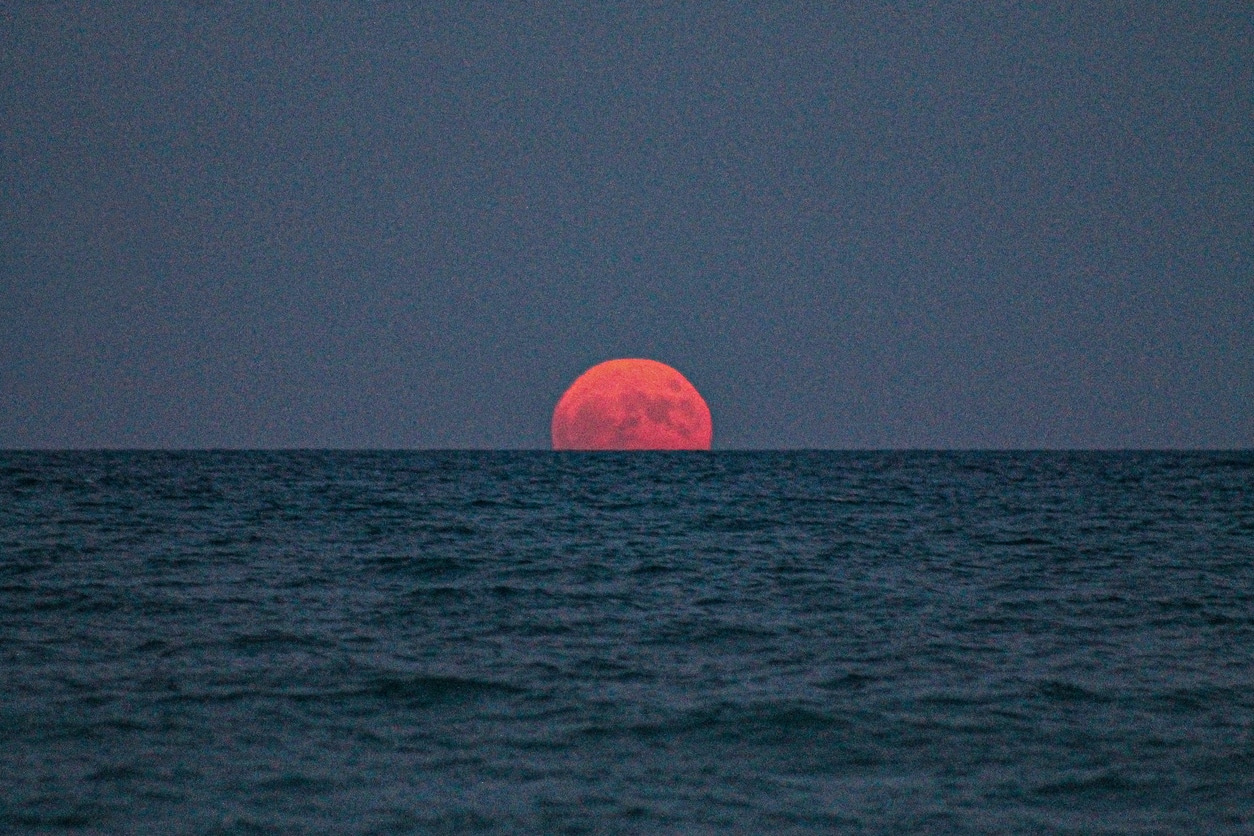
The Lua Cheia Rosa of April 2026 reaches its full phase on Wednesday, April 1st, at 10:12 pm approximately Costa Leste of the Estados Unidos. Essa is the fourth of 13 full moons predicted for the year and is named after the pink wildflowers of the genus Phlox that bloom in spring on América of Norte. The phenomenon offers good visibility when it rises on the eastern horizon at dusk, when the contrast with the still clear sky creates a natural spectacle.
Observers in different regions can follow the event with moonrise close to sunset. On the North American west coast, the alignment between the exact moment of fullness, sunset and moonrise occurs synchronously. The moon also appears practically full on nearby days, allowing observation in wide time windows.
- Elevated or open locations facing east favor unobstructed views.
- Moonrise apps or calculators help you set the exact time by city.
- Clear skies increase the chances of enjoying the satellite’s natural glow.
Best time to watch the full moon rise
The full moonrise is highlighted when it appears shortly after sunset, especially during the so-called blue hour. On Wednesday, April 1, this effect is repeated in several locations on América and Norte, with the moon rising over the eastern horizon while the sun still sets in the west. Full lighting provides striking contrast against the gradually darkening sky.
On Nova Iorque, sunset occurs around 7:20 pm local time and moonrise around 7:15 pm. Em Los Angeles, both events align close to 7:13 pm Pacífico time, creating rare synchrony. Especialistas recommend choosing points with a clear view to capture the lunar disk emerging on the horizon.
The moon also maintains a high brightness the following night, when it approaches a bright star. Essa configuration allows observers to identify the satellite even in urban areas with some moderate light pollution.
Connection of the pink moon with the date of Easter
April’s Lua Rosa is also known as Lua Pascal in reference to Western Christian tradition. The Domingo of Páscoa is defined as the first Sunday after the first full moon that occurs after the spring equinox. The equinox took place on March 20, 2026, and the April full moon determines the calculation for the religious celebration.
This year, Domingo of Páscoa falls on April 5th. The full moon acts as a fixed astronomical reference within the moving calendar of Páscoa. Diferentes churches follow variations in the calculation, but Western tradition uses this April moon as the main landmark.
The name Pascal refers directly to the Latin term for Páscoa and reinforces the historical link between lunar observation and religious calendars.
Proximity to star Spica the next day
On April 2, the full moon passes less than two degrees from the star Spica, the 16th brightest in the night sky. Spica belongs to the constellation Virgem and can be located using simple star observation techniques. The approach offers additional opportunities for those following the sky after lunar fullness.
To find Spica, observers in the northern hemisphere can use Ursa Maior as a starting reference. The pattern of stars known as the “cape” of the constellation points to Arcturus and then to Spica. The moon acts as a visual guide during the process, especially when the sky gets dark enough.
Binoculars make it easy to see the star next to the moon, even in average visibility conditions. The small angular separation allows both objects to appear in the same field of view.
Practical tips for observing the pink moon
Choose an elevated location, such as a hill or east-facing beach, to avoid obstructions on the horizon. A full moonrise appears most impressive when the lunar disk appears larger due to the optical illusion effect on the horizon. Evite areas with strong artificial lighting to preserve natural contrast.
Check local moonrise times using online tools or specialized apps. The moon remains visible and bright throughout the night, but the initial moment of emergence offers the most favorable contrast with the twilight sky.
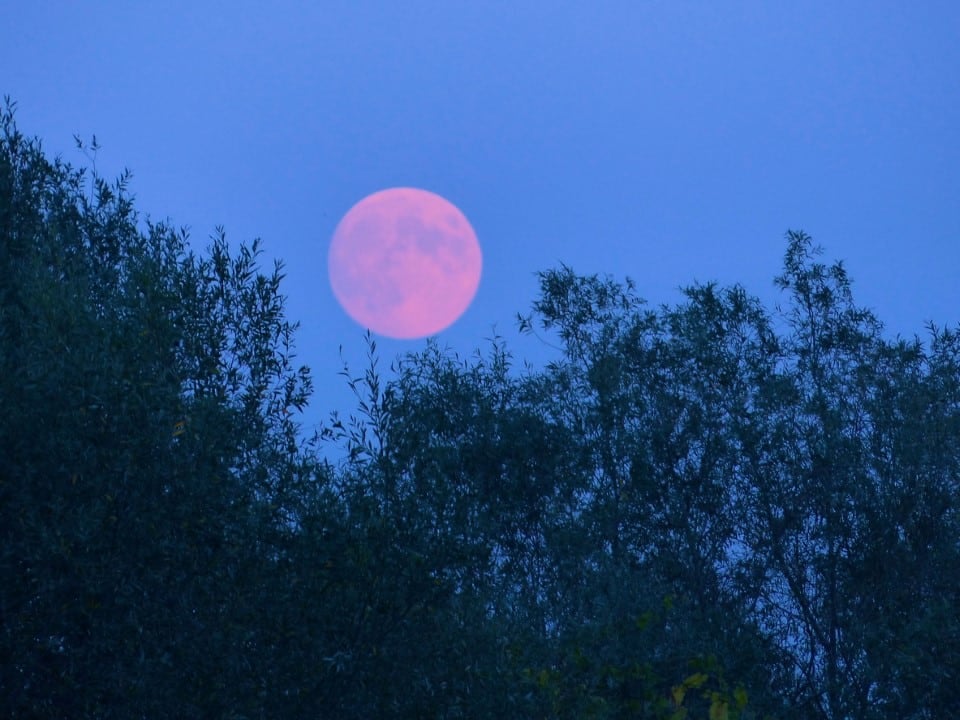
Lua Rosa does not have a real pink color most of the time. The name derives exclusively from the association with spring flowers and not from any change in the appearance of the satellite. In specific atmospheric conditions, such as dust or humidity, the moon can acquire reddish or yellowish tones near the horizon.
Other full moons scheduled for 2026
The year 2026 records 13 full moons, a number higher than the annual average due to the lunar cycle. Lua Rosa represents the fourth of the year and precedes Lua of Flores in May, which has a second full moon in the same month, known as Lua Azul. Superluas are scheduled for November and December, with the latter occurring on the eve of Natal.
The sequence of lunar events also includes a total lunar eclipse recorded in March. Cada full moon receives traditional names that reflect seasons or natural phenomena observed by different cultures. Lua Rosa stands out for its connection with spring flowering in América of Norte.
Observers can follow the rest of the lunar calendar to plan new sky-gazing sessions.
The Lua Cheia of April 2026 offers an accessible opportunity for anyone interested in astronomical phenomena. The combination of fullness, alignment with the sunset and proximity to Spica enriches the visual experience without the need for complex equipment. Locais open and times consulted in advance maximize the chances of good viewing in different time zones.



