Moon Phase today: Gibbous crescent moon illuminates 92% this Monday, March 30
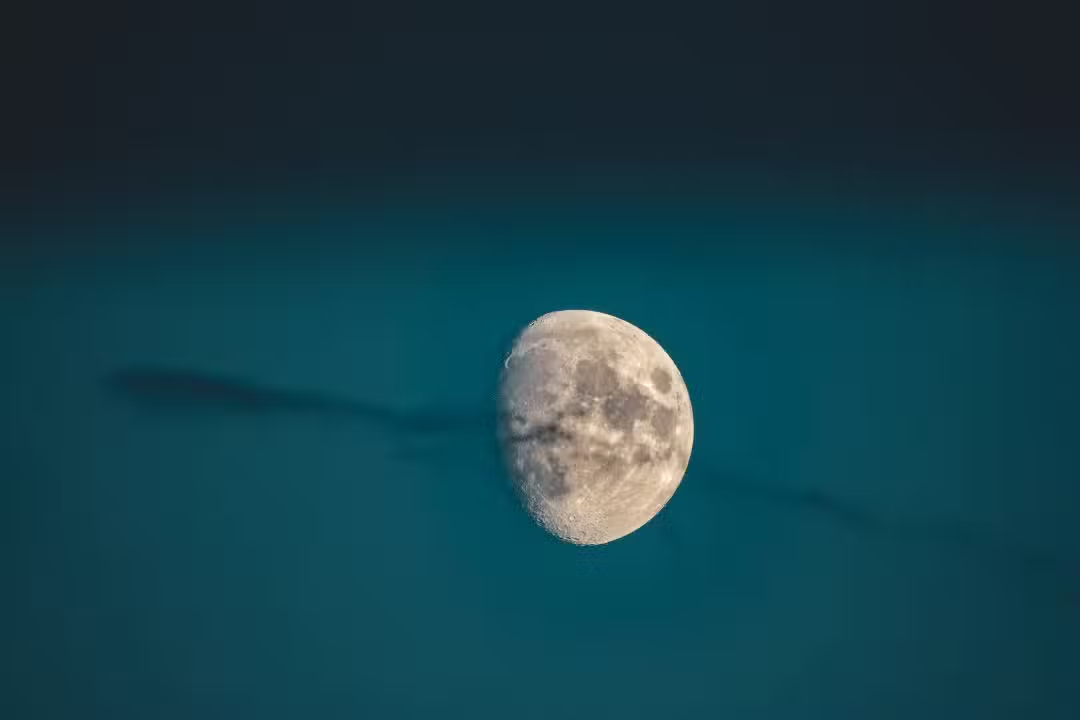
The moon approaches the full phase this Monday, March 30, 2026. The current phase is a gibbous crescent, with around 92% of the lunar surface illuminated by the sun. Observadores in the northern hemisphere can identify striking details even with the naked eye.
This configuration allows most of the lunar disk to be visible at night. The illumination has been gradually increasing since the waxing quarter occurred on March 25th. The lunar cycle follows its natural pattern of approximately 29.5 days.
Details visible to the naked eye and with equipment
The gibbous crescent moon offers a good observation opportunity this Monday. Crateras as Tycho and Kepler stand out clearly without the need for instruments. Mare Serenitatis also appears easily to those who follow the night sky.
Using binoculars, it is possible to identify Mare Frigoris, the crater of Arquimedes and Mare Nectaris. Essas formations gain relief as sunlight falls at favorable angles. Telescópios reveals even more structures, including the Terras Altas of Descartes, the Schiller crater and the Linne crater.
Amateur astronomers report that visibility improves in places with less light pollution. The moon remains high in the sky for much of the night, making it easy to follow.
Lunar cycle and next transition
The moon completes one orbit around the earth in about 29.5 days. Durante this period goes through eight distinct phases that result from the relative position between the sun, earth and moon. The gibbous crescent represents the stage in which more than half of the surface is illuminated, but has not yet reached its maximum point.
The next full moon is scheduled for April 1st. Nessa date, the lunar disk will be fully illuminated when viewed from Earth. The transition occurs continuously, with lighting increasing day by day.

Main phases of the lunar cycle
The cycle begins with the new moon, when the side facing the earth becomes dark because the moon is positioned between the earth and the sun. Then the thin crescent appears, with a small arc of light on the right side in the northern hemisphere.


The first quarter phase shows half of the moon illuminated on the right side. Depois comes the growing gibbous, with more than half lit. The full moon represents the moment of total illumination of the visible face.
Observation and current conditions
The current phase allows geological details of the lunar surface to become more evident. Illumination at 92% creates elongated shadows that highlight reliefs such as craters and lunar seas. Essa condition remains favorable until the arrival of the full moon.
Those planning to observe should choose times after sunset, when the moon has already risen above the eastern horizon. The absence of a recent new moon ensures that the night sky is not completely dark, but still allows good visibility of lunar details.
Tips for better viewing
The crescent gibbous is positioned so that the right side appears brighter in the northern hemisphere. Essa guidance helps in quickly identifying key formations. Observadores with basic equipment can already record interesting images.
The distance between Earth and Moon varies throughout the cycle, slightly influencing the apparent size of the disk. Nesta phase, the combination of lighting and position favors productive observing sessions for astronomy enthusiasts.
Next days in heaven
After March 30, the moon’s illumination continues to increase until it reaches 100% at the April 1 full moon. The period between gibbous and high water tends to be one of the most appreciated by those who regularly follow the sky.
The sequence of phases follows the established pattern, with the waning gibbous appearing after the flood. Cada stage has specific visibility and lighting angle characteristics.
Veja Tambem em News (EN)

Research reveals that parents are unaware of how their children use artificial intelligence

Samsung releases new system update with new features for Galaxy Watch 4 users

Digital retail reduces the value of the Galaxy S25 5G smartphone with bank bonuses and device exchange

Amazon’s wireless CarPlay adapter has a 50% discount and high approval ratings from drivers

Zach Cregger’s new Resident Evil ignores games and focuses on an unprecedented story with new characters

Rumor suggests that Nintendo is preparing a special edition of the Switch 2 with a remake of Ocarina of Time

Apple accelerates production of the iPhone 17e and develops new Air model with dual camera system

Epic Games platform releases twelve high-budget games at no permanent cost for PC users

PlayStation 5 Pro price drop accelerates digital retail sales and eliminates global stocks

New Galaxy Watch 9 firmware appears on server and confirms progress in software development

Apple’s commemorative project tests cell phone with 1.1 millimeter edge and curved screen for 2027