
NASA prepares launch of the Artemis II mission with four astronauts heading to the Moon

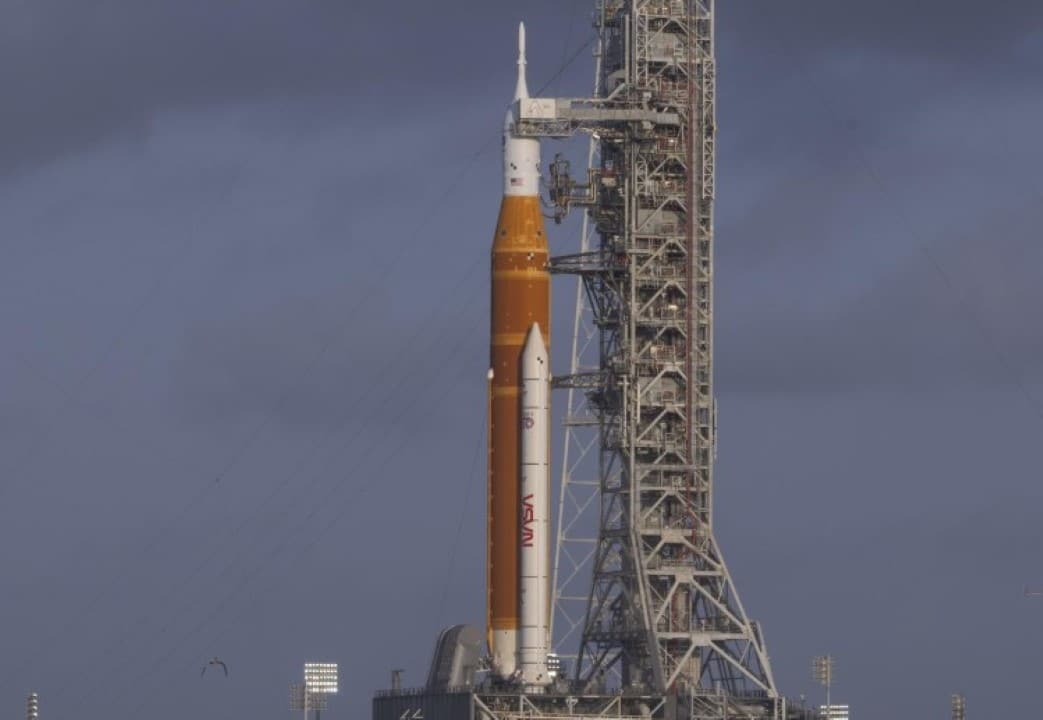
Nasa has the launch of the Artemis II mission scheduled for April 1st from Centro Espacial Kennedy, on Flórida. Quatro astronauts will travel aboard the Orion capsule attached to the SLS rocket to carry out the first manned flight of the Artemis program. The approximately ten-day journey will see the crew fly over the far side of Lua on a trajectory that will set a new distance record in deep space.
Astronauts Reid Wiseman, as commander, Victor Glover as pilot, Christina Koch and Jeremy Hansen, from Agência Espacial Canadense, as mission specialists, will form the team. Eles will complete two orbits around Terra before heading to Lua. The Orion capsule will perform a figure-of-eight pattern during lunar orbit and return to Terra after systems checks in the deep space environment.
- The mission will test Orion systems in real-world conditions beyond Terra’s low orbit.
- Crew members will face challenges such as radiation and delayed communication.
- The trajectory will allow unique observations of the entire lunar disk.
Planned trajectory details
The spacecraft will leave Centro Espacial Kennedy powered by the Space Launch System rocket. Após the initial orbits of Terra, it will head towards the encounter with Lua. At its closest approach, astronauts will see the natural satellite similar in size to a basketball held at arm’s length.
This altitude varies between approximately 4,800 and 14,500 kilometers from the lunar surface. The configuration allows the crew to observe regions close to the north and south poles, areas less visually explored in previous missions. The eight-shaped trajectory guarantees safe return without the need for insertion into lunar orbit.
Engineers adjusted the plan to maximize data collection on the capsule’s performance. Problemas recent technicians with helium flow and leaks were resolved before the rocket rolled to launch pad 39B. Nasa confirmed launch windows between April 1st and 6th, with an additional possibility on the 30th.
Introducing the Moon Mascot for the Artemis II mission!
— NASA (@NASA)March 27, 2026
The zero gravity indicator for the Moonbound crew was selected from thousands of submissions from over 50 countries and is named “Rise.” The design was inspired by the iconic Earthrise moment from the Apollo 8 mission.pic.twitter.com/5g2B0I6BDn
Preparations and final checks
The crew entered quarantine on Houston to preserve their health before takeoff. Técnicos carried out general tests with fluids and flight readiness analyses. The SLS rocket and Orion were transported to the platform after delays caused by weather conditions and technical adjustments.
Experts highlight that the mission represents the most demanding test of Orion in deep space. Sistemas radiation protection and communications receive special attention due to the greater distance from Terra. The capsule must demonstrate capability for future lunar landing missions.
Technical aspects of the mission
The flight will surpass the distance record set by the Apollo 13 in 1970. The astronauts will travel beyond 400,000 kilometers from the Terra at a certain point in the trajectory. Essa mark confirms technological advancement since the last manned missions to Lua in the 1970s.
Observation of the far side of Lua will take place at a higher altitude than the Apollo missions. The crew will record images and data that will help plan future explorations. The Nasa uses the mission to validate all components before proceeding with landing objectives.
Deep space challenges
The greater distance from Terra imposes conditions different from those found in low orbits. Comunicação with delay and exposure to radiation require robust systems in Orion. The crew will monitor equipment operation throughout the journey.
The figure-eight pattern allows the spacecraft to use lunar gravity to adjust the return route. Essa maneuver reduces propellant consumption and increases the safety of re-entry into the Earth’s atmosphere. Engenheiros simulate scenarios to ensure adequate responses to any eventuality.
Unique astronaut observations
The four crew members will have an unprecedented perspective of the natural satellite. Eles will view the entire lunar disk, including poles, at a different angle than previous missions. The relative proximity at the point of closest approach will facilitate detailed captures.
The Artemis II mission sets the stage for the next steps of the program. Dados collected will influence the development of technologies for lunar habitation and longer travel. The Nasa maintains focus on the precise execution of each phase of the trajectory.
Importance for program Artemis
This will be the first time that humans have traveled beyond the low orbit of Terra since 1972. The crewed flight validates the integration between the SLS rocket and the Orion capsule. Sucesso in the mission paves the way for Artemis III, which involves landing on the lunar surface.
The international collaboration appears in the presence of Jeremy Hansen, from Agência Espacial Canadense. The diverse crew represents progress in the inclusion of different profiles in space exploration. Todos members have previous experience in orbital flights.
Nasa continues monitoring conditions on the launch pad. Qualquer adjustment to the date within the available windows will be officially communicated. The focus remains on crew safety and meeting technical objectives.



