
Relatives of Cesium-137 victims in Goiânia criticize streaming for altering real facts

Associação of Vítimas of Césio-137 expressed formal opposition to the launch of a new audiovisual work that portrays the radiological accident that occurred in the capital of The group’s representatives point out that the company responsible for transmitting the content modified historical records with the aim of increasing the commercial appeal of the production.
The central question involves the transformation of a public health event into an entertainment product, without the necessary technical compliance. Survivors argue that the dramatization of the facts disrespects the experience of people who suffered direct exposure to radioactive material in September 1987.
Entities linked to the defense of human rights endorsed the criticism and requested a public position from the producers. The main concern of these organizations is the impact that the dissemination of inaccurate data can have on new generations’ understanding of the seriousness of the handling of nuclear materials.
Main objections to the narrative presented
The leaders representing the victims of radio accidents prepared a document detailing the flaws in the characterization of the events and the construction of the characters. The material points out that the scriptwriters chose to create narrative arcs focused on interpersonal conflicts, distancing themselves from the official reports issued by the competent authorities at the time of the accident.
One of the biggest points of disagreement is the lack of dialogue with victims during the research and pre-production phases. Members of the association report that no eyewitnesses were consulted to validate the information included in the script, which resulted in a representation considered superficial and harmful.
Activists warn of the risk of consolidating a collective memory based on fictional elements. The overlapping of the dramatized version with scientific inquiries and studies can misinform the global public about the institutional responsibilities and oversight failures that allowed the irregular disposal of the equipment.
Family reactions and social stigma
The representation of the individuals directly involved in opening the capsule generated outrage among family members. Odesson Alves Ferreira, activist and brother of Devair Alves Ferreira, owner of the recycling establishment where the machine was dismantled, states that the documentary records already contain enough elements to construct a factual narrative, without the need for dramatic exaggerations. Ele points out that the creation of antagonistic profiles to justify the script’s choices acts as an additional penalty for survivors, who faced isolation and severe prejudice in the decades following contact with the radioactive isotope.
The approach adopted by the production shapes a perception that tends to blame ordinary citizens, neglecting the complexity of the social vulnerability scenario and the lack of information at the time. The activist reinforces that the lack of commitment to primary sources constitutes an error in the historiography of the event in Goiás. Local associations demand that future audiovisual initiatives establish mandatory partnerships with researchers and historians, ensuring that factual accuracy prevails over the purely commercial interests of the entertainment industry.
Lack of prior consultation and institutional silence
The lack of communication during the series’ development stages constitutes the main complaint formalized by the survivors’ representative entity. Marcelo Santos Neves, president of the association, publicly confirmed that no member of the group was approached to act as a script consultant or to collect real statements.
The distance between the creators of the work and the people affected resulted in the material being criticized by local experts. The exclusion of the voices of those who experienced the acute effects of radiation deprives the production of an authentic perspective on the period of isolation in Estádio Olímpico of Goiânia.
The streaming platform responsible for the global distribution of content did not issue official statements in response to criticism from the Goiás community. Institutional silence reinforces the dissatisfaction of family members, who interpret the stance as a refusal to establish a transparent dialogue channel.
The prioritization of the launch schedule to the detriment of social responsibility demonstrates, according to activists, an ethical failure on the part of the company. The local public claims moral ownership over their own history and demands reparation measures in relation to the image of those involved.
The history of the radiological accident
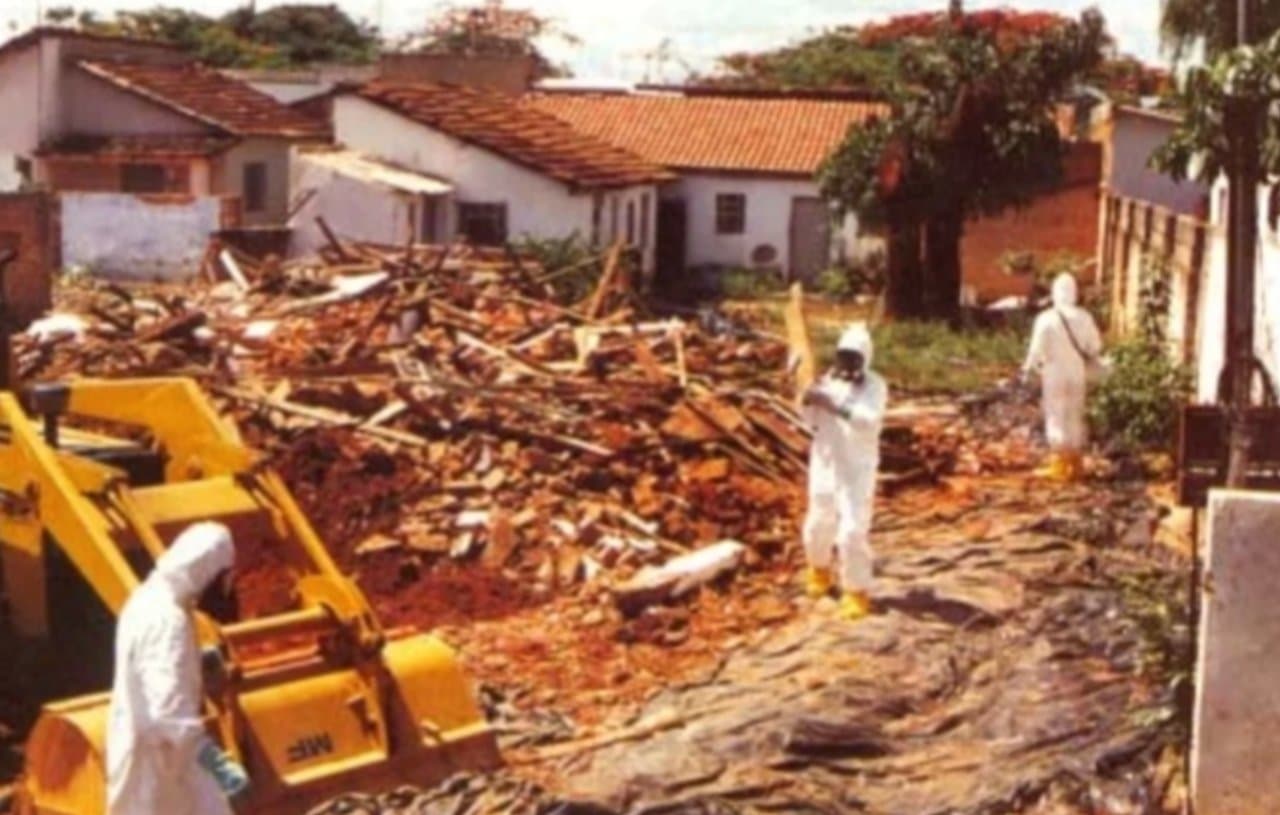
The event began when two workers from the recycling sector located an abandoned radiotherapy device in the former facilities of Instituto Goiano of Radioterapia. Sem knowledge about the nature of the equipment, the machine was transported and dismantled, breaking the lead protective casing that housed the cesium chloride. The substance, which emitted a bluish luminescence in dark environments, caught the attention of local residents, resulting in the distribution of fragments of the radioactive material among family, neighbors and friends. Direct manipulation and contact with the skin triggered a chain of mass contamination that required the immediate intervention of national and international nuclear authorities to contain the spread of radiation through urban areas. Official records from Comissão Nacional of Energia Nuclear indicate that hundreds of people suffered significant exposure, culminating in four deaths in the weeks following initial contact, including the girl Leide of The government response involved the screening of more than one hundred thousand citizens, the demolition of entire homes, and the removal of thousands of tons of contaminated soil and objects, which were confined in a definitive repository in the city of Abadia of Goiás. The physical and psychological consequences persist, with survivors requiring continuous medical monitoring to treat chronic diseases, neoplasms and other health complications resulting from prolonged exposure to the gamma rays emitted by the isotope.
Preservation of documentary memory
The controversy surrounding the adaptation raises debates about the limits of the audiovisual industry’s exploitation of real events. Especialistas in communication ethics point out that the main structure of a narrative based on facts must not contradict the expert reports and the memory documented over the years.
Transforming an environmental disaster into a consumer product requires a rigorous balance between viewer attraction and information integrity. The dissemination of inaccurate data on the handling of hazardous materials minimizes the responsibility of the competent institutions and harms awareness about radiological safety.
Current demands for medical and financial assistance
Almost four decades after the opening of the capsule, the search for comprehensive medical and financial support remains the main agenda for radioactive victims and their direct descendants. The pensions provided by Estado, often calculated based on the current minimum wage of R$1,621, are frequently the target of legal disputes and administrative reviews that generate material insecurity.
The constant mobilization of lawyers and activists aims to ensure that public authorities fulfill their legal obligations towards citizens affected by the failure to manage nuclear waste. The group demands the maintenance and improvement of centers of excellence for specialized oncological and psychological treatment in the Centro-West region.
Reformulation of nuclear safety protocols
The episode that occurred at Brasil forced a complete change in the safety guidelines of Agência Internacional, Energia Atômica and national regulatory bodies. Rigorous tracking of radioactive sources has become a non-negotiable requirement, with the implementation of digital inventories and periodic inspections in radiotherapy clinics and industrial facilities to prevent the abandonment of obsolete equipment.
Current standards for handling equipment
Current legislation establishes strict rules for any institution that operates with ionizing radiation in the national territory. Failure to comply with these guidelines results in severe sanctions, immediate closure of facilities and criminal liability for managers involved in the chain of custody of hazardous materials.
Safety standards require the application of specific containment procedures, such as maintaining updated records on the location of each active or inactive source. Disposal must be carried out exclusively by certified companies, and medical teams require continuous training to ensure the immediate isolation of areas in the event of a suspected leak or breach of lead shields.



