
Weather conditions could delay manned launch of Artemis II to the Moon
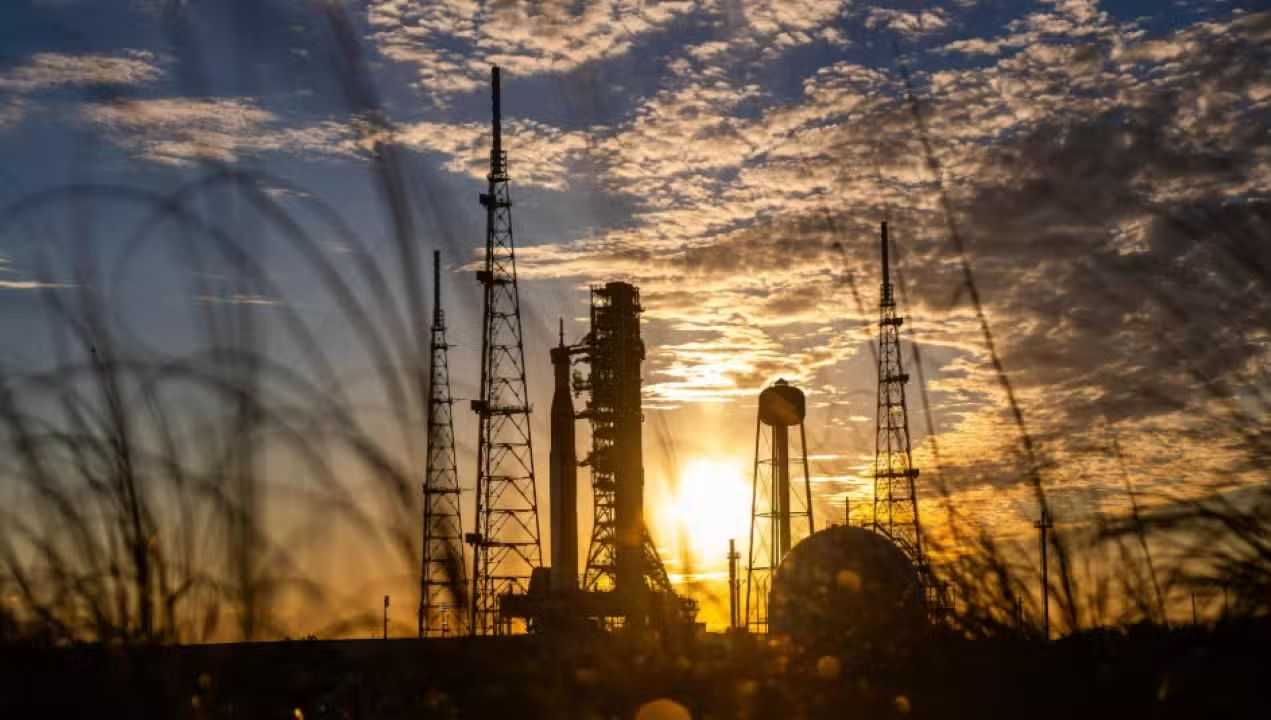
Nasa is preparing to launch the Artemis II mission, the first manned flight around Lua in more than 50 years. Takeoff is scheduled for April 1 at 6:24 pm Florida local time, with a two-hour window. Quatro astronauts — Reid Wiseman as commander, Victor Glover as pilot, Christina Koch and Jeremy Hansen of
Teams at Centro Espacial Kennedy, in Cabo Canaveral, closely monitor weather forecasts. Weather Squadron 45 indicates around an 80% chance of favorable conditions at the earliest opportunity. Preocupações main ones involve cumulus cloud cover, thick cloud layers, and strong winds in the eastern coastal region of Flórida.
- Rules include restrictions on convective clouds and winds that could affect safety.
- Natural or rocket-induced lightning poses one of the highest risks.
- Large-volume propellant requires stable conditions throughout the process.
Meteorological risk monitoring
Experts evaluate several criteria before authorizing the launch. Nuvens cumulus that develop with spring heat and humidity brought by southeast winds require constant attention. Essas formations can evolve into showers or storms, which violate protocols established over decades of operations at the site.
The lead launch weather officer, Mark Burger, of the 45th Esquadrão of Meteorologia, has been monitoring conditions for months. Ele explains that the work consists of ensuring safety from a meteorological point of view, combining climate data, local experience and launch history. Quase half of rocket launch cancellations occur for weather-related reasons.
Specific safety rules on site
Teams apply rigorous criteria on atmospheric electricity, cloud types and winds. Nuvens that do not naturally produce lightning can still carry enough electrical charge for the rocket to act as a lightning rod when passing by at high speed. Esse vehicle-induced lightning phenomenon requires precise monitoring.
Precipitation, strong winds and extreme temperatures can also compromise the operation. Durante the countdown, the meteorological officer must confirm that no criteria are violated to give final approval. The two-hour window allows some flexibility to wait for conditions to improve.
Alternative forecasts and windows
The combination of increasing heat and humidity on the east coast of Flórida favors the development of convective clouds at this time of year. If conditions do not permit at the initial date, additional opportunities are scheduled between April 2nd and 6th, plus a later date on the 30th.



Recovery of possible areas in Atlântico Norte is also included in the planning, with attention to the local climate in this region. High solar Atividade in the current cycle receives extra monitoring due to potential radiation effects for astronauts in deep space.
Mission operational details
The Artemis II mission will test Orion’s life support systems with humans on board for the first time. The approximately ten-day flight will send the crew on a trajectory around Lua before returning to Terra. Essa stage prepares future operations of the Artemis program, including manned lunar landings.
The SLS rocket carries around 750,000 gallons of propellant, which increases sensitivity to hazards such as lightning. Historical Regras, based on past incidents such as Apollo 12, guide current decisions to protect both the crew and the vehicle.
Continuous updates before the window
Meteorologists use probability percentages of rule violations to guide recommendations. Dados climatological, local observations and accumulated experience help predict whether there will be a safe window. The focus remains on operational security in all aspects.
Additional factors in planning
Solar activity at the peak of the current cycle leads teams to monitor flares and increased radiation that could impact astronauts outside of Terra’s magnetic shield. Essas observations complement ground-based analyzes of atmospheric conditions at the launch site.
Veja Tambem em News (EN)

Research reveals that parents are unaware of how their children use artificial intelligence

Samsung releases new system update with new features for Galaxy Watch 4 users

Digital retail reduces the value of the Galaxy S25 5G smartphone with bank bonuses and device exchange

Amazon’s wireless CarPlay adapter has a 50% discount and high approval ratings from drivers

Zach Cregger’s new Resident Evil ignores games and focuses on an unprecedented story with new characters

Rumor suggests that Nintendo is preparing a special edition of the Switch 2 with a remake of Ocarina of Time

Apple accelerates production of the iPhone 17e and develops new Air model with dual camera system

Epic Games platform releases twelve high-budget games at no permanent cost for PC users

PlayStation 5 Pro price drop accelerates digital retail sales and eliminates global stocks

New Galaxy Watch 9 firmware appears on server and confirms progress in software development

Apple’s commemorative project tests cell phone with 1.1 millimeter edge and curved screen for 2027
