
Webb and Hubble Telescopes Reveal Detailed Layers of Saturn’s Atmosphere in New Images

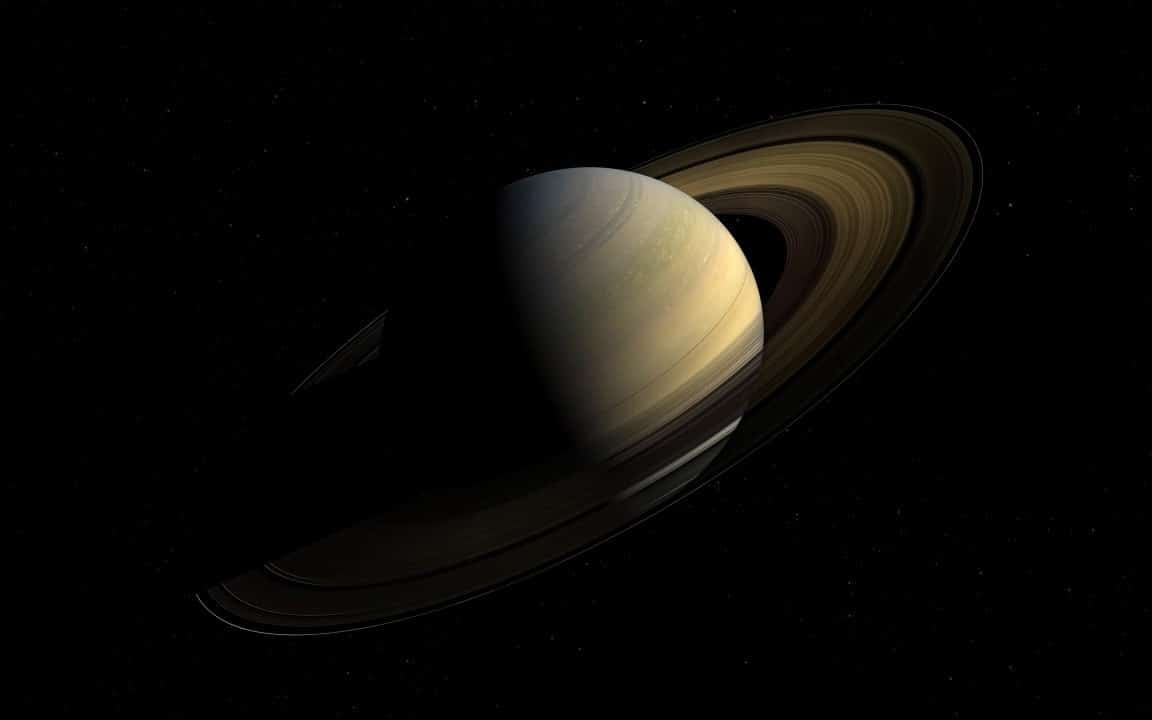
Astronomers have released new images of Saturno that combine observations of James Webb Space Telescope and Hubble Space Telescope. The captures, taken every few weeks in 2024, provide the most complete view of the gaseous planet to date. James Webb recorded near-infrared data on November 29, while Hubble obtained visible light records on August 22. Essa partnership allows us to analyze different depths of the atmosphere and highlight features such as rings and moons.
The records show Saturno transitioning from spring in the Northern Hemisphere toward the 2025 equinox. The water ice rings reflect sunlight intensely, appearing especially bright in infrared images. Várias The planet’s larger moons also come into view, including Titan, Enceladus, Dione and others. Essas complementary observations help to better understand the dynamic processes that occur in the gas giant.

Comparison between wavelengths highlights atmospheric structures
The Hubble images reveal subtle patterns of clouds and bands in Saturno’s visible atmosphere. Data captured in visible light shows color variations and surface structures that indicate atmospheric circulation. Essa vision complements the records of James Webb, which penetrate deeper layers when using infrared.
James Webb identified wavy ribbon-shaped jets in mid-northern latitudes. Pequenas spots in the atmosphere may correspond to traces of a large storm recorded in the spring of Saturno in the early 2010s.
Details of the rings and presence of moons highlighted
Rings composed mainly of water ice particles stand out brightly in infrared observations. The wider record of James Webb includes six larger moons, with Titan positioned on the left. Enceladus, which has a liquid ocean under the ice crust, and Titan, with its thick methane atmosphere, gain relevance in these captures.
The subtle outline of the jet hexagon at the north pole also appears. Essa persistent structure, initially observed by the Voyager probe in 1981, may soon have its visibility affected due to the entry of Saturno into a long polar winter that lasts about 15 Earth years. Current images represent a valuable opportunity ahead of this prolonged seasonal change.
Moons of Saturno and scientific potential for future missions
Enceladus arouses interest in its subsurface ocean, considered a possible environment for investigating signs of life. Titan, the largest moon, has a methane cycle in its atmosphere, similar to the water cycle on Terra. NASA plans the Dragonfly mission to Titan in 2028, which reinforces the importance of these recent observations.
Dione and other smaller moons also appear in the records. The combination of data makes it possible to map interactions between the planet, its rings and natural satellite system. Scientists use this information to refine models about the composition and dynamics of the Saturnian system.
Multi-layer analysis improves meteorological understanding
The combined approach works like peeling back layers of an onion, revealing processes at different altitudes. Hubble shows surface clouds, while James Webb detects structures at depth, including emissions around 4.3 micrometers in the polar regions. Essa three-dimensional vision enriches the study of the complex meteorology of Saturno.
The records are part of long-term monitoring programs, such as Outer Planet Atmospheres Legacy and Hubble. James Webb contributed discretionary time to these specific captures. Juntos, the telescopes deliver data that complement previous observations and prepare more accurate analyzes of seasonal variations.
Persistent structures and seasonal changes in Saturno
The north polar hexagon maintains its stable shape over decades, but the move into winter could limit future high-resolution observations in this region for an extended period. The 2024 images capture the planet still in its summer phase in the northern hemisphere, offering clear details before the transition.
Storms and atmospheric jets demonstrate continued activity in the gas giant. The data helps track how these phenomena evolve over the seasonal cycles of Saturno, which last about 30 Earth years each. The observed variations contribute to comparative studies with other planets in the solar system.
Saturn serves as a natural laboratory for understanding gas giant atmospheres. Recent observations reinforce the value of collaboration between different space instruments to uncover details that remain hidden in a single wavelength range. Scientists continue to process these records to extract new information about chemical composition and atmospheric dynamics.
- Wavy jets identified in northern mid-latitudes
- Spots associated with old storms
- Polar regions with gray-green tones in infrared
- Glowing rings made up of water ice
- Moons like Titan, Enceladus and Dione visible in the enlarged field



