
Collector buys Xbox 360 development kit in Scotland and discovers unreleased version of GTA IV
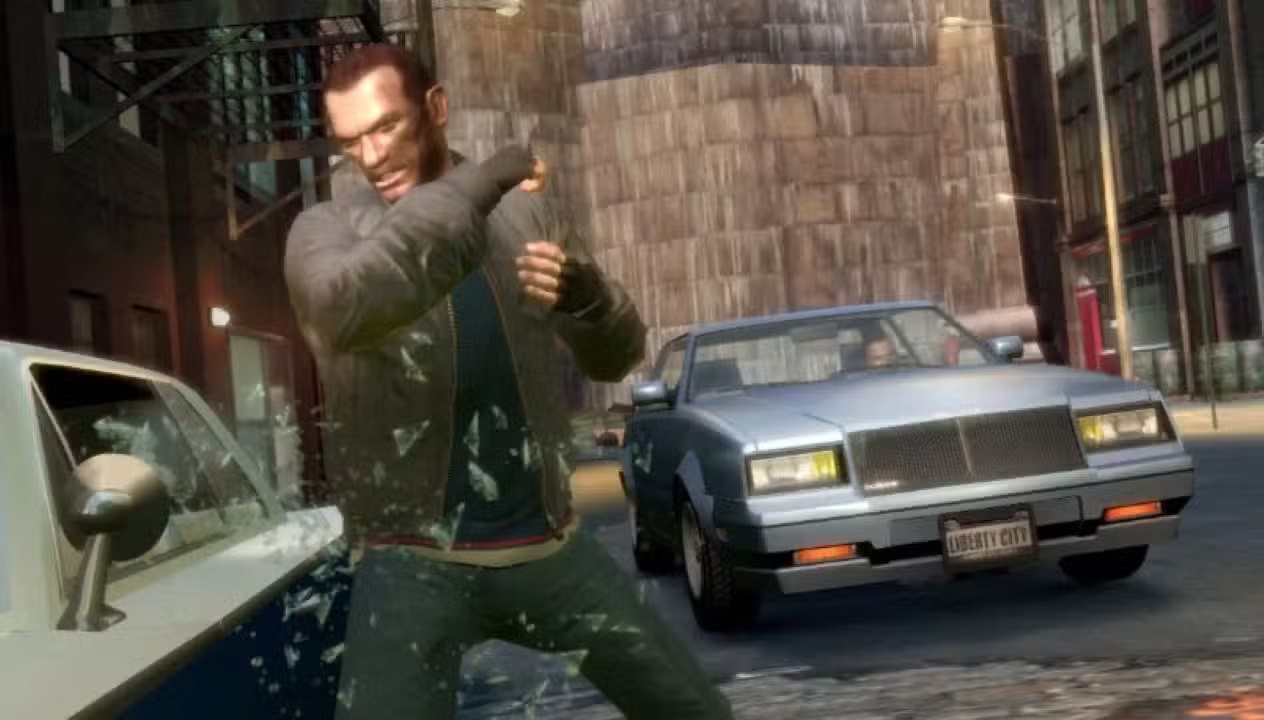
A video game console acquired unpretentiously at a European garage sale revealed one of the biggest recent leaks in the history of digital entertainment. The device, purchased for a ridiculous amount equivalent to five pounds sterling, hid confidential data on its hard drive from one of the most profitable projects of the seventh generation of consoles.
The machine contained an advanced test version of an open world title set in Liberty City, dated November 2007. The material includes more than one hundred gigabytes of raw files, experimental textures and game mechanics that ended up discarded before the official release on the global market.
A user bought an Xbox 360 for £5 at a car boot sale, which turned out to be a Rockstar North devkit containing a 118GB GTA 4 beta build with:
– Different radio stations and cut songs
– Unused logo models
– A cut zombies minigame
– Ferry’s model from the first trailer
– Beta…pic.twitter.com/FHHYFA2XUB— GTA 6 Countdown ⏳ (@GTAVI_Countdown)March 28, 2026
The find occurred in the city of Edimburgo, a location that houses the headquarters of the developer responsible for creating the franchise. The geographic proximity between the place of purchase and the company’s offices reinforces the authenticity of the equipment, which was used exclusively by programmers and software engineers during the production cycle.
Technical details of the equipment found
The hardware recovered by the collector is classified as a development kit, a tool for strictly internal use provided by console manufacturers to partner studios. Esses devices have different specifications than commercial units, including greater RAM memory capacity and code debugging ports, allowing creators to test the software directly in the environment in which it will be run by end consumers. The presence of the developer’s heritage label on the device’s casing was the first indication of the item’s corporate origin.
When turning on the system, the buyer identified a software compilation that predates the game’s arrival on shelves in 2008 by several months. The files extracted from the hard drive reveal a transition phase in the project’s design, where several ideas were still being tested and optimized for the hardware of the time. Extracting this data required specific technical knowledge, since development consoles usually have their own security and encryption locks to prevent the leakage of intellectual property.
Discarded elements and project evolution
Preliminary analysis of the files revealed the existence of vehicles and transport systems that did not make it into the final version of the product. Entre The highlights are three-dimensional models of ferries that would cross between the islands on the map, a mechanic that was replaced by bridges and tunnels in the commercialized version.
Another point of interest in the recovered data is the presence of codes referring to an experimental game mode involving zombies. Essa discovery indicates that the development team considered implementing survival and horror elements in the main title, an idea that ended up being shelved, but which demonstrates the flexibility of the graphics engine used.
The digital collection also encompasses a vast amount of audio files, including complete radio stations and music tracks that have lost licensing or were cut due to creative decisions. The dialogues of non-playable characters present significant variations in relation to the final script, showing how the narrative was refined over the months.
Firearms and inventory items appear with distinct initial textures and physical behaviors. The ballistics and artificial intelligence of the enemies in this 2007 version present a more rudimentary behavior, highlighting the polishing work that took place in the final stretch of production.



The role of digital preservation in the industry
The rescue of these files raises questions about the conservation of the historical heritage of the technology and entertainment sector. Especialistas in digital archiving point out that a large part of the studios’ creative process is lost when internal servers are turned off or when old equipment is discarded without proper data processing.
Recovering test builds allows researchers and historians to document the evolution of programming tools and the design decisions that shaped successful products. Esse raw material type offers transparent insight into the technical challenges faced by software engineers during the transition to high definition.
Institutions dedicated to video game memory often seek partnerships with developers to archive these records in a legal and structured way. However, accidental discoveries like the one that occurred at Escócia remain one of the main sources of unpublished material for the study of interactive media.
Repercussion in specialized forums and communities
The release of images and code snippets generated intense movement on discussion platforms focused on reverse engineering and game modification. Usuários from different parts of the world began a joint effort to catalog the one hundred gigabytes of information, comparing each texture and line of code with the commercial version of the software.
Former employees of the development company even spoke out anonymously on some of these platforms, confirming the legitimacy of certain three-dimensional models and recalling the reasons that led to the cutting of certain missions. Essa interaction between the community and former producers enriches the understanding of the project’s life cycle.
November 2007 build specifications
The software release dated November 23, 2007 represents a crucial time frame, falling exactly between the first video advertising campaigns and the final product certification phase. With a total size of approximately 118 gigabytes, the root directory contains uncompressed folders that house mission prototypes, raw motion capture animations, and main plot iterations that diverge from the narrative arc known to the public. Researchers who had access to the raw data noted substantial differences in the density of vehicle traffic and the complexity of pedestrian interactions, elements that required rigorous optimization adjustments to not overload the console’s processor. Furthermore, the user interface, including the design of the cell phone used by the protagonist, displays a provisional layout, demonstrating how the game’s visual identity was still subject to aesthetic revisions just a few months before its global distribution.
Legal implications and the collectors market
The initial attempt to sell the hardware on online auction sites ran up against strict intellectual property guidelines. The sales platforms removed the ads quickly after copyright notices, a common practice when it comes to development equipment containing proprietary software not authorized for public distribution.
Despite the legal obstacles to selling the physical device, the prior extraction of data ensured that the historical content was not lost. Colecionadores of rare technology items are watching the case carefully, as the presence of intact data on hard drives from two decades ago is an increasingly scarce phenomenon due to the natural degradation of magnetic components.
Historical value for interactive entertainment
The episode reinforces the importance of documenting the intermediate steps of creating big-budget software. The ongoing analysis of this discarded collection will continue to provide concrete data on the development practices of the seventh generation of consoles, transforming a chance find into a primary source of research for the history of technology.
Veja Tambem em News (EN)

Research reveals that parents are unaware of how their children use artificial intelligence

Samsung releases new system update with new features for Galaxy Watch 4 users

Digital retail reduces the value of the Galaxy S25 5G smartphone with bank bonuses and device exchange

Amazon’s wireless CarPlay adapter has a 50% discount and high approval ratings from drivers

Zach Cregger’s new Resident Evil ignores games and focuses on an unprecedented story with new characters

Rumor suggests that Nintendo is preparing a special edition of the Switch 2 with a remake of Ocarina of Time

Apple accelerates production of the iPhone 17e and develops new Air model with dual camera system

Epic Games platform releases twelve high-budget games at no permanent cost for PC users

PlayStation 5 Pro price drop accelerates digital retail sales and eliminates global stocks

New Galaxy Watch 9 firmware appears on server and confirms progress in software development

Apple’s commemorative project tests cell phone with 1.1 millimeter edge and curved screen for 2027
