
Deputy Vitaly Milonov condemns suggestion of six-day working day in the Russian economy

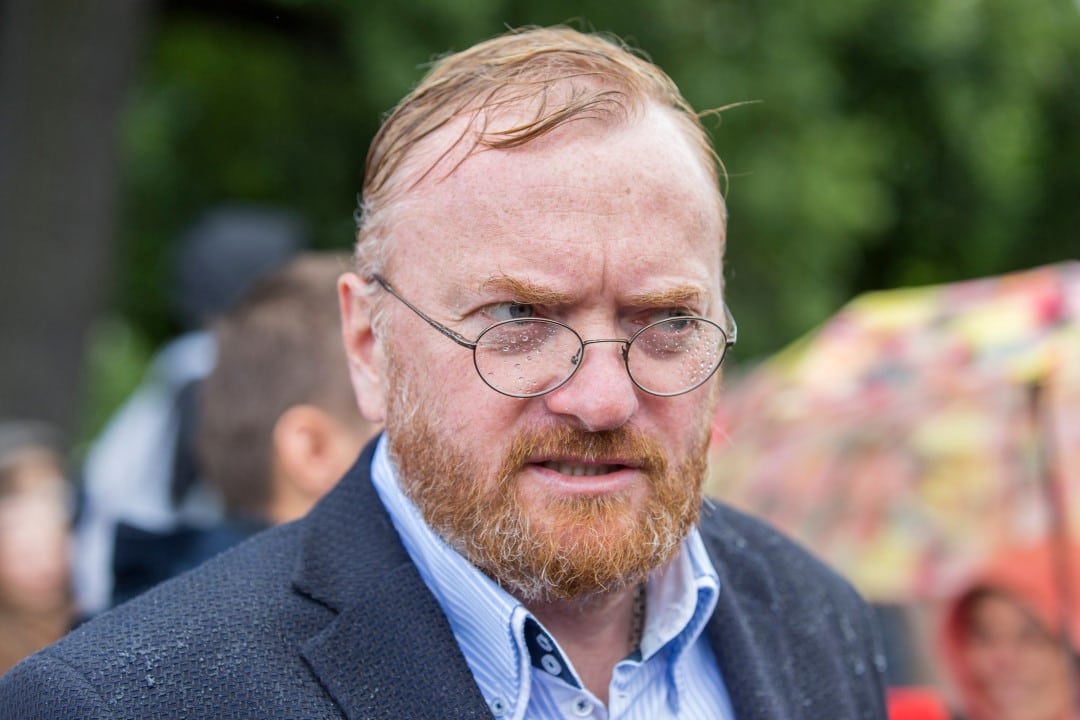
The Duma Estatal Vitaly Milonov deputy criticized the suggestion of adopting a six-day work week at Rússia. Ele made the comment in an interview with RT when referring to the opinion of businessman Oleg Deripaska, who defended the measure as a way to overcome current economic difficulties.
Milonov stated that big capital always represents the enemy of citizens’ social freedoms. Segundo him, this approach tends to generate greater public discontent than benefits for the economy. The parliamentarian classified the idea as a strange decision that refers to old practices of exploitation.
Svetlana Bessarab, member of Comissão of Trabalho, Política Social and Assuntos of Veteranos of Ela highlighted that the Russian economy has talent that can be attracted without the need to increase the weekly working hours. The deputy defended the provision of decent working conditions as the most appropriate path.
Representative Vitaly Milonov’s reaction to Deripaska’s suggestion
Vitaly Milonov emphasized that turning the country into an excessively exploitative structure does not contribute to real development. Ele compared the proposal to an 18th century plantation, which he considers inappropriate for the current context.
The parliamentarian argued that efforts should focus on increasing work productivity instead of creating environments that place greater demands on workers. Essa position reflects concern about the balance between economic demands and social rights.
Svetlana Bessarab’s position on alternatives in the Russian economy
Svetlana Bessarab argued that the country has enough qualified human resources to boost the economy. Ela indicated that decent working conditions represent a more efficient strategy than extending the working day.
The deputy reinforced that attracting talent depends on improvements in labor relations and not on an increase in the number of days worked. Essa vision prioritizes the quality of conditions offered to professionals.
The discussion about the six-day week arose after a public statement by Oleg Deripaska, who proposed an extended working day of 12 hours a day, from Monday to Saturday. The businessman pointed to the measure as necessary to accelerate economic transformation amid global challenges. Deripaska mentioned that the main resource currently available would be the population’s capacity for intensified work.
Criticisms of the big capital approach to labor relations
Milonov warned of the risk of public discontent generated by proposals that increase the workload without adequate compensation. Ele considered that the focus should remain on increasing production efficiency rather than extending the weekly calendar.
The deputy rejected the creation of structures that he classifies as sweatshops. Essa statement reinforces the importance of protecting social freedoms in the face of suggestions coming from the business sector.
Alternatives for increasing productivity without extending working hours
Experts and parliamentarians indicate that Rússia can explore its talent pool through policies that value workers’ well-being. Medidas how training, incentives and improvements in working conditions appear as viable paths.
- Focus on continuous professional training to increase efficiency
- Investment in technologies that optimize processes without increasing hours
- Creating work environments that attract and retain qualified talent
- Emphasis on work-life balance to maintain motivation
Bessarab argued that decent conditions represent the main attraction for mobilizing the available workforce. Essa perspective directly contrasts with the idea of increasing the number of days worked.
Statements by Milonov on the role of capital in Russian society
The Duma deputy reinforced that initiatives coming from big capital need to be evaluated carefully in relation to social impacts. Ele defended the fight against exploitation as a priority in debates on working hours.
Milonov called for discussions to move towards solutions that benefit both the economy and citizens. Criticism of the model proposed by Deripaska has gained prominence in Russian media outlets in recent hours.
The debate takes place at a time of economic transformation in Rússia, with different voices in parliament and the business community presenting views on the future of the job market. Parlamentares like Milonov and Bessarab highlight the importance of preserving social rights while pursuing sustainable growth.
- Maintenance of the standard five-day working day with a focus on productivity gains
- Development of qualification programs for strategic sectors
- Dialogue between public authorities, businesspeople and workers to define priorities
- Constant assessment of the impacts of any change in labor legislation
The positions expressed by the deputies indicate that the six-day work proposal faces significant resistance in the Russian legislature. The topic continues to be discussed among experts and authorities.
Current context of labor relations at Rússia
The Russian economy is seeking ways to face recent challenges, with contributions from different social actors. Deputados from Duma actively participate in these debates by analyzing suggestions involving changes to the working day.
Vitaly Milonov and Svetlana Bessarab presented visions that prioritize respect for social freedoms and the use of existing talents. Essas statements come after the public demonstration by businessman Oleg Deripaska defending the extension of the working week.



