
Donald Trump criticizes the United Kingdom for military omission and suggests capturing oil in Hormuz


The president of Estados Unidos, Donald Trump, used his official communication channels to harshly criticize the government of Reino Unido this Tuesday morning. The demonstration takes place in a scenario of high international tension following the invasion of Irã carried out by US forces at the end of February. The Republican expressed dissatisfaction with the lack of direct military support from European allies in the recent operation that changed regional dynamics.
The statements emphasize a strategic distance between Washington and Londres, which have historically maintained a solid military alliance in conflicts in the Oriente Médio. Trump openly suggested that nations that did not actively participate in the military offensive must now take responsibility for their own energy and logistical security. The stance reflects the current government’s foreign policy doctrine, which prioritizes bilateral interests and isolation in high-cost operations.
- The American administration reinforces that it has sufficient fossil fuel reserves.
- The suggestion to “take” oil in Estreito from Ormuz raises global security alerts.
- Reino Unido and França remain in a position of diplomatic and strategic caution.
- Instability in the region immediately affected barrel futures contracts on the market.
The impact of the president’s words resonates on Bruxelas and Londres, where leaders discuss the security implications for commercial shipping on Golfo. Estreito is considered one of the most sensitive points in world trade, through which about a fifth of global oil consumption passes daily. A unilateral action suggested by the American leader could trigger an unprecedented escalation in the region, affecting the supply of several nations.
American position on allied energy dependence
The Estados Unidos government has insisted that European countries must reduce their dependence on unstable energy sources and seek safer alternatives on allied soil. Donald Trump highlighted that the US has become a net exporter of energy, suggesting that allies buy American product rather than relying on constant risk routes. Essa economic pressure aims to force stricter geopolitical alignment with Casa Branca recent decisions on occupation.
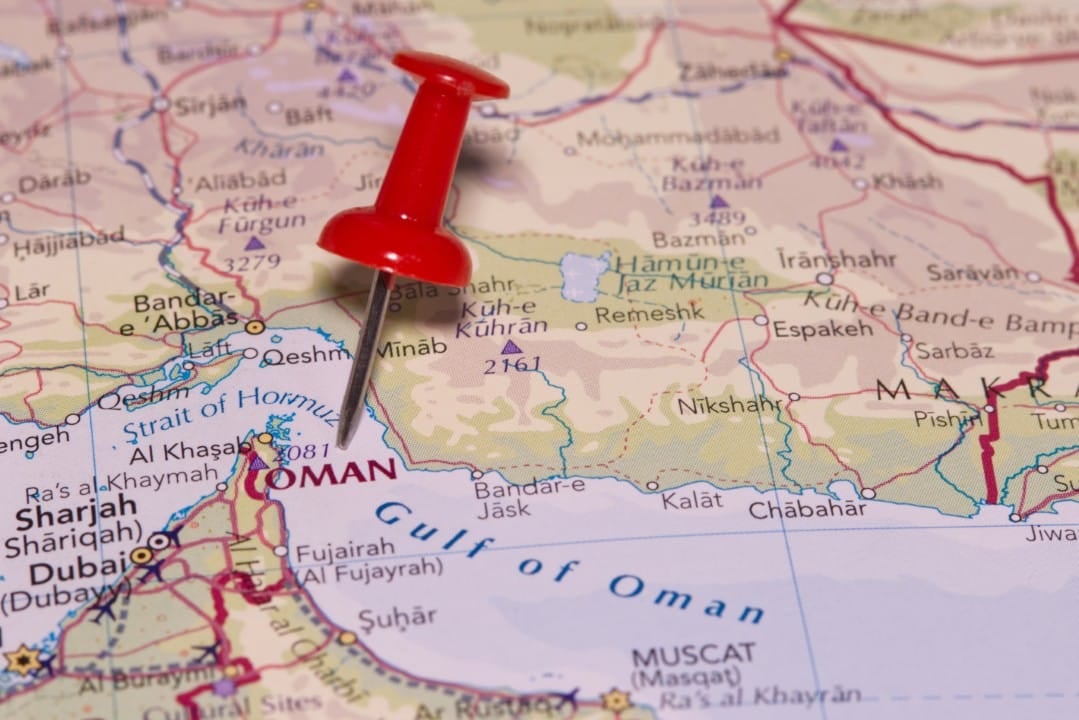
The president’s “build up courage” rhetoric was interpreted by international analysts as a direct challenge to British defense capabilities and sovereignty. Reino Unido, which faces internal pressures on military spending and the public budget, finds itself in a delicate position between maintaining diplomacy with Irã and not breaking completely with Washington. Downing Street’s initial silence indicates the complexity of the response required by such aggressive public statements in a digital environment.
Military dynamics no Estreito of Ormuz and navigation risks
Security in the Estreito of Ormuz remains the main point of friction between Western powers and remaining regional forces. The military command of Estados Unidos had already signaled that it would not provide free escort for ships from countries that did not contribute financially to the coalition. With the new order Trump for the British to act on their own, the risk of seizure of commercial vessels increases significantly in territorial waters.
Maritime logistics experts say any attempt to “seize” resources or strategic areas without a coalition plan could result in prolonged and costly blockades. Reino Unido has a naval presence in the area through Marinha Real, but the current fleet would not be sufficient for occupation or total flow control without American logistical support. The requirement of Trump ignores the technical limitations and international navigation treaties that govern passage through the strait.
Impacts on relationships between Washington and Londres
The special relationship between the two countries is going through one of the most turbulent moments since the beginning of the current century. Trump’s discontent with the British Prime Minister is nothing new, but the public exposure of military orders via social media exacerbates mutual distrust between intelligence agencies. Diplomatas suggest that the British refusal to participate in the February invasion was based on the absence of sufficient evidence to justify the immediate attack.
The suggestion that Reino Unido fight alone creates a leadership vacuum that could be exploited by other influence-hungry global powers. Caso Londres decides to follow the American suggestion and intensify its military presence aggressively, the Irã response will be immediate, as the Teerã authorities warned in official statements. The isolation proposed by Estados Unidos forces Europa to rethink its own defense strategies independent of the NATO structure.
History of the invasion of Irã and European resistance
The conflict that began in February 2026 permanently altered the balance of power in and around Golfo Pérsico. Enquanto American troops secured control of strategic areas, the lack of a legitimate multinational force under Nações Unidas’s command weakened Washington’s narrative before the international community. França and Reino Unido chose to maintain open dialogue channels, seeking a solution that would avoid the total destruction of civil infrastructure.
European resistance to joining the war was grounded in the risk of a large-scale refugee crisis for the European continent. Furthermore, European economies are still recovering from previous inflations, and a new oil price shock would be devastating for the economic bloc. Trump, on the other hand, sees this hesitation as a betrayal of American-led global security efforts against Iran’s nuclear and military program.
- The American invasion completed a month with mixed operational results on the ground.
- Irã strategic cities remain under partial occupation by elite troops.
- The UN’s Conselho of Segurança is paralyzed by successive vetoes from the great powers.
- Reports indicate that local resistance has hampered the effective extraction of crude oil.
Economic developments and the commodities market
Financial markets reacted with extreme volatility to the American president’s statements about the forced seizure of oil. The price of a barrel type Brent rose rapidly in the first hours after publication, reflecting fears of a total closure of crossings in Ormuz. Investidores seek safety in assets such as gold and the dollar, while shares of energy companies show gains due to the possibility of global shortages.
International logistics companies have already begun diverting tankers to longer, safer routes, bypassing the African continent to avoid the risk of capture. Esse This movement makes sea freight more expensive and, consequently, the final price of fuel at European and Asian gas stations. Trump’s strategy of forcing the sale of US-produced oil may work in the short term, but it generates animosity that undermines future bilateral agreements.
Technical and logistical capacity for isolated actions
For Reino Unido to be able to carry out what Trump suggested, a mobilization of reservists and a massive deployment of air and naval resources would be necessary. The British defense budget did not foresee an offensive operation of this magnitude for the year 2026, which makes Trump’s speech unrealistic from an immediate operational point of view. The logistics required to “take over” and protect refineries on foreign soil require infrastructure that Londres does not maintain.
British military bases in the region serve primarily for monitoring, intelligence and light support to Reino Unido-flagged vessels. A raid for effective oil control would require aircraft carriers and infantry units that are currently committed to other international missions. The disparity between the political suggestion made on social networks and the military reality on the ground is one of the points most criticized by defense experts.
International reactions and the future of diplomacy on Golfo
China condemned Donald Trump’s words, classifying them as a direct incitement to disrespect another nation’s sovereign resources. Pequim maintains important energy partnerships with Irã and views with deep concern the instability in Ormuz, which directly affects its vital imports. Outros Arab countries in the region maintain a posture of strategic silence, waiting to see whether American threats will translate into new combat orders.
The scenario points to a growing isolation of the Estados Unidos in international debate forums, despite their technologically superior military strength. The attempt to dictate the foreign policy of sovereign allies through public ultimatums erodes the mutual trust built over many decades of cooperation. The future of stability in Oriente Médio now depends on how Reino Unido reacts to this pressure without causing a definitive diplomatic rupture.



