Easter traditions in different religions mark spiritual renewal in April 2026
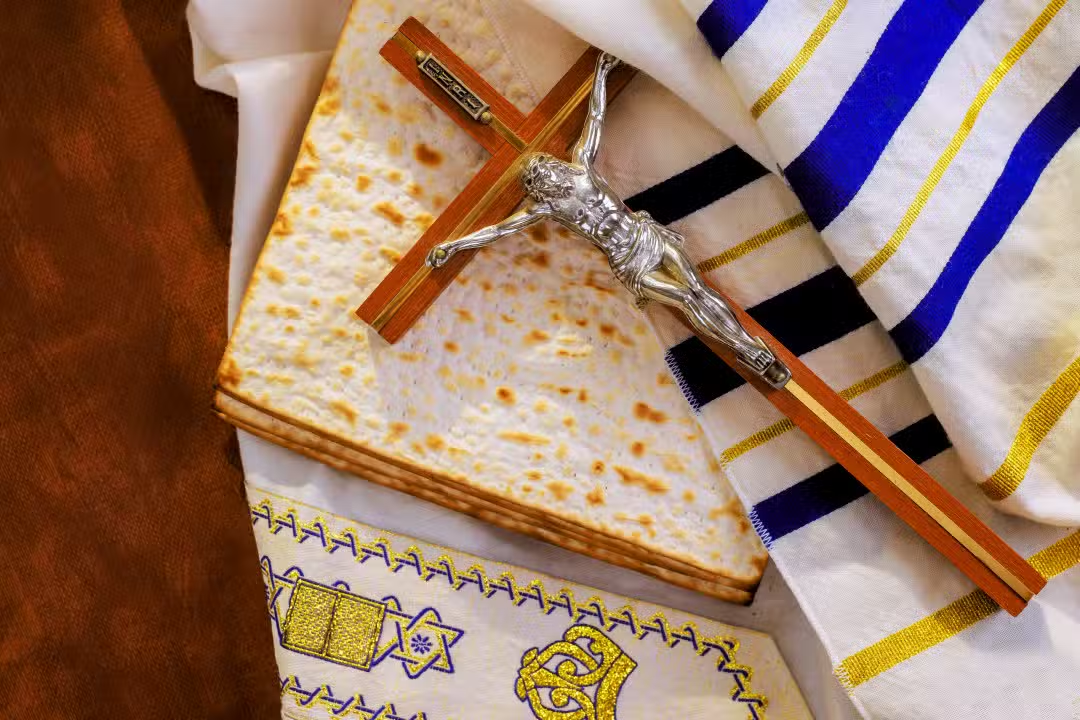
Sunday Páscoa represents one of the central days in the Christian liturgical calendar. The celebration of the death and resurrection of Jesus Cristo begins a 50-day period that ends on the solemnity of Pentecostes. In 2026, the Sunday of Páscoa occurs on April 5 in the Gregorian calendar adopted by most Western churches.
This date mobilizes millions of believers in masses, vigils and family gatherings in different regions of the planet. The Christian tradition incorporates ancient symbols from the Jewish festival of liberation. Outras beliefs also take advantage of the period for moments of spiritual reflection and the search for inner renewal.
- The Christian Páscoa remembers the triumph of life over death.
- The symbolism of the lamb refers to the Jewish tradition of Pessach.
- Various religions find the spring or autumn cycle an opportunity for purification practices.
Jewish origin of Christian Páscoa
The Christian Páscoa has direct roots in Judaism. The Jewish festival called Pessach remembers the Hebrew people’s exit from slavery in Egito and their passage through Mar Vermelho. In 2026, Pessach begins at sunset on April 1 and lasts until April 9 on the Gregorian calendar.
The biblical texts from the book of Êxodo describe the celebration as a family event of thanksgiving for liberation. The narrative invites participants to put themselves in the shoes of their ancestors to understand the choices made in the past. Essa Historical memory gains current meaning by reinforcing values of freedom and collective responsibility.

Differences in the date of the Orthodox Páscoa
Orthodox churches follow the Julian calendar to set the date of the Páscoa. Essa historical choice maintains specific astronomical criteria that diverge from the Gregorian calendar used by the Igreja Católica since 1582. In 2026, the Orthodox Páscoa falls on April 12, always on a Sunday after the spring equinox full moon at Oriente.
The calculation ensures that the celebration takes place after the Jewish Páscoa. Comunidades Orthodox women in different countries hold night vigils and liturgies that emphasize the resurrection with their own rituals, such as the distribution of red eggs in some traditions. The variable date reflects the antiquity of lunar and solar observation methods adopted since Concílio of Niceia in 325.
Spiritist interpretation of the Easter message
Spiritist doctrine does not establish a specific commemoration for Páscoa, although it respects the date celebrated by Jews and Christians. Followers of the doctrine seek to live the teachings of Evangelho and Jesus throughout the year. Essa approach emphasizes inner transformation and the constant practice of charity and moral evolution.
Texts such as the passage from Gálatas serve as a reference for the idea that the spirit of Cristo lives in the individual who follows its precepts. Reuniões Spiritist centers during the Easter period usually address themes of spiritual rebirth and overcoming personal limitations. The central message remains in the daily living of evangelical values.
Muslim approach to the Easter period
Muslims recognize Jesus as an important prophet cited in Alcorão, but do not celebrate the Christian Páscoa as a central religious date. The Islamic faith affirms strict monotheism and rejects any deity association with Jesus. Instead, the holy month of Ramadã focuses on the practices of fasting, prayer, and personal purification.
In 2026, Ramadã occurred between February and March, with abstinence from food, drink, and evil deeds from dawn to sunset. Esse period promotes patience, mutual respect and greater closeness with Deus. The Federação of Associações Muçulmanas of Brasil reinforces that Islam maintains the belief in a single Deus without associations.
Celebrations in African-based religions
Candomblé and Umbanda treat Semana Santa differently from the predominant Catholic rites in Brasil. Durante Lent, which begins on Quarta-Friday of Cinzas, some terreiros suspend regular activities in observance of the period known as Lorogun. Esse cycle represents collective rest and the symbolic struggle of Orixás against negative forces.
At the end of Lent, the liturgical New Year begins in several homes. Fiéis perform spiritual cleansing rituals and offerings that harmonize with the Catholic calendar due to the historical influence of syncretism. The date of April 5 in 2026 coincides with the closure of Semana Santa and allows communities to adapt renewal and energy balance practices.



Common Spiritual Reflection Practices
Various religious traditions find opportunities for fasting, charity and meditation in the Easter period. The search for personal transformation and a fresh start appears in different ways, but with the shared purpose of strengthening community ties and ethical values. In urban and rural contexts, families and groups adapt customs according to their specific beliefs.
The simultaneous presence of important dates on different religious calendars in 2026 highlights the plurality of expressions of faith in the contemporary world. Cada The group maintains its own rituals without losing respect for the traditions of others. Essa Coexistence reinforces interreligious dialogue in diverse societies.
Contemporary meaning of celebrations
The narrative of liberation in Judaism continues to inspire reflections on human rights and social justice. In Christianity, the resurrection symbolizes hope in the midst of everyday challenges. Práticas of purification in Islam and balance in Afro-Brazilian religions complete the panorama of spiritual responses to the idea of moving into a new cycle.
Communities around the world organize activities that mix traditional elements and modern adaptations. The focus remains on the collective experience of values such as gratitude, renewal and mutual responsibility. The date of April 5 in 2026 serves as a meeting point for these different spiritual paths.
Regional and family adaptations
In countries with a strong Catholic presence, Sunday Páscoa brings together families for lunches and symbolic exchanges. Nas Orthodox communities, the night liturgy is highlighted with songs and processions. Grupos Spiritists carry out lectures and doctrinal studies that connect the message of Jesus to practical life.
Candomblé and Umbanda terreiros adjust schedules to respect both the liturgical calendar and the obligations specific to each house. Essa Flexibility allows the date to be experienced authentically in varied cultural contexts. The result is a celebration rich in diversity without mandatory uniformity.
Shared symbolic elements
The Passover lamb appears in both Jewish and Christian traditions as a symbol of sacrifice and liberation. Ovos and unleavened bread mark tables in different cultures during the period. Práticas of fasting and abstinence appear in several religions as a form of spiritual discipline and empathy with others.
These elements help to build bridges between different beliefs. The observance of moving dates based on lunar and solar cycles reveals the ancient influence of astronomy on religious definitions. In 2026, date variations between April 5 and 12 for Christian Páscoas illustrate this dynamic.
Importance of interreligious coexistence
Contemporary societies value mutual respect between different expressions of faith. The temporal proximity of celebrations in 2026 offers an opportunity for initiatives of dialogue and reciprocal knowledge. Eventos Community and educational publications help clarify meanings without imposing single views.
Maintaining ancestral traditions alongside modern interpretations guarantees the vitality of religions. Fiéis find Páscoa or equivalent dates motivation for concrete actions of solidarity and self-knowledge. The period reinforces the role of spirituality in building more harmonious social bonds.
Veja Tambem em News (EN)

Research reveals that parents are unaware of how their children use artificial intelligence

Samsung releases new system update with new features for Galaxy Watch 4 users

Digital retail reduces the value of the Galaxy S25 5G smartphone with bank bonuses and device exchange

Amazon’s wireless CarPlay adapter has a 50% discount and high approval ratings from drivers

Zach Cregger’s new Resident Evil ignores games and focuses on an unprecedented story with new characters

Rumor suggests that Nintendo is preparing a special edition of the Switch 2 with a remake of Ocarina of Time

Apple accelerates production of the iPhone 17e and develops new Air model with dual camera system

Epic Games platform releases twelve high-budget games at no permanent cost for PC users

PlayStation 5 Pro price drop accelerates digital retail sales and eliminates global stocks

New Galaxy Watch 9 firmware appears on server and confirms progress in software development

Apple’s commemorative project tests cell phone with 1.1 millimeter edge and curved screen for 2027