

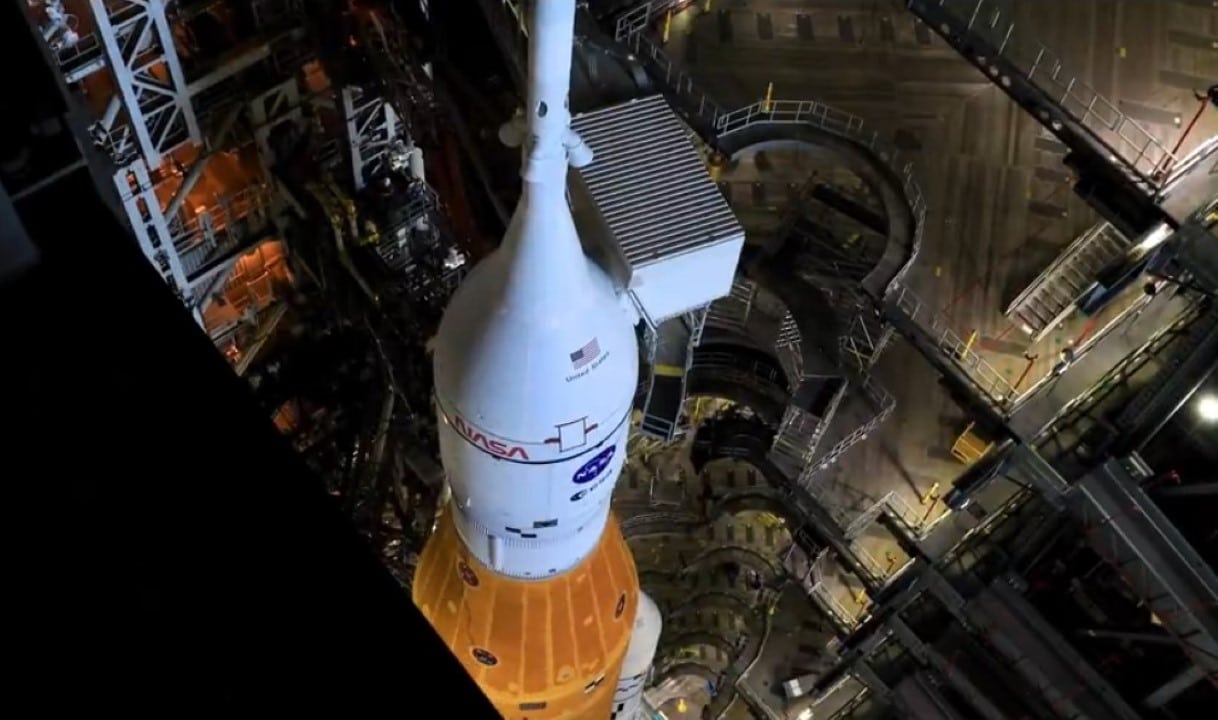
The North American space agency is advancing in the preparation stages of the spacecraft that will transport the next human crew towards the orbit of Lua. Engineers are concentrating their work on finalizing the interior of the capsule Orion, a vehicle attached to the rocket Space Launch System, designed to withstand the extreme conditions of deep space. The equipment undergoes rigorous safety assessments before official launch.
The orbital flight represents a historic milestone in space exploration, breaking a gap of more than five decades since the last expedition of the Apollo program. The selected crew will undertake a journey of approximately ten days, testing the feasibility of prolonged missions and collecting fundamental data for the establishment of a sustainable human presence outside low Earth orbit.
The operation is scheduled to depart from Centro Espacial Kennedy, located in the state of Flórida. Durante During the flight period, the professionals on board will perform navigation maneuvers and system monitoring, ensuring that the structure supports the physical and operational demands of a highly complex interplanetary journey.
Details of the internal environment and structural adaptations
The ship’s habitable space was designed to maximize efficiency in a microgravity environment, requiring engineering solutions that optimize every available centimeter. The technical team works on configuring control panels, ergonomic seats, and storage compartments for vital supplies. The arrangement of equipment aims to facilitate crew movement, avoiding obstructions during emergency procedures or routine activities. Internal organization is a determining factor for the success of daily operations and the physical integrity of occupants.
Astronauts actively participate in flight simulations inside models identical to the original capsule. Essa practice allows the identification of possible ergonomic flaws and the adaptation of spacesuits to the restricted seating space.
The internal architecture of Orion differs significantly from previous lunar program spacecraft, incorporating lighter materials and advanced digital systems that reduce the need for extensive physical panels. Engineers installed high-speed communications interfaces and real-time diagnostic monitors, allowing the crew to have absolute control over the ship’s vital parameters without relying exclusively on the command center at Terra. The integration of these modern technologies requires superior acoustic and thermal insulation, protecting occupants from extreme temperature variations and cosmic radiation during the journey beyond Earth orbit. The development of this interface was based on years of continuous testing in state-of-the-art flight simulators.
- The capsule’s habitable volume has around nine cubic meters of free space.
- The internal structure houses specific compartments for food, tools and medical equipment.
- The seats are adjustable and designed to absorb impact during launch and return.
- The design prioritizes modularity, allowing quick reconfigurations of the environment according to mission needs.
Physical dimensions and operational capacity
Limited physical space imposes severe restrictions on the amount of payload that can be transported during the expedition. Cada The shipped item undergoes a rigorous weight and volume analysis, ensuring that only the strictly necessary materials reach the space. The efficient management of these resources is continuously monitored by onboard systems.
Despite its compact dimensions, the spacecraft has the capacity to support four adults autonomously throughout the duration of the flight. The structural design eliminates unused areas, transforming walls and ceilings into functional surfaces for attaching research instruments and secondary control panels.
Life support systems and continuous monitoring
Maintaining a safe, breathable atmosphere depends on a highly redundant life support system. On-board technology controls oxygen levels, removes carbon dioxide and regulates cabin humidity. Sensores distributed throughout the structure detect chemical changes in the air in fractions of a second.
Thermal control is another priority in capsule engineering, considering the sudden temperature fluctuations in the space vacuum. The external coating and internal refrigeration circuits work together to maintain the environment in comfortable conditions for human work.
The ground team performs continuous stress tests on this equipment, simulating multiple failure scenarios to assess the ship’s responsiveness. The redundancy of the circuits ensures that, in the event of a failure in a main module, a secondary system takes over the function immediately, without compromising safety.
Protection against solar and cosmic radiation was reinforced with additional layers of absorbent materials in the fuselage. Durante events of high solar activity, astronauts have specific protocols to take shelter in the most protected areas of the vehicle, minimizing exposure to harmful particles.
Crew training and flight simulations
The professionals assigned to the expedition, Reid Wiseman, Victor Glover, Christina Koch and Jeremy Hansen, follow an exhaustive schedule of technical and physical preparation. The training ranges from manual operation of the thrusters to first aid procedures in zero gravity. The routine includes hours of practice in virtual reality simulators that accurately replicate the Orion’s instrument panel, allowing the team to memorize the location of each switch and navigation screen instinctively.
Coordination between crew members is assessed in contingency exercises, where scenarios of rapid depressurization or communication failure are introduced by surprise by instructors. The ability to make quick and accurate decisions under extreme pressure is a fundamental requirement for final group approval. The commander and pilot share navigation responsibilities, while mission specialists focus on monitoring vital systems and collecting scientific data during the lunar approach.
Waste management and supply logistics
The waste management system, known technically as Universal Waste Management System, represents a significant advance over previous generation space toilets. The equipment was miniaturized to fit into the restricted space of the Orion and uses a directed airflow to capture waste in a weightless environment, avoiding contamination of the cabin. The collected urine is processed and chemically filtered, although in this specific short-duration mission, full recycling into drinking water is not the main focus, unlike operations on the orbital station. Safe storage of solid waste is done in vacuum-sealed containers, which neutralize odors and prevent the proliferation of bacteria. The efficiency of this system is vital not only for the comfort of the crew, but for maintaining the sanitary integrity of the entire enclosed environment throughout the ten days of travel, ensuring that the astronauts operate in a clean location free from biological risks.
Orbital trajectory and approach maneuvers
The planned route for the expedition involves a translunar injection maneuver that will propel the spacecraft out of the direct gravitational influence of Terra. The vehicle will travel hundreds of thousands of kilometers until reaching the closest point to the surface of the natural satellite.
During the flyby, the crew will take advantage of the privileged position to record high-resolution images of the far side of Lua and test the laser’s optical communication capability with terrestrial antennas. Lunar gravity will be used as a natural slingshot to direct the capsule back to our planet.
Communication and data transmission
The ship’s communications infrastructure has been modernized to support the transmission of large data packets in real time. The integration of laser systems allows sending high definition videos directly to control centers in Terra. Essa technology drastically reduces communication delay.
Engineers extensively test the directional antennas attached to the outer fuselage. Esses equipment needs to maintain precise alignment with ground-based receiving stations, even during the most complex capsule rotation maneuvers in deep space.
Redundancy in the communications network ensures that astronauts maintain uninterrupted voice contact with the support team. In the event of solar interference or main system failure, low-frequency radio channels are automatically activated to preserve the flow of critical information.
Reentry and ocean rescue procedures
The final phase of the operation requires the ship’s heat shield to withstand extreme temperatures caused by friction with the Earth’s atmosphere. Após deceleration, a set of parachutes will deploy to ensure a smooth landing in the waters of Oceano Pacífico, where navy rescue teams will be positioned for the immediate recovery of the capsule and its occupants.



