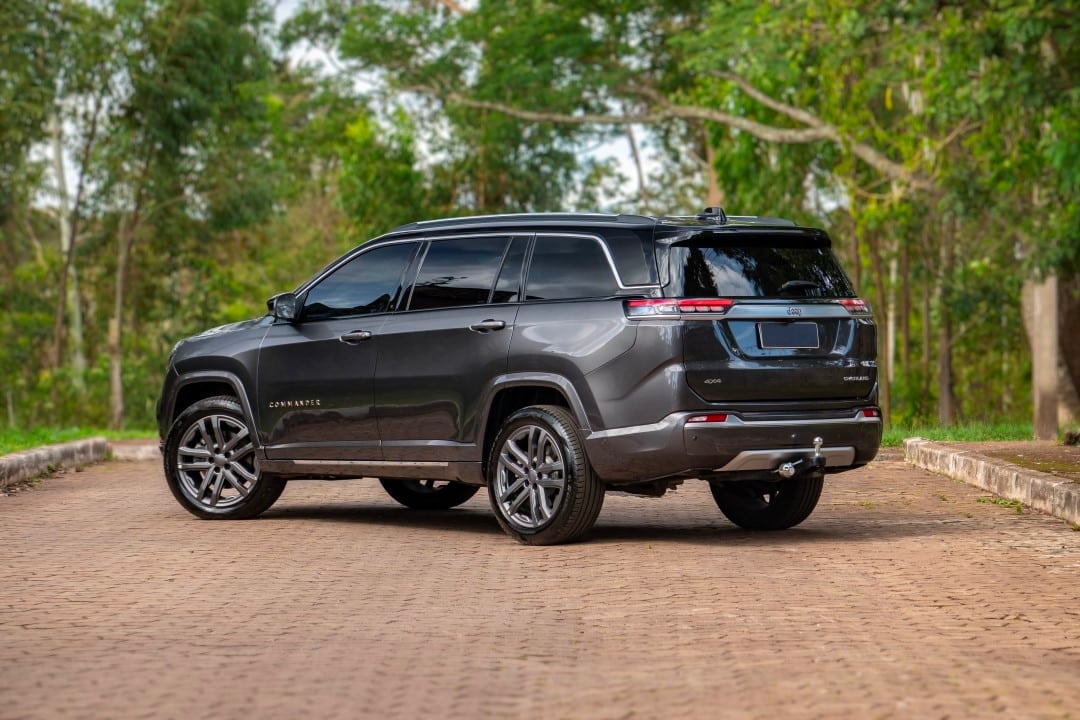
The North American automaker officially announces the arrival of profound mechanical updates for its seven-seater sports utility vehicle sold in the national market. The main mechanical change involves the adoption of an electrified set to support the thermal propellant, aiming to adapt the vehicle to contemporary demands for energy efficiency and reduction of polluting gas emissions.
The engineering strategy applied to the model follows a gradual electrification schedule that the manufacturer had already initiated in other cars in its recent portfolio. The automaker’s focus is to optimize urban performance without the need to change the vehicle’s structural platform or compromise its ability to overcome obstacles on unpaved roads.

The modifications implemented in the updated line cover different finishing configurations, offering options that range from traditional engines to high-performance engines adapted for the use of multiple fuels. The company chose to maintain stability in most of its price list, applying strategic repositioning only in specific catalogs.
Market strategy and new utility value table
The vehicle’s marketing structure was designed to meet different consumer profiles, maintaining a clear division between entry-level, intermediate and top-of-the-line options. Version Longitude remains the gateway to the utility, using the conventional T270 engine, without the addition of the auxiliary electrical system, which guarantees a more competitive initial value in the segment.
Configurations Limited and Overland take on the role of introducing the new partial electrification technology for the public looking for greater refinement and fuel economy in daily use. The manufacturer structured the equipment packages in such a way as to justify the jump in value between versions, adding not only new mechanics, but also exclusive finishes and improved convenience systems.
For the catalog focused on sports performance, the brand applied a direct reduction in the suggested consumer price, making the high-power option slightly more affordable compared to the previous year. Abaixo, the official values released for the entire range of the sports utility vehicle:
- Jeep Commander Longitude T270: R$ 228,790
- Jeep Commander Limited MHEV T270: R$ 255,690
- Jeep Commander Overland MHEV T270: R$ 283,790
- Jeep Commander Overland 2.2 Turbodiesel 4×4: R$ 319,990
- Jeep Commander Blackhawk flex: R$ 329,990
Detailed operation of the 48-volt mild hybrid system
The MHEV technology implemented in versions Limited and Overland replaces the traditional alternator and starter motor with a 48-volt multifunctional electric generator. Este component works in sync with the 1.3 turboflex T270 engine, which delivers 176 horsepower and 27.5 kgfm of torque, providing additional energy directly to the crankshaft through a high-resistance belt. The system features a compact lithium-ion battery, installed so as not to compromise cabin space, which stores the kinetic energy recovered during braking and deceleration of the vehicle.
The auxiliary electric motor is capable of providing instant support of up to 6.6 kgfm of torque in times of greatest demand, such as leaving traffic lights and regaining speed on highways. Embora the architecture does not allow the utility to move using exclusively electrical energy, the intervention of the generator considerably alleviates the effort of the combustion engine. The electronic management operates completely autonomously, without requiring any type of command or adaptation from the driver, maintaining the six-speed automatic transmission with calibration aimed at smooth shifting.
Mechanical performance and the arrival of the Blackhawk flex version
The Blackhawk configuration, positioned as the range’s sporty option, now features the 2.0 turbo engine Hurricane in its dual-fuel variant. The update allows fueling with ethanol or gasoline in any proportion.
Even with the adaptation to use vegetable fuel, the engine maintains the superlative numbers that characterize it, delivering 272 horsepower and an impressive 40.8 kgfm of torque. Power is distributed to all four wheels through an intelligent traction system.
This mechanical calibration follows the technological standard already adopted by other high-performance vehicles from the same automotive group, ensuring standardization on the assembly line. A nine-speed automatic transmission comes with this set.
The manufacturer highlights that the transition to the flex system did not generate losses in the vehicle’s acceleration capacity or directional stability. The price repositioning, with a reduction of R$6,500, aims to increase competitiveness against imported rivals.
Impact on urban consumption and energy efficiency
Official approval data from Inmetro indicate that the utility vehicle equipped with the mild hybrid system can record averages of up to 11 km/l when fueled with gasoline on urban routes. Esta brand represents a reduction in fuel consumption that can reach 9.4% when compared directly with versions powered only by the traditional combustion engine.
The improvement in thermal efficiency directly reflects on the levels of environmental pollution generated by the vehicle’s exhaust. Measurements indicate a drop of up to 5% in carbon dioxide (CO2) emissions in the combined cycle, which encompasses both use on expressways and heavy traffic in large cities, highlighting the benefit of electric assistance during constant stops and starts.
Tax benefits and exemptions for electrified vehicles
The adoption of the 48-volt set legally classifies the utility as an electrified vehicle, which opens the door to a series of tax advantages in different regions of the country. Atualmente, six Brazilian states offer incentive policies for this category of automobiles.
The discounts applied on Imposto on Propriedade of Veículos Automotores (IPVA) vary according to the legislation of each federative unit. In specific scenarios, the savings generated by partial or total tax exemption can reach the mark of R$9,000 over the first years of use of the asset.
In the capital of São Paulo, registering a vehicle as a hybrid guarantees automatic exemption from municipal vehicle rotation. Esta Free circulation during peak hours represents a decisive commercial attraction for consumers who use cars daily in large urban centers.
Preservation of internal space and capacity for seven occupants
The automaker’s engineering team dedicated special attention to the positioning of the new electrical components to ensure that the vehicle’s habitability would not suffer any type of change. The model fully preserves its main market characteristic, which is the ability to accommodate seven passengers divided into three rows of seats with dedicated air conditioning outlets. The trunk volume remains unchanged, offering the same versatility for transporting luggage when the last row of seats is folded down. The acoustic insulation of the cabin was maintained at the same standards as previous lines, ensuring that the energy regeneration system operates silently, without transmitting unwanted noise or vibrations to the occupants during long journeys or in daily urban traffic.
Safety and driver assistance technologies
The vehicle’s active and passive safety package continues to be one of the most complete in its category, offering six standard airbags and a body structure made of high-strength steel. The advanced driver assistance system encompasses autonomous emergency braking with pedestrian detection, lane keeping assistant with steering correction and adaptive cruise control, features that operate in conjunction with the hybrid system’s new deceleration parameters.
Diesel engine maintenance for off-road use
To serve the public that needs high towing capacity and autonomy when traveling on dirt roads, the Overland configuration maintains the offer of the 2.2 engine Turbodiesel. Este engine delivers 200 horsepower and a robust 45.9 kgfm of torque.
The diesel version continues to be linked to the 4×4 traction system with terrain selector and electronic reduction gear. The four-wheel independent suspension guarantees the level of comfort required on asphalt without compromising the travel necessary to overcome ditches and potholes in rural environments.