
Sales of the GMKtec Evo-T2S mini PC with Intel Panther Lake and 64 GB of RAM begin on the global market

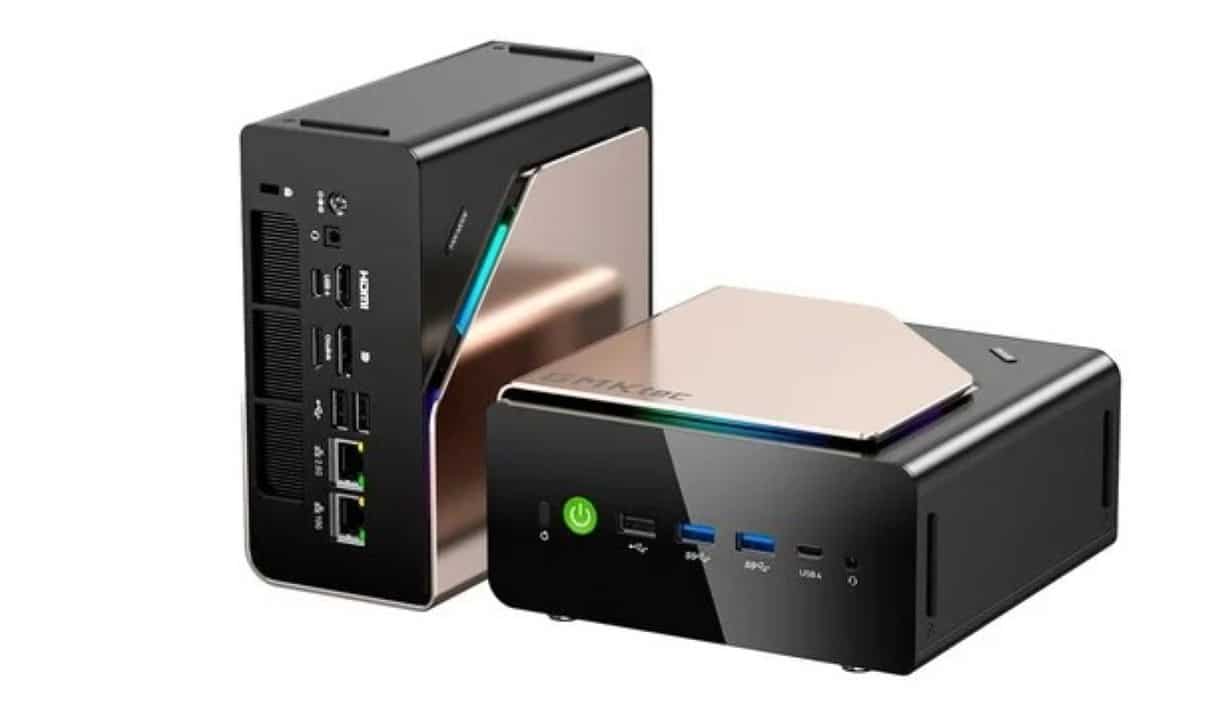
The technology industry records a significant advance in the compact computer segment with the start of global sales of the model Evo-T2S. The equipment hits the market this Monday, March 30, 2026, designed to meet rigorous processing demands and workflows focused on artificial intelligence. The device’s main purpose is to deliver the capabilities of a traditional workstation in a reduced format.
The development of this machine reflects a change in the behavior of professionals who require high performance, but have physical space restrictions in their work environments. The manufacturer structured the hardware to support continuous loads of data processing, three-dimensional modeling and execution of complex algorithms. The focus is on system stability during operations that demand the maximum from internal components.
The integration of new silicon architectures allows the computer to operate with greater energy efficiency than previous generation models. The launch establishes a new level for the mini PC category, which is no longer seen as just basic office solutions but takes on the role of personal servers and advanced processing centers.
Intel Core Ultra X7 processor architecture
The processing core of the new computer is based on the Intel Panther Lake family of chips, which introduces substantial improvements in resource allocation. The version available to consumers is equipped with the Intel Core Ultra X7 358H processor. Este component was designed to balance power consumption and raw speed delivery.
The internal structure of the chip has a strategic division of its 16 physical cores. The array includes four high-performance cores, known as P-Cores, intended for critical tasks that require immediate response. Oito High-efficiency cores, or E-Cores, take over the operating system’s secondary processes.
To maximize energy savings during idle times, the processor also has four low-power cores, called LP E-Cores. Essa hybrid configuration ensures that the system directs the exact computational power to each type of application opened by the user. The maximum operating frequency reaches the 5.1 GHz mark during peak demands.
Intelligent task management avoids processing bottlenecks when multiple heavy software programs are running simultaneously. Profissionais Video editing, software developers and data researchers find in this architecture the fluidity necessary to compile codes or render projects without unexpected interruptions.
Graphics capability and advanced cooling system
The visual processing of the device is managed by the integrated graphics unit Intel Arc B390, built under the new Xe3 architecture, which raises the standard of rendering in compact devices. The GPU reaches frequencies of up to 2.5 GHz and is equipped with 12 Xe Cores, offering native support for Ray Tracing technology and the XeSS intelligent upscaling suite. Esses features, driven by artificial intelligence, allow the generation of additional frames and improvement of image quality in real time, delivering visual performance that rivals entry-level dedicated graphics cards used in conventional-sized cases.
To maintain thermal stability in the face of such powerful hardware, the product’s engineering implemented a cooling system consisting of two fans and a dedicated vapor chamber. Esta heat dissipation solution is designed to support continuous consumption of up to 54 W in the central processing unit, supporting total peaks of 60 W without thermal throttling occurring. The chassis, which weighs just 930 grams, was designed with strategic air vents that ensure constant flow, keeping noise levels under control even during long days of rendering or training language models.
Memory expansion and storage technology
The device’s memory management features innovations aimed at processing large volumes of data through the aiDAPTIV+ technology, developed by the company Phison. The computer leaves the factory equipped with 64 GB of LPDDR5X RAM memory, operating at a transfer speed of 8,533 MT/s. The difference lies in the system’s ability to use internal storage as a direct extension of volatile memory.
This virtual expansion mechanism allows the computer to offload less urgent information to the high-speed SSD, freeing up RAM space for critical artificial intelligence processes. The functionality solves one of the main obstacles faced by developers who run local language models, which tend to quickly saturate traditional memories.
The standard 1TB internal storage offers ample scope for physical expansion, thanks to the presence of two M.2 2280 slots on the motherboard. Connections are compatible with PCIe 5.0 and PCIe 4.0 protocols, allowing the user to install additional drives until reaching a maximum capacity of 16 TB, transforming the equipment into a true local database.
Connectivity standards and communication ports
The device’s network infrastructure is supported by an AMD RZ717 modem, which guarantees compatibility with Wi-Fi 7 wireless networks and Bluetooth 5.4 connections. Para corporate environments that demand absolute stability, the rear panel offers two distinct Ethernet ports, one being a very high-speed connection of 10 Gbps and a secondary 2.5 port of Gbps.
Peripheral communication options include two USB4 ports capable of transferring data at 40 Gbps, as well as HDMI 2.0 and DisplayPort 1.4 video outputs for multi-monitor configurations. The panel also houses a dedicated OCuLink connector for external graphics cards, three USB 2.0 ports, two USB-A 3.2 Gen 2 ports, and a standard 3.5 millimeter audio jack.
Software and user interface management
Integration between cutting-edge hardware and the operating system is facilitated by the inclusion of proprietary GMKtec Claw software, a management platform specifically developed to optimize the use of artificial intelligence agents and monitor machine resources. The program’s interface allows users to fine-tune performance profiles, controlling fan speeds, processor power allocation and real-time thermal monitoring, all through an intuitive control panel. The equipment is delivered with the Windows operating system pre-configured to extract maximum efficiency from the hybrid architecture of the Intel chips, ensuring that the performance and efficiency cores are activated correctly according to the demands of the application in use. The manufacturer’s strategy is to deliver a ready-to-use solution immediately, eliminating the need for complex BIOS settings or manual installation of specific drivers, allowing technology professionals, researchers and content creators to start their projects as soon as the computer is connected to power and the network.
Price positioning and import
The initial model equipped with the Core Ultra X7 processor is available for purchase on the brand’s official website for a suggested price of US$1,899. Considerando at the current exchange rate, the amount is equivalent to approximately R$9,965, an amount that does not include taxes and customs fees applied by the Brazilian government on the import of electronic products.
The manufacturer confirmed that it ships the product to Brazilian territory with exemption from international shipping fees. Consumers, however, must calculate the import taxes in force in the country to understand the final cost of purchasing the high-performance machine.
Future launches in the line
The company’s schedule foresees the expansion of the family of compact computers with the introduction of an even more robust variant in the coming months. Este future model will be equipped with the Intel Core Ultra X9 388H processor, destined for the top of the category, although details on the exact date of availability and sales values have not yet been officially released by the brand.




