
Three Chinese ships manage to cross the Strait of Hormuz on a second attempt
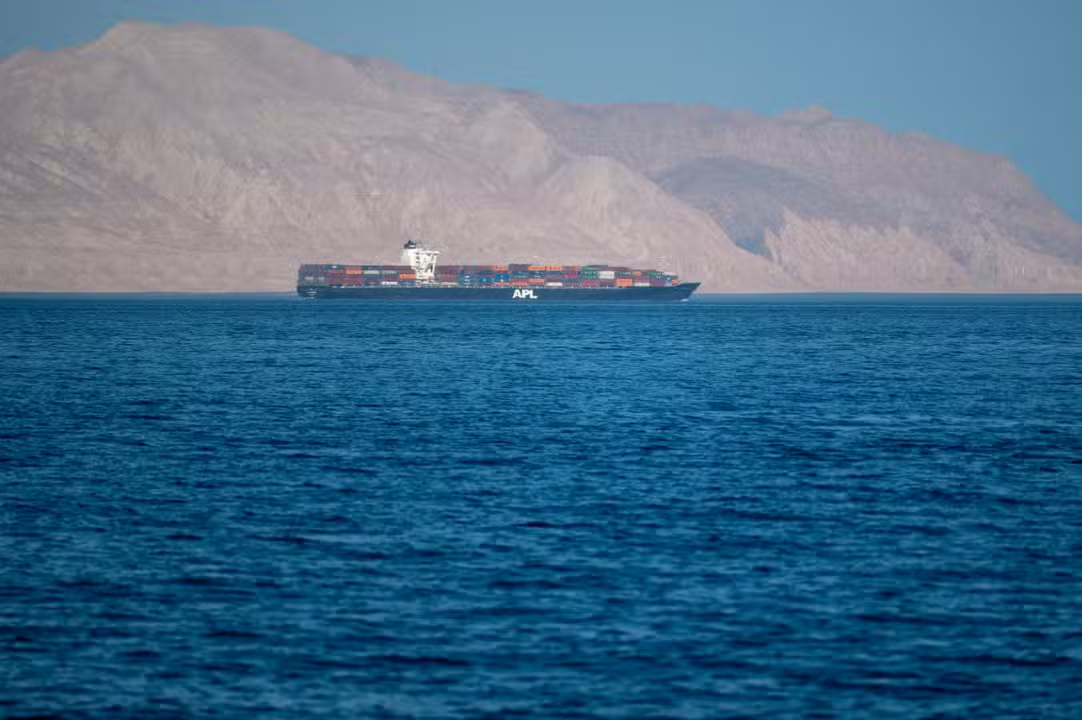
Three Chinese ships, including two container ships operated by group Cosco, crossed Estreito from Ormuz on Monday, March 30. The vessels sailed in close formation and headed towards open waters at Golfo of Omã at high speed. Dados tracking platform MarineTraffic confirmed the successful passage after coordination with the authorities concerned. Trata is the first crossing of Chinese containers leaving Golfo Pérsico since the beginning of the conflict in the region.
The ships attempted the crossing for the first time the previous Friday, but returned to Golfo without completing the route. The second attempt was successful on Monday, marking an increase in general cargo traffic through the strategic channel. Estreito of Ormuz has remained under severe restrictions since February 28th, when the conflict between Estados Unidos, Israel and Irã intensified.

Details of the crossing of Chinese ships
The Chinese vessels crossed the channel after aligning with the parties involved in monitoring the region. Dois container ships headed towards Porto Klang, at Malásia, according to maritime tracking information. The operation took place amid persistent risks, including warnings of possible missile and drone attacks in the area.
The third ship was part of the movement that allowed the group’s coordinated exit. Autoridades Chinese women highlighted the importance of the route for global trade and energy supply. The passage represents a practical test for the gradual resumption of commercial operations at Golfo Pérsico.
Context of the conflict affecting maritime traffic
Estreito of Ormuz recorded a drastic reduction in the volume of vessels since the fighting began in February. Centenas of ships and thousands of crew members were stranded in the region due to the restrictions imposed. Most of the passages authorized to date have involved Iranian-flagged vessels or specific oil cargoes.
Ships of other nationalities, such as Chinese container ships, faced additional difficulties obtaining clearance. Empresas of maritime transport adopted measures such as navigation at times of lower visibility and adjustments to tracking systems to minimize exposure.
Risks and measures adopted in the region of Golfo
The crossing of Chinese ships took place in an environment with a constant presence of threats reported by local authorities. The narrow channel connects Golfo Pérsico to Golfo of Omã and serves as an essential route for the flow of oil and gas in the region. Previous Incidentes involved vessels that had to return after alerts.
International operators closely monitor any signs of normalization in traffic. The resumption of bookings by Cosco for destinations on Golfo, announced at the end of March, indicates efforts to re-establish disrupted trade routes.



Official position of China on the situation on Golfo
China reinforced the need for an immediate ceasefire and restoration of peace in the region of Golfo. The spokesperson for Ministério of Relações Exteriores, Mao Ning, stated that Estreito of Ormuz and the surrounding waters constitute vital routes for international trade. The statement was made during a press conference this Tuesday.
Beijing maintains dialogue with the parties involved to ensure navigation safety. The successful departure of the Chinese ships represents a concrete step in preserving commercial interests amid the protracted conflict.
Recent movements of other vessels in the strait
Ships of nationalities such as Índia and Paquistão also recorded passages through Ormuz and Ormuz in previous days. Dois Indian liquefied petroleum gas ships crossed the canal on Saturday, carrying critical supplies. A Greek oil tanker operated by Dynacom left Golfo and was sighted off the west coast of Índia on March 30th.
These additional cases show that traffic, although still limited, is beginning to register movements from different sources. Total volume remains well below levels seen before the conflict that began in February.
Strategic importance of Estreito of Ormuz for global trade
The canal represents one of the most critical maritime routes in the world for transporting energy. Exportações of Arábia Saudita oil and Catar liquefied natural gas depend directly on safe passage through the strait. The prolonged disruption has affected supply chains on several continents.
Maritime analysis companies monitor tracking data daily to assess possible changes in the scenario. The passage of Chinese containers gains relevance as it signals that non-oil-related cargo is also seeking to resume operations.
Three Chinese ships managed to complete the crossing in coordinated formation, which demonstrates prior planning between operators and authorities. The event reinforces the international attention focused on the Golfo Pérsico region at this time of tension.
Veja Tambem em News (EN)

Research reveals that parents are unaware of how their children use artificial intelligence

Samsung releases new system update with new features for Galaxy Watch 4 users

Digital retail reduces the value of the Galaxy S25 5G smartphone with bank bonuses and device exchange

Amazon’s wireless CarPlay adapter has a 50% discount and high approval ratings from drivers

Zach Cregger’s new Resident Evil ignores games and focuses on an unprecedented story with new characters

Rumor suggests that Nintendo is preparing a special edition of the Switch 2 with a remake of Ocarina of Time

Apple accelerates production of the iPhone 17e and develops new Air model with dual camera system

Epic Games platform releases twelve high-budget games at no permanent cost for PC users

PlayStation 5 Pro price drop accelerates digital retail sales and eliminates global stocks

New Galaxy Watch 9 firmware appears on server and confirms progress in software development

Apple’s commemorative project tests cell phone with 1.1 millimeter edge and curved screen for 2027
