
Artemis II mission successfully takes off and resumes manned flights towards lunar orbit after five decades

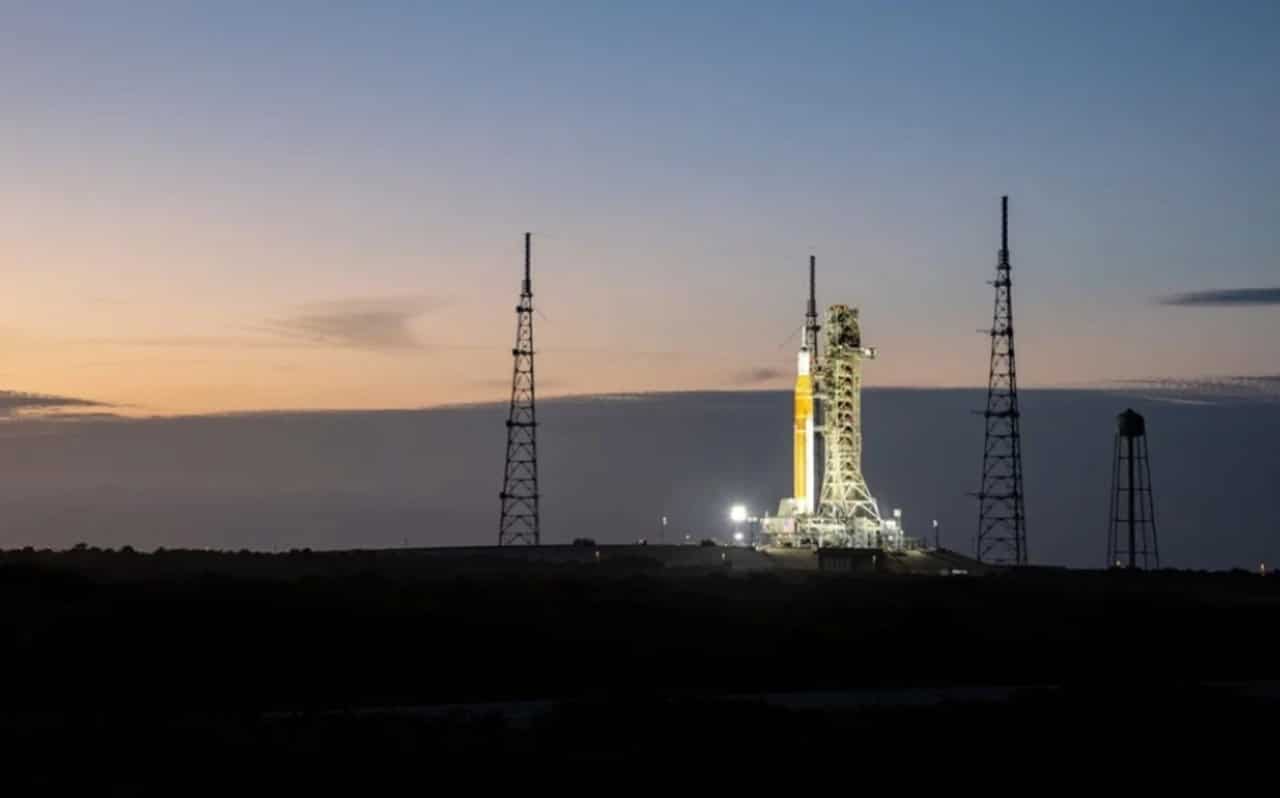
The launch of the manned spacecraft towards the orbit of Lua took place from the space center located at Flórida, marking the resumption of interplanetary operations with a human presence. The crew, made up of four astronauts, began the journey that breaks a gap of more than fifty years without manned flights beyond the low orbit of Terra.
The current operation’s main objective is to perform a complete revolution around the natural satellite, without landing on the surface, to test the integrity and functionality of all navigation and life support systems. The flight partly replicates the trajectory carried out by the last manned mission of the Apollo program, Apollo 17, completed in 1972.

The planning foresees a total duration of approximately ten days in space, during which the technical team on the ground monitors telemetry and the behavior of the equipment in a deep radiation environment. Real-time data collection is the determining factor in releasing the next phases of the North American space program.
Operational details and spacecraft trajectory
The team on board is made up of astronauts Reid Wiseman, Victor Glover, Christina Hammock Koch and Jeremy Hansen, who assume specific command, piloting and mission specialization roles. The group was trained extensively in simulators to deal with the variables of a translunar flight, operating the vehicle’s manual and automated controls.
The flight plan establishes a circumnavigation maneuver that will take the vehicle to a distance of 10,200 kilometers beyond the hidden face of Lua before beginning the return trajectory to Terra. Durante In this phase, communication with mission control suffers scheduled interruptions due to the occlusion caused by the celestial body, requiring full autonomy of the onboard computers.
In-travel verification procedures include the following priority steps:
– Avaliação for the air purification system and internal thermal control of the cabin.
– Teste resistance of the heat shield during re-entry into the Earth’s atmosphere at high speed.
– Calibração of deep space communication instruments with the terrestrial antenna network.
Overcoming technical failures in the launch system
The original launch schedule underwent revisions and postponements in February and March due to anomalies detected during wet general rehearsals. Engineers identified leaks in the liquid fuel supply system and pressure fluctuations in the core stage supply lines.
Maintenance teams replaced relief valves and adjusted helium flow in the upper stage of rocket Space Launch System (SLS). The resolution of these mechanical issues guaranteed the stability of the vehicle during the final countdown and the ignition of the main engines.
Orion Capsule Engineering for Deep Space
The Orion capsule was built with exclusive specifications to withstand the extreme conditions of deep space, differentiating itself from vehicles used for trips to Estação Espacial Internacional. The primary structure is composed of aluminum and lithium alloys, designed to offer maximum structural strength with reduced weight.
The service module, attached to the capsule, provides the main propulsion, electrical energy generated by solar panels and water and oxygen storage for the crew. Este component is vital for executing course correction maneuvers during transit between Terra and Lua.
The radiation protection system was reinforced to shelter the astronauts during their passage through the Van Allen belts and possible solar storms. Sensores distributed throughout the cabin continuously measure exposure levels, providing data for improving future spacesuits.
The validation of these systems in a real operational scenario replaces theoretical projections and tests in vacuum chambers on the Terra. The performance of the Orion dictates the safety parameters required for the authorization of missions that involve the descent of modules onto extraterrestrial soil.
The role of the rocket in the mission architecture
Space Launch System serves as the backbone of the current interplanetary transportation infrastructure, being the most powerful launch vehicle in operation. The rocket’s architecture combines solid-fuel boosters with RS-25 liquid-fuel engines, generating the thrust needed to escape Earth’s gravitational pull with a heavy payload. The burning of the stages occurs in precise sequences, discarding the empty sections into the ocean to alleviate the mass of the assembly and optimize acceleration towards outer space.
The development of this super-heavy launcher required the integration of technologies inherited from the space shuttle program with new avionics and autonomous navigation systems. The ability to send the crew capsule and service module in a single launch simplifies orbital logistics, eliminating the need for multiple assembly in Terra low orbit. SLS performance on this flight provides final flight certification for the vehicle, ensuring that the design meets stringent safety criteria for human transportation.
The new geopolitical dynamics in the exploration of the solar system
The execution of this orbital flight puts Estados Unidos in an advantageous position in the current space race, which differs from the scenario of the last century due to the multiplicity of state and private actors involved. The ability to transport humans beyond low Earth orbit and demonstrate the functionality of a complex launch and navigation infrastructure signals the technological mastery required for the exploration of extraterrestrial resources. The North American space program structures its operations based on international cooperation agreements, establishing operational and legal guidelines for the use of outer space. Nações competitors, especially Ásia, accelerate the development of their own super-heavy vehicles and landers, with the aim of establishing research bases at the lunar south pole. The continuous human presence in the vicinity of Lua functions as a demonstrator of logistical strength and industrial capacity, directly influencing diplomatic relations and the formulation of global policies for the governance of territories outside the planet Terra. The operational success of the current manned mission consolidates the technical viability of the model adopted by the space agency, guaranteeing the flow of government and private investments for the next decades of interplanetary exploration.
Preparations for the next stages of the program
Telemetry information and crew reports collected during the ten days of flight will be directly applied to the safety review of mission Artemis III. Esta The subsequent stage focuses on transferring astronauts from capsule Orion to a commercial landing module, culminating in the physical descent to the lunar surface.
Long-term structure and orbital bases
The program’s ongoing planning envisages the assembly of space station Gateway, an infrastructure that will orbit Lua to serve as a docking and refueling point. The station will function as a research laboratory and an advanced communications center.
The consolidation of lunar operations establishes the technical and operational basis for sending manned missions to planet Marte. The mastery of life support technologies in long-duration missions and the extraction of resources in situ are the pillars for the expansion of human presence in the solar system.




