
Artemis II takes off with 4 astronauts on an unprecedented mission to the moon, with challenges in the onboard bathroom

Mission Artemis II began its monumental journey on April 1, 2026, with the successful launch of four astronauts from Centro Espacial Kennedy to Flórida. Esta’s historic 10-day expedition aims to circle Lua, marking the return of humans to proximity to the natural satellite after more than five decades since the last manned mission. The feat represents a crucial step towards in-depth space exploration, setting new records for the distance traveled by humans beyond Terra.
The crew aboard capsule Orion is made up of prominent names in the space community: Reid Wiseman, Victor Glover and Christina Koch, all from NASA, and Jeremy Hansen, representing Agência Espacial Canadense. The selection of these astronauts highlights the international collaboration and high level of expertise required for such a complex and challenging undertaking. Desde the launch, the team began acclimatizing to the space environment, performing early systems tests and decommissioning spacesuits to change into more comfortable clothing, while the eyes of the world turn to their next steps.
First moments in orbit and initial adjustments
The first moments of mission Artemis II in space were dedicated to setting up and checking crucial systems. Astronautas as Reid Wiseman and Christina Koch are engaged in a series of standardized procedures that ensure the proper functioning of all equipment before the spacecraft heads deeper into its lunar trajectory. Estes Testing is critical to mission safety and success.
Despite initial success, minor adjustments and technical challenges are to be expected on test missions like this. Conforme released by Amit Kshatriya, NASA Associate Administrator, the mission control team is monitoring some minor issues. Entre them, an issue has been identified with the capsule toilet controller which will require a few hours of troubleshooting.
Unexpected challenges and the reality of spaceflight
The complexity of sending humans into deep space naturally involves the possibility of unexpected problems occurring, even with the most rigorous planning. The toilet mishap aboard Artemis II, while seemingly trivial, highlights the realities of spaceflight, where every system must function flawlessly in an extreme, enclosed environment.
This type of situation is not unprecedented. Jared Isaacman, one of NASA’s chiefs and an experienced astronaut, already faced a similar bathroom problem during his own space trip in 2021 aboard a SpaceX capsule. Tais incidents serve as reminders that space engineering, no matter how advanced it is, constantly deals with unpredictable variables.
The team on the ground is in constant contact with the astronauts, providing support and guidance to resolve any unforeseen events. The nature of a test mission like Artemis II is precisely to identify and resolve these small problems in real time, ensuring that future missions, like the landing on Lua, are even safer and more efficient. The resilience and adaptability of the crew and mission control are put to the test in these moments.
The importance of a test mission for the future of exploration
Artemis II is more than a trip around Lua; it is a critical test mission that serves as a precursor to the ultimate goal of returning humans to the lunar surface and eventually to Marte. Cada system, every protocol, and every experience of the astronauts and ground crew provides invaluable data that will shape the next steps of the Artemis program. The crew’s journey carries significant weight for humanity’s scientific and technological advancement.
The relevance of this expedition lies in validating the systems of the Orion spacecraft, the Space Launch System rocket (SLS) and operational procedures under real deep space flight conditions. Exposure to a different radiation environment and long periods outside the protection of the Earth’s magnetic field provides crucial data on impacts on human health and technology performance. The results of this mission will be thoroughly analyzed to ensure the safety and success of future stages of the program.
The longing for a new “born of Terra”
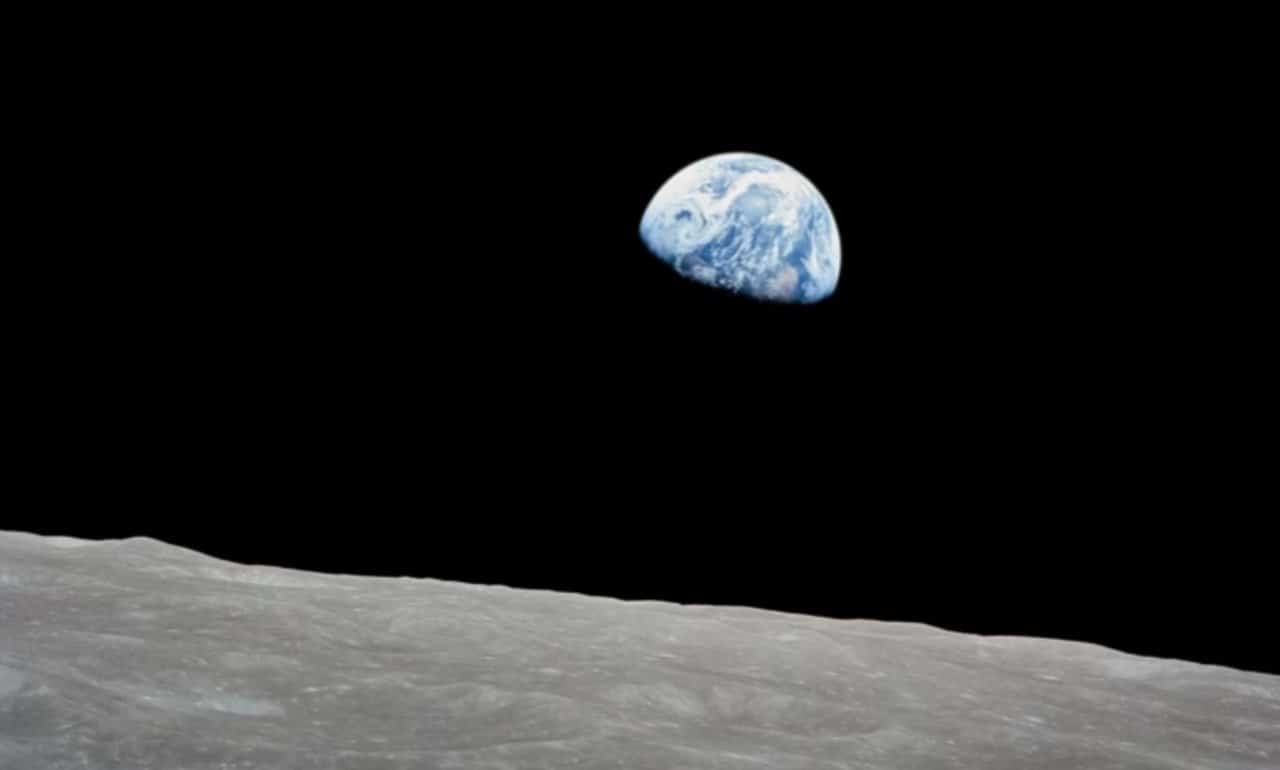
Among the mission’s many scientific and technical goals, there is also a shared yearning for moments of beauty and inspiration. The crew of Artemis II expressed a desire to experience and record their own “Terra sunrise”, an iconic image captured by Apollo 8 in 1968, which showed Terra as a blue and white sphere emerging from the lunar horizon. Essa Photography has become a powerful symbol of humanity’s perspective on its own planet.
Lori Glaze, Acting Associate Administrator for NASA, confirmed that this is a topic of discussion and an item on the team’s wish list for when the spacecraft approaches the Lua on the sixth day of the mission. Embora While there is no guarantee that live footage will be broadcast, NASA plans to make it available to the public as soon as possible if the crew is able to capture this long-awaited moment. The opportunity to replicate this visual experience would not only yield stunning images, but also reinforce the connection between space exploration and human perception of our place in the universe.
Preparation for future lunar and interplanetary missions
Artemis II is a crucial link in the chain of missions that aim to establish a sustainable human presence at Lua, a fundamental step for future trips to Marte. The knowledge acquired on this journey, from overcoming small technical problems to adapting astronauts to deep space, will be directly applied to developing the technologies and strategies necessary for these long-term ambitions. NASA and its international partners are laying the foundation for a new era of exploration.
The ability to operate autonomously for long periods, to manage resources and to maintain the health and well-being of the crew in extreme conditions are aspects that are being extensively tested. Cada data collected and each challenge overcome in Artemis II contribute to refining lunar habitat designs, life support systems and propulsion technologies that will enable even more ambitious missions in the future. The adventure around Lua is therefore an orbiting laboratory for the future of human presence on other worlds.
The legacy of Artemis II for future generations
Mission Artemis II is not just a feat of engineering and science; she is also a source of inspiration for generations to come. By once again taking human beings to the vicinity of Lua, it rekindles the fascination with space exploration and demonstrates what is possible when humanity comes together for a common goal. The legacy of this mission will be to drive scientific curiosity and technological development around the world.
The experience of the four astronauts aboard Orion, the images they capture and the discoveries the team makes will be incorporated into history books and serve as catalysts for students and young professionals. The visibility of missions like Artemis II is essential to ensuring that interest in science, technology, engineering and mathematics (STEM) continues to grow, forming the basis for future explorers and innovators who will take humanity further into the cosmos.



