
Comets MAPS and PanSTARRS approach the Sun in April with chances of visibility

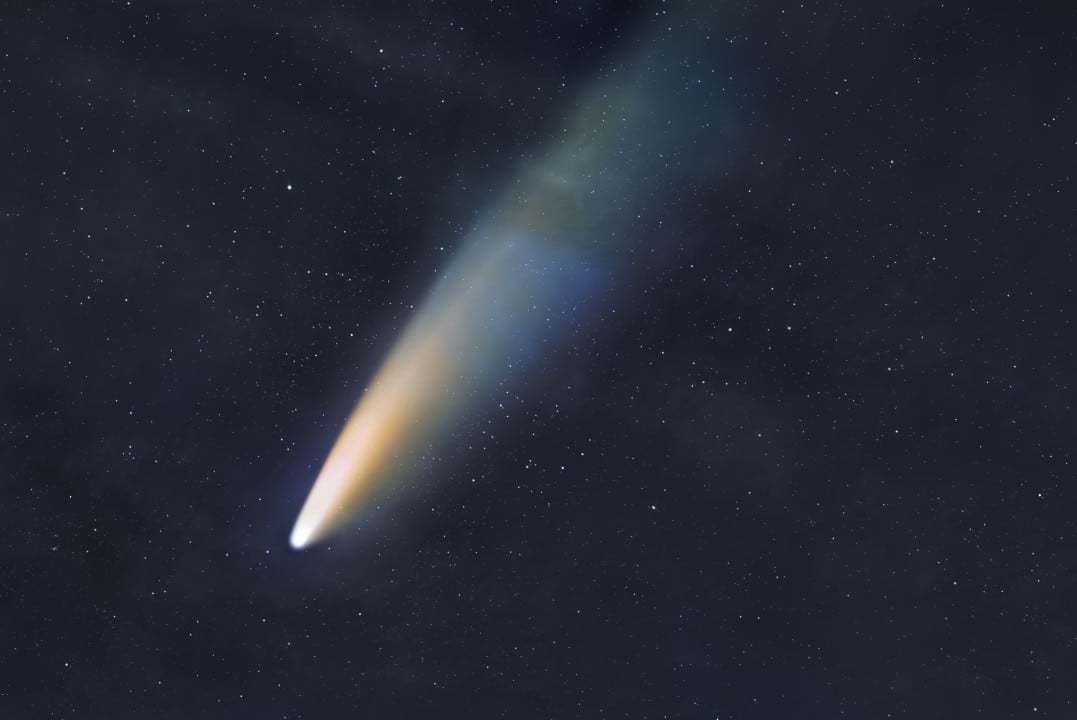
Dois cometas devem cruzar o céu noturno em abril de 2026 e oferecer oportunidades distintas de observação para entusiastas da astronomia. Comet C/2026 A1 (MAPS) belongs to the Kreutz group of sungrazers and passes through perihelion around April 4. Já C/2025 R3 (PanSTARRS) reaches its closest point to Sol around April 19 or 20.
Both objects approach the inner solar system and attract the attention of observers at different latitudes. MAPS presents unpredictable behavior typical of sungrazers while PanSTARRS follows a more stable trajectory. Especialistas monitor the brightness and integrity of the cores to assess actual visibility.
- MAPS has a core estimated to be around 400 meters in diameter.
- PanSTARRS was discovered in September 2025 by the Pan-STARRS system.
- Both may require binoculars or telescopes in many observing scenarios.
Risk of disintegration of comet MAPS during solar approach
Comet C/2026 A1 (MAPS) passes just about 161,000 kilometers from the solar surface at perihelion. Essa distance places the object within the solar corona and exposes the core to intense heat and gravity. Muitos sungrazers from group Kreutz fragment in these extreme conditions.
Astronomers report that MAPS demonstrated an acceleration in brightness in the last few weeks before the passage. The small nucleus increases the likelihood of complete disintegration before or during the event. Caso survive, the comet may have an elongated tail visible briefly after perihelion.
Observing comet MAPS requires specific conditions on the horizon
Observers should look for the comet between 30 and 45 minutes after sunset at mid or high latitudes. The low position in the western sky makes detection difficult because the twilight glow interferes. Binóculos or small telescopes help identify the object even in favorable conditions.
After perihelion on April 4, MAPS may appear more clearly for a few days in the early evening. The tail projects away from Sol and can achieve remarkable extension if the nucleus resists. Regiões with dark skies and a clear horizon offer the best chances.

PanSTARRS presents more predictable behavior at the end of the month
Comet C/2025 R3 (PanSTARRS) reaches perihelion around April 19 or 20 and makes closest approach to Terra on April 26. The minimum distance is around 73 million kilometers. Esse profile allows for more reliable predictions about brightness and visibility.
The object should be bright enough to observe with binoculars for much of the month. In optimistic scenarios, it can reach a magnitude that allows detection with the naked eye in places with little light pollution. The position in the sky varies depending on the hemisphere and local time.
The comet transits through constellations such as Pegasus before approaching Sol. Após perihelion can be more easily observed in the morning or evening sky depending on the observer’s location. Relative stability makes PanSTARRS a complementary option to MAPS.
Practical tips for safe observation of the two comets
Never direct instruments or look directly at Sol during the approach of comets. The risk of permanent eye damage requires maximum caution during perihelion days. Utilize Certified solar filters only for safe solar observation if necessary.
Choose locations away from urban lights to improve contrast in the twilight sky. Aplicativos astronomy help determine the exact position of comets in real time according to local time. Registre atmospheric conditions because clouds or low fog may impede viewing.
Sungrazer comets like MAPS reveal fragments of ancient bodies
Group Kreutz brings together comets that share origins in a larger progenitor that disintegrated centuries ago. Esses objects follow similar orbits and pass very close to Sol at varying intervals. MAPS stands out for its recent discovery and accelerated brightness behavior.
Astronomers use space and ground-based telescopes to monitor the evolution of these visitors. Dados collected before and after perihelion contribute to understanding the composition and durability of cometary nuclei. PanSTARRS offers contrast by presenting a more conventional long-period comet trajectory.
The double presence in April 2026 allows observers to compare different dynamics in the same month. MAPS brings the element of risk and possible brief spectacle while PanSTARRS offers a longer observation window. Ambas Situations depend on factors such as nuclear survival and local sky conditions.
Comet MAPS may show long tail if it resists perihelion
If the MAPS core supports solar passage, a bright tail could quickly form. Observadores report that similar events in the past produced stunning visuals for a few days. The tail projection occurs in the opposite direction to Sol.
Maximum visibility tends to occur between April 5th and 10th on the western horizon after dusk. The length of the tail can reach several degrees in the sky under ideal conditions. Binóculos increase the chance of capturing details even when the core remains faint.
PanSTARRS should maintain stable brightness after approaching Terra
After perihelion, comet C/2025 R3 (PanSTARRS) remains visible as it gradually moves away. The predicted magnitude allows monitoring for weeks depending on the equipment used. Observadores in the southern hemisphere may have advantages in certain phases of the trajectory.
The object does not suffer the same level of thermal stress as MAPS. Essa feature reduces the risk of sudden disintegration and keeps expectations more consistent. Astrônomos continue to refine predictions based on updated brightness observations.



