
Danilo and Endrick ensure Brazil’s victory over Croatia in a decisive test before the 2026 World Cup

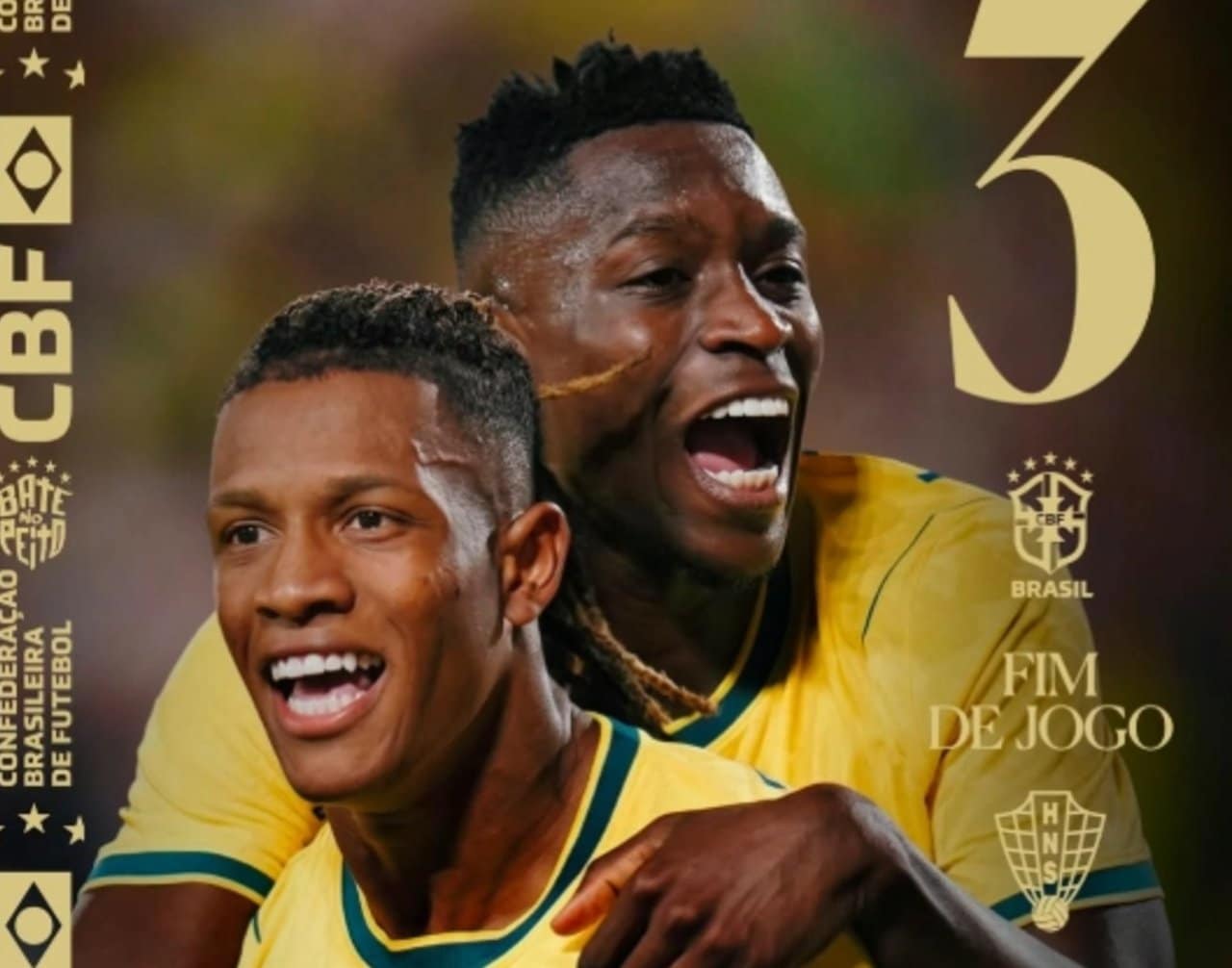
The Brazilian team demonstrated an extremely competitive aspect by beating Croácia 3-1 in a friendly played in Orlando, at Estados Unidos, this Wednesday morning. Sob commanded by Carlo Ancelotti, the national team displayed the so-called “cupboy mode”, prioritizing tactical efficiency and quick transitions to the detriment of purely aesthetic football. The positive result ends the Data Fifa friendly cycle with clear signs that the group has reached the necessary maturity to face the main global powers.
The clash served as an important laboratory for the Italian coach to test the players’ ability to adapt to different game scenarios against elite opponents. Diferente From the stance adopted in the previous game against França, Brasil sought to have more control of ball possession at various times, but did not hesitate to retreat the lines to explore the spaces provided by the Europeans. The strategy had an effect and allowed individual talents such as Danilo and Vini Jr. to unbalance the match at crucial moments of the dispute.
- The team used medium and low blocks to attract Croatian marking and generate depth.
- Goalkeeper Livakovic made at least three saves considered miraculous in the first stage alone.
- Transition speed was Brazil’s main differentiator in breaking through the opponent’s defensive system.
- Endrick came on in the second half and changed the dynamics of the match with a direct participation in the final goals.
Danilo’s performance and organization of the midfield guarantee an initial advantage
The first stage showed a patient and organized Brasil, focused on circulating the ball intelligently in the offensive field to wear down the Croatian marking. Danilo Santos was the highlight of this phase of the game, giving a new dynamic to the central sector by combining defensive intensity with constant attacks. The player demonstrated excellent interaction with Matheus Cunha, occupying empty spaces and facilitating the attackers’ approach to create real chances of finishing.
The goal that opened the scoring in the 44th minute of the first half was the direct result of this strategy of speed and verticality. Após a precise cut of Léo Pereira in defense, the ball reached Matheus Cunha, who quickly activated the attack for the Vini Jr. sprint down the left wing. The Brazilian number 7 cleared three opponents’ markings with a dry dribble and crossed low for Danilo to appear as a surprise element and fill the net, crowning his performance.
Change of posture in the second half and the risks of reactivity
Upon returning from the break, the Brazilian team changed its tactical approach and opted to give up more ground to the Croácia team. With 67% possession of the ball in a given period, the Croatians put pressure on the Brasil team and managed to equalize after a cross coming from the right attacking sector. The goal scored by Majer exposed a momentary flaw in goalkeeper Bento’s exit and raised concerns about the sustainability of an excessively defensive game against technical teams.
The pressure exerted by the opponents forced the Brazilian reserve bank to move to rebalance the actions and resume the leading role in the duel on American soil. Embora the team took unnecessary risks when giving up control, the solidity of the defense duo prevented Croácia from turning the score around before the substitutions. The moment served to show that, despite its defensive competence, Brasil still needs to adjust the transition between the moment of defense and control of possession.
- Croácia finished eight times against the Brazilian goal during the second half of the match.
- The zone marking system has been extensively tested by the attacks of Modric and his companions.
- The arrival of new attackers allowed Brasil to catch its breath to press the ball out.
Impact of Endrick and consolidation of the final score at Orlando
The arrival of Endrick once again transformed the outlook of the friendly match, giving Brasil the necessary aggressiveness to seek the definitive victory in regular time. Assim As in previous engagements against major European teams, the young striker demonstrated a unique ability to attack empty spaces. Ele was responsible for conceding the penalty that put Brasil back in front and, minutes later, served a precise assist to close the score at 3-1.
This immediate decision-making capacity reinforces Carlo Ancelotti’s tactical repertoire for the final call of Mundial that approaches in a few months. The coach highlighted in a press conference that the current team has enough self-knowledge to understand when it should be protagonist and when it needs to be reactive. The balance between individual talent and tactical discipline seems to be the formula chosen to seek the title and overcome the trauma of past eliminations.
Tactical repertoire and psychological preparation for the global challenge
The Brazilian technical committee assesses that the current group is much more psychologically prepared to deal with moments of adversity within a knockout match. The focus on being competitive over seeking spectacle reflects the influence of modern European football and Ancelotti’s experience in short-shooter tournaments. The victory over Croácia, executioner of Brasil in 2022, brings an important emotional component of overcoming and confidence for the athletes called up.
The closure of Data Fifa leaves a positive balance of constant evolution and defensive security, elements that usually decide high-level world championships. The selection now awaits the announcement of the definitive list, but the names that played in Orlando gained important points in the dispute for a place among the starters. Brazilian fans envision a team that knows how to suffer without losing organization, an essential characteristic for those who aim to lift the most important trophy in football.
Statistical analysis and individual performance of athletes on the field
When observing the final numbers of the confrontation, it is clear that efficiency in finishing was the determining point for the success of the scheme set up for the friendly. Brasil had less total shot volume compared to games from the previous era, but the quality of chances created was significantly higher due to collective organization. The midfielders fulfilled dual roles of protection and playmaking, allowing the wingers to have freedom for one-on-one play without defensive overload.
Bento’s performance, despite the scare in the equalizing goal, continues to be seen favorably due to the security conveyed in aerial balls and quick throw-ins. The goalkeeper has established himself as a reliable player in a system that requires extra attention during 90 minutes of intense play. The integration between veterans like Danilo and young promises like Endrick creates a balanced locker room environment, facilitating the implementation of Carlo Ancelotti’s complex ideas on the pitch.
- Brasil recorded a pass success rate of over 85% in offensive transition zones.
- The team covered a greater average distance than that recorded in previous qualifying games.
- The tactical substitutions occurred exactly when the Croatian team was physically down.
- The defensive sector blocked four dangerous shots that could have changed the course of the game.
Expectations for the final call-up and the atmosphere in the Brazilian delegation
The mood in the dressing rooms after the victory in Orlando was one of restrained optimism, with the players aware that the tactical work is only beginning to bear fruit. Carlo Ancelotti has emphasized the need to maintain humility and focus on executing the game plan, regardless of the style of the opponent faced. The Brazilian delegation now returns to their respective clubs with the mission of maintaining the level of performance to guarantee their presence in the main tournament.
The international press and sports analysts highlighted the Brasil organization as one of the most solid among South American teams today. The ability to beat Croácia convincingly sends a message to rivals that the team does not just depend on individual flashes from its stars. The “copper mode” activated by Ancelotti appears to be the answer to the physical and tactical challenges that modern football poses in each new international competition.
Adaptation to local time and game conditions on Estados Unidos
The match was played under mild temperatures and excellent condition of the pitch, providing a high-level technical spectacle for the fans present at the stadium. The 11:00 local time facilitated the physical recovery of the athletes immediately after the match, allowing a smoother return to the training centers. Essa acclimatization is seen as a dress rehearsal, as the next Copa of Mundo will have Estados Unidos as one of the main venues for the decisive phases.
The players highlighted the importance of familiarizing themselves with the American environment and the logistics of traveling between the host cities that will be required in Mundial. The support of the Brazilian fans resident in Flórida was also an extra motivational factor, creating a “home” atmosphere even in foreign territory. The team leaves Orlando with a renewed soul and with the certainty that the path outlined by the current technical management is the most viable for success.
- CBF logistics provided specific rest periods to minimize the impact of time differences.
- Training sessions open to the public strengthened the bond between the team and local fans during the week.
- The technological structure used in American stadiums helped the commission analyze real-time data.
Defensive evolution and compaction between the team’s sectors
One of the points most praised by analysts was the compactness between the defensive line and the midfield, preventing Croácia from finding breakthrough passes. Léo Pereira and his defender teammates maintained impeccable coordination, only going into combat when there was guaranteed cover behind. Essa tactical discipline prevented Brasil from being vulnerable even when Croácia had possession of the ball in dangerous intermediate areas of the field of play.
The defensive evolution is the result of exhaustive work of video repetition and analysis promoted by Ancelotti and his technical assistants since they took command. The goal is to create a system that is immune to sudden variations in performance, ensuring that the Brasil is difficult to beat under any circumstances. With a solid defense, the attackers’ talent has more freedom to flourish without the constant pressure of needing to recover the score at all costs during the match.
Conclusion of Data Fifa and next steps for the Brazilian team
With the end of this testing period, the Brazilian team now enters a regime of constant monitoring of athletes in their European and national clubs. The performance against Croácia served to resolve some doubts and open up new lineup possibilities according to the needs of each game in Mundial. Brasil showed that it has the resources to face teams that play closed or seek control of the game through qualified possession of the ball.
The focus now turns to the detailed analysis of the future group stage opponents and the final physical preparation of those chosen to represent the country. Renewed confidence and the successful implementation of new strategies place Brasil once again among the favorites to win football’s greatest title. The “tactical repertoire” mentioned by Ancelotti will be the secret weapon to try to bring the sixth star to the Canarian shirt after years of waiting.



