

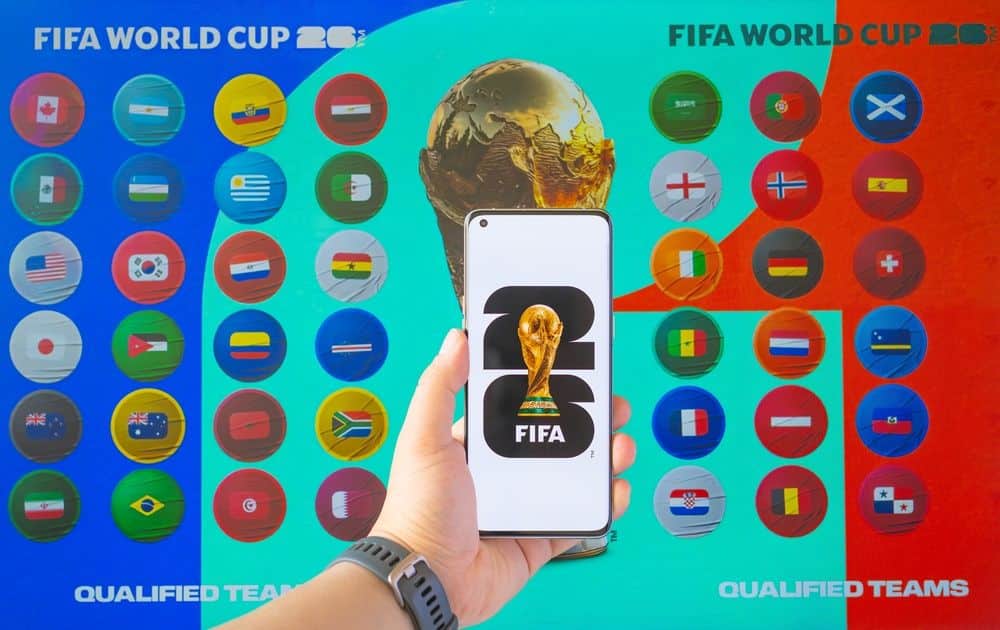
The organization of the biggest football tournament on the planet established the official guidelines for the competition hosted jointly by Estados Unidos, México and Canadá. The sporting event marks a historic change in the traditional structure, expanding global participation and reconfiguring the map of disputes. The matches will take place in 16 different cities, requiring rigorous mobility and security planning.
The unprecedented format includes the presence of 48 national teams, which directly changes the number of clashes and the duration of the championship. The highest football entity distributed the teams into 12 groups made up of four members each, guaranteeing a greater volume of games in the initial phase. Essa modification aims to increase the representation of continents that historically had fewer direct vacancies.
No more hypotheticals. 104 matches. Let it begins. 🫨#FIFAWorldCup pic.twitter.com/asxkk4bxhR
— FIFA World Cup (@FIFAWorldCup)April 1, 2026
The official calendar determines that the ball starts rolling on June 11th, extending until the grand final scheduled for July 19th. México will host the opening match, honoring its tradition in the sport, while the most acute phases of the tournament will focus on American and Canadian territory. Local authorities have already begun operations to adapt public spaces to receive visitors.
Group division and regionalized planning of Fifa
The organizing committee prioritized the regionalization of clashes to minimize the physical strain on athletes and facilitate the movement of fans during the first phase of the competition. The stadiums and training centers meet international standards of excellence. The strategy of dividing games into specific geographic zones allows teams to maintain fixed bases for longer, reducing the need for long flights between one round and another. Esse The logistical model also benefits the hotel chain and local transport services, which are able to predict the flow of tourists with greater accuracy.
The distribution of the 48 teams into 12 groups creates a scenario where the best teams advance with an adjusted safety margin, but simultaneously offers opportunities for nations with less tradition in the sport. Structural planning involves coordination between government authorities in the three countries to streamline immigration and customs procedures. Entre the main logistical guidelines established for the operation of the headquarters, the following operational points stand out:
– Implementação of exclusive transport corridors between airports and hotel areas.
– Criação of social areas for fans in strategic tourist spots.
– Padronização of security protocols at land and air borders.
– Monitoramento constant climate in cities with a history of high temperatures.
Initial schedule and times of the first matches
The opening match will take place on June 11th, a Thursday, pitting the teams from México and África from Sul face to face, at 4pm local time. On the same day, Sul faces Tchéquia at 11pm, closing the first round of Grupo A. Esses times were defined to maximize the television audience on the home continents of the teams involved.
The following day, June 12, Canadá makes its debut against Bósnia at 4pm, in a match valid for Grupo B. Mais later, at 10pm, Estados Unidos enters the field against Paraguai for Grupo D. The organization distributed the premieres of the host countries on consecutive days to keep the local public’s engagement high from the first moments of the tournament.
Saturday, June 13th features an intense schedule of clashes, starting with Catar and Suíça at 4pm. Seleção Brasileira starts its journey at 7pm against Marrocos, for Grupo C, followed by the game between Haiti and Escócia at 10pm. The round progresses into the early hours with Austrália and Turquia facing each other at 1am on Sunday.
The sequence of games continues on Sunday, June 14th, with Alemanha playing against Curaçao at 2pm and Holanda facing Japão at 5pm. Costa of Marfim and Equador measure strength at 8 pm, while Suécia and Tunísia end the day at 11 pm. Esse The rhythm of four daily matches requires a coordinated effort from the broadcast and referee teams.
Broadcast dynamics and audience engagement
The programming schedule was structured to offer continuous broadcast windows, starting in the early afternoon and continuing until the evening. On June 15, for example, Espanha plays against Cabo Verde at 1pm, followed by Bélgica and Egito at 4pm, Arábia Saudita and Uruguai at 7pm, and Irã against Nova Zelândia at 10pm. Essa continuity aims to retain viewers’ attention on digital platforms and television channels.
The final rounds of the group stage, scheduled from June 24th, will take place simultaneously to guarantee the sporting integrity of the competition. México will end its initial participation against Tchéquia at the same time that África of Sul faces Coreia of Sul. Essa simultaneity prevents teams from entering the field knowing the results necessary for classification, increasing competitiveness.
Structure of the knockout stage and the new knockout format
The introduction of the round of 16 stage represents the most drastic change to the tournament’s elimination system, scheduled to begin on June 28 with simultaneous matches that allow no room for error. The teams that survive this initial stage of the knockout stage will advance to the round of 16, which will take place between the 4th and 7th of July, coinciding with important holidays and guaranteeing stadiums with maximum capacity. The competition continues with the quarterfinals held from July 9th to 11th in arenas equipped with advanced air conditioning technology, protecting athletes from the extreme thermal variations of summer in the northern hemisphere. The semi-finals are scheduled for July 14th and 15th, defining the protagonists who will compete for the world title. The match for third place will serve as a preliminary event on July 18th, setting the stage for the grand final on July 19th, when the two best teams on the planet will face off on US soil under the eyes of billions of globally connected spectators.
Tactical preparation of Brasil and adaptation to the pitch
The Brazilian technical committee focuses its efforts on the detailed analysis of Grupo C’s opponents and on adapting to the specific conditions of the North American arenas. Após debut against Marrocos, Brasil will face Haiti on June 19th and will close the group stage against Escócia on June 24th. The physical monitoring of athletes is treated as an absolute priority.
One of the main technical challenges of this edition is the presence of synthetic pitches in several stadiums of Estados Unidos and Canadá. The national delegation’s training sessions were adjusted to simulate the ball time and joint impact characteristic of this type of surface. Quick adaptation to this surface can define success in the knockout stages.
The increase in the number of participants and the addition of an extra knockout phase require squads with greater depth and versatility. Especialistas in sports physiology point out that player rotation will be essential to avoid muscle injuries throughout the 39 days of competition. Managing physical and mental exhaustion will determine the longevity of teams in the tournament.
Government investments and impact on the hotel sector
The governments of the three organizing countries injected significant resources into the modernization of urban infrastructure, including the expansion of airport terminals and the revitalization of expressways. The tourism and hospitality sector is already recording unprecedented occupancy rates for the event period, boosting the local economy of the 16 host cities. The integration between public authorities and the private sector made it possible to build temporary complexes to accommodate the international press and official sponsors.
Within the four lines, investment in arbitration technology reached a new level with the implementation of improved offside detection and video communication systems. The digital tools were calibrated to reduce downtime in matches and ensure accurate decisions in highly complex moves. The technological apparatus installed in the arenas will remain a legacy for local sports leagues after the championship ends.
Security and urban mobility protocols for fans
Access to stadiums will depend on a fully digital ticketing system, requiring prior registration and biometric validation in some venues to prevent scalpers. Public security authorities have set up integrated command centers that will monitor the flow of people through networks of smart cameras spread across sports perimeters. Linhas exclusive public transport routes were created to ensure that fans reach the stands in advance and safely, minimizing the impact on routine traffic in metropolises.



