
Full Pink Moon lights up Brazilian sky on April 1st with symbolic name


April Lua Cheia appears in the Brazilian sky from the night of April 1st. The phenomenon marks the peak of the full phase at around 11:11 pm at Brasília, with visibility throughout the following night. Apesar of its popular name, the natural satellite does not present any change in its usual color.
Observers in different regions of the country can follow the event from sunset. Lua appears full to the naked eye the night before and remains prominently visible in the hours following the peak. Condições of clear skies favor contemplation in urban or rural areas.
- The full phase coincides with the seasonal transition period on the planet.
- The name derives from ancient traditions linked to nature.
- Visibility extends for several hours around the main moment.
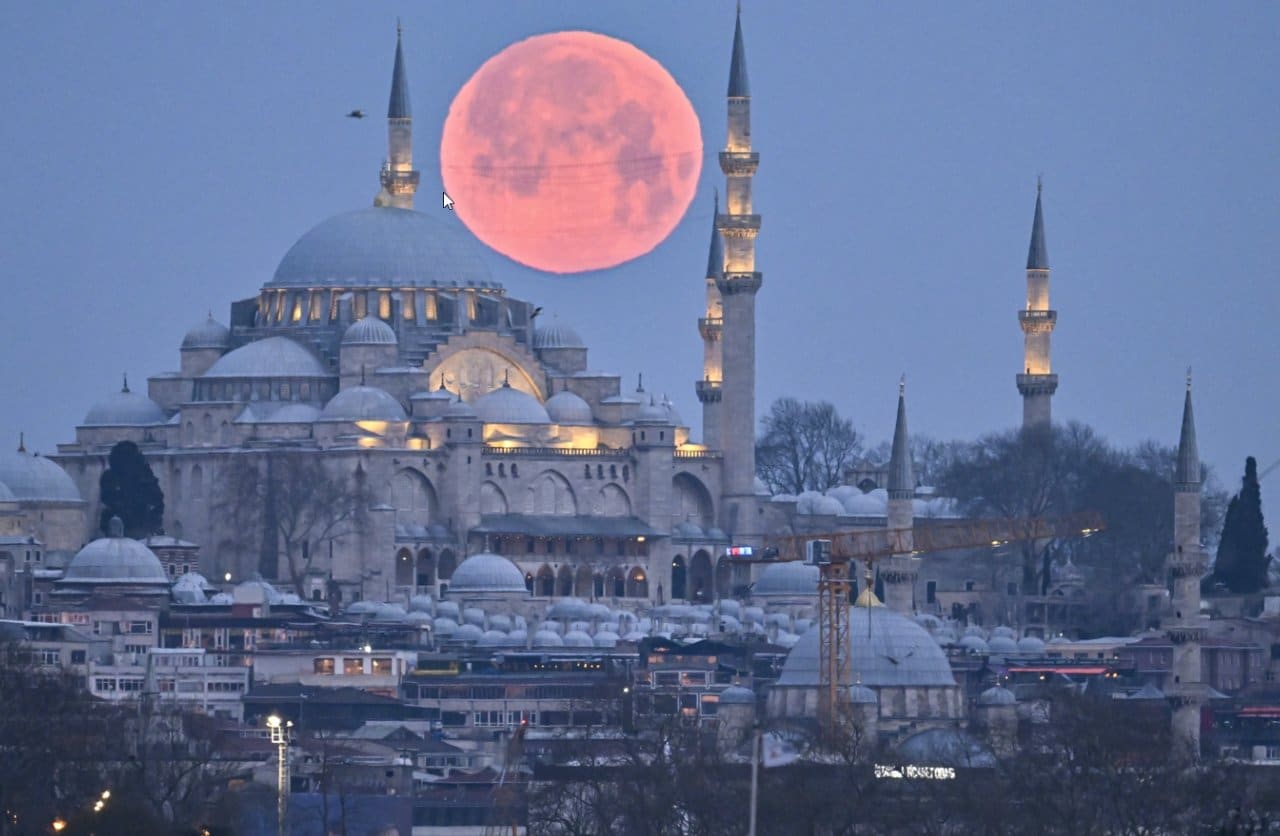
Traditional origin of the name of Lua Cheia Rosa
People originating from Estados Unidos attributed the term “Rosa” to April Lua Cheia. The name refers to the flowering of the plant Phlox subulata, also known as phlox or moss rose, which occurs at this time of year in Hemisfério Norte. Essa flower has pink tones and signals the beginning of spring in the region.
The nickname became popular over time through agricultural almanacs. Ele reflects the observation of natural cycles rather than specific astronomical features. No Hemisfério Sul, the same event indicates the advance of autumn.
North American Indian tradition includes several names for the monthly Luas Cheias. Cada one of them associates the phenomenon with seasonal or behavioral elements of the local fauna and flora.
Astronomical characteristics of April Lua Cheia
Lua reaches opposition to Sol during the full phase. Nesse moment, the satellite is completely illuminated from the terrestrial point of view. Lua’s elliptical orbit around Terra influences the distance and apparent appearance, although subtle differences require instruments for precise measurement.
In the case of Lua Cheia from April 2026, the event occurs without classification as a supermoon. Full lighting allows easy observation with the naked eye over much of the globe. The background constellation may vary depending on the exact positioning.
Astronomers follow the complete lunar cycle of approximately 29.5 days. The sequence of phases includes new, rising, full and waning, with the peak of the flood representing the point of greatest nighttime brightness.
Visibility and tips for observation on Brasil
Lua Cheia Rosa can be seen throughout Brazilian territory during the night of April 1st to 2nd. Locais with lower light pollution offer better contrast and details of the lunar surface. The recommendation is to look for open areas after dark, when the satellite appears closest to the horizon.
The optical illusion known as the “Bigger Moon” occurs when it is low in the sky. Esse effect makes the lunar disk appear larger and closer, although this is visual perception. Fotografias Zoom or simple telescopes capture the texture of lunar craters and seas.
The phenomenon repeats itself annually on nearby dates. In 2026, it starts the calendar of Luas Cheias denominations of the year, followed by other traditional denominations in subsequent months.
Cultural traditions associated with Luas Cheias
Several ancient cultures developed nomenclatures based on seasonal observations. April Lua Cheia is named Rosa mainly because of its association with spring flowering in the north. Outros nicknames include Lua from Grama, in reference to the green that returns after winter, and Lua from Peixe, linked to the spawning period in rivers.
These names help historic communities keep track of the agricultural or hunting calendar. Eles do not alter physical properties of Lua, but enrich the cultural context of the phenomenon. No Brasil, observation is integrated into night sky appreciation practices accessible to anyone.
Lua Cheia marks the end of a cycle that began in the previous new phase. Seu Intense brightness facilitates nighttime outdoor activities in regions with good visibility.
Scientific explanation behind the lunar appearance
The silver or yellowish color of Lua results from the reflection of sunlight on its rocky surface. The Earth’s atmosphere can slightly change tone when the satellite is low on the horizon, due to the dispersion of wavelengths. Nenhum April event changes this basic composition.
The full phase occurs when Terra is positioned between Sol and Lua. Full lighting creates the effect of a bright round disc. Estudos astronomers precisely measure the exact moment of the apex in universal coordinates, then adapted to local time zones.
The 2026 lunar calendar includes another nine Luas Cheias with traditional names. Cada one reflects specific aspects of the year in different hemispheres.
Lua Cheia Rosa remains visible with intensity in the hours following its peak. The event offers an opportunity for simple observation and photographic recording in favorable weather conditions.



