
Is Maundy Thursday a public holiday in 2026? See the official days off during Holy Week
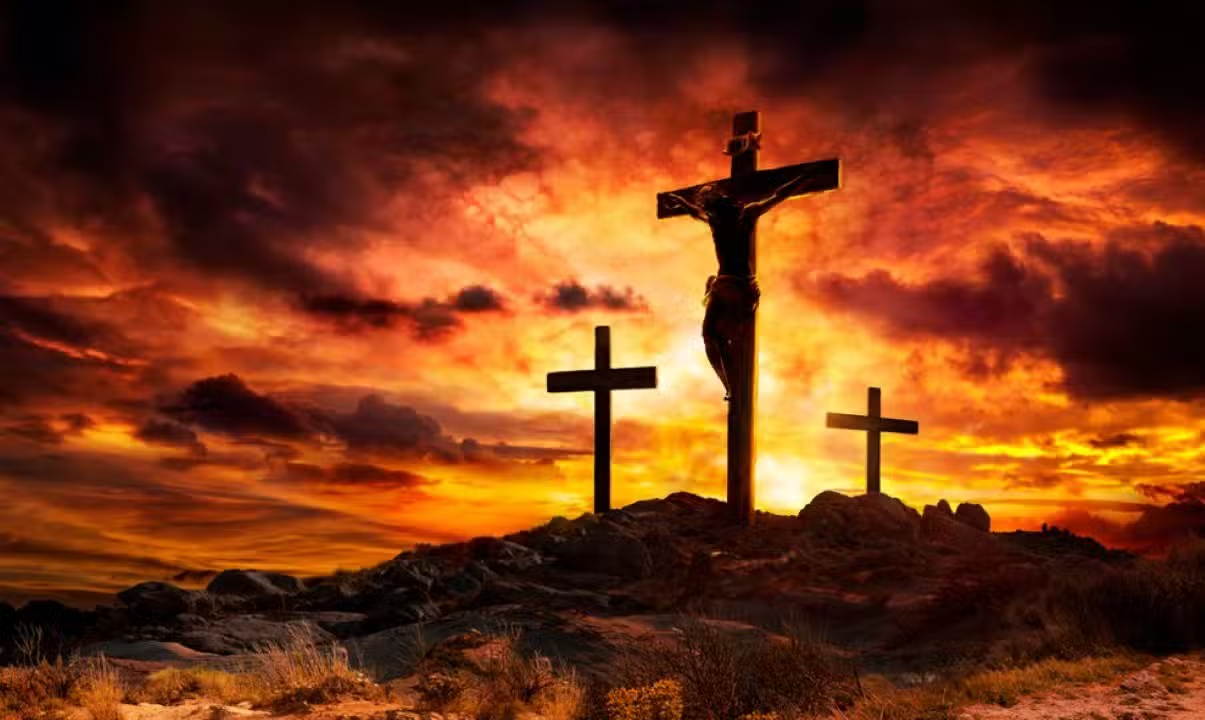
For many Brazilians, the expectation surrounding holidays is constant, especially when dates with strong religious and cultural symbolism approach. In 2026, with Semana Santa approaching in early April, the question about the status of Quinta-Santa returns. Contrariando popular belief among some, this date, which this year will fall on April 2, is not officially a national holiday in Brasil.
Only Sexta-Friday Santa is recognized by law as a holiday throughout the national territory. Isso means that, for the vast majority of workers, Quinta-Friday Santa operates as a common working day, requiring presence in usual work activities. The distinction is crucial for personal and corporate planning, avoiding mistakes that could cause disruption.
Status of Quinta Friday Santa in 2026
Quinta-Friday Santa, on April 2, 2026, does not appear on the list of Brazilian national holidays, according to current legislation. Embora is a date of extreme liturgical importance for Christians, especially Catholics, its observance as a day of rest depends on specific decisions. Empresas or public bodies may, on an occasional basis, grant an optional point or establish agreements for the release of employees, but this is not a general rule.
The working day on that day follows the normal course, without the legal interruptions that accompany an official holiday. The responsibility for checking whether there are any layoffs or adjustments to the schedule falls to the individual, who should consult their employer or the standards of the industry in which they work. Muitos municipalities and states may have their own rules for religious dates, but at the federal level, the Thursday before Páscoa remains a regular business day.
Meaning and traditions of the date
Quinta Santa marks the beginning of Tríduo Pascal, a three-day period that precedes Páscoa and recalls the last moments of Jesus Cristo on Terra. The celebration is deeply rooted in the Christian faith, highlighting pivotal biblical events that shaped the foundations of Christianity. Neste day, the faithful remember the Última Ceia of Jesus with their apostles.
During this meal, Jesus performed the foot washing rite, symbolizing humility and service to others, an act that is replicated in many religious ceremonies to this day. Foi also on Quinta-Friday Santa which Jesus instituted the sacrament of Eucaristia, the sharing of bread and wine, which became the center of the Catholic liturgy. Igrejas Catholic women, on this day, generally do not ring bells as part of mourning and preparation for the crucifixion.
Impact for workers and companies
The absence of a holiday on Quinta-Friday Santa has direct implications for the country’s economy and daily life. Para workers, it means one less day off in a period that is often associated with travel and extended rest. The need to complete the normal journey may change travel plans or family meetings, requiring adaptations and more organization.
Companies, on the other hand, need to maintain their operations without interruptions, planning the work schedule and logistics to meet demand. Setores how commerce, services and industry operate normally, contributing to the maintenance of economic activity. Apenas Some specific locations or sectors may have optional point agreements, which must be communicated internally in advance. Personnel management and clear communication about the work calendar are essential to avoid misunderstandings and ensure productivity.
Distinction between holiday and optional point
It is essential to understand the difference between a holiday and an optional period. A national holiday is a date officially established by federal law, which determines the cessation of work and school activities throughout the country. Nesses days, time off is a worker’s right, and work only occurs upon payment of overtime or compensation.



The optional point is a government order for its public bodies, allowing its employees not to show up for work, but without the measure being mandatory for the private sector. In the private sector, the decision whether or not to release employees is up to the company, which can follow the recommendation or maintain normal working hours. Geralmente, the optional point is adopted on dates that precede long holidays or that have great cultural appeal, as is the case of Quarta-Friday of Cinzas or some dates of Semana Santa.
Planning time off and holidays in 2026
With the reality of Quinta-Friday Santa as a working day, planning time off in 2026 requires attention. Sexta-Friday Santa (April 3, 2026) will be the only national holiday during this period. Para For those who want a long weekend, the alternative is to negotiate with the employer to release the day or use a day off or bank of hours, if available.
The 2026 holiday calendar features other important dates that could lead to extended weekends:
Legislation and regulation of holidays
The regulation of holidays in Brasil is established by specific laws that differentiate between national, state and municipal holidays. Lei nº 9,093/1995 provides for civil holidays and Lei nº 10,607/2002 establishes national holidays. Sexta-Santa is included in the calendar of national religious holidays, recognizing its cultural and historical importance for the majority of the population.
Consolidação of Leis of Trabalho (CLT) also addresses the issue of holidays, guaranteeing the rights of workers to take time off on these dates or to receive additional remuneration in case of work. The legislation aims to balance the need for rest and celebration with maintaining the country’s productive activities. The absence of Quinta-feira Santa in this list reinforces the legal distinction and the need for clarity in work relationships.
Adaptations and regional variations
Although Quinta-Friday Santa is not a national holiday, some regions may have specific rules. In certain municipalities and states, local religious dates may be declared a holiday by local legislation, influencing the work calendar. It is always recommended that citizens and companies consult local legislation to check if there is any particularity that affects Semana Santa.
This variation often occurs on dates such as Corpus Christi or the city’s patron saint’s day, when the celebration has a strong appeal in the community. However, for Quinta-feira Santa, these exceptions are less common and, when they occur, they tend to be optional points for the civil service or specific agreements within certain professional categories. Brasil cultural and religious diversity is reflected in these arrangements, but the general norm remains for most sectors.
Veja Tambem em News (EN)

Research reveals that parents are unaware of how their children use artificial intelligence

Samsung releases new system update with new features for Galaxy Watch 4 users

Digital retail reduces the value of the Galaxy S25 5G smartphone with bank bonuses and device exchange

Amazon’s wireless CarPlay adapter has a 50% discount and high approval ratings from drivers

Zach Cregger’s new Resident Evil ignores games and focuses on an unprecedented story with new characters

Rumor suggests that Nintendo is preparing a special edition of the Switch 2 with a remake of Ocarina of Time

Apple accelerates production of the iPhone 17e and develops new Air model with dual camera system

Epic Games platform releases twelve high-budget games at no permanent cost for PC users

PlayStation 5 Pro price drop accelerates digital retail sales and eliminates global stocks

New Galaxy Watch 9 firmware appears on server and confirms progress in software development

Apple’s commemorative project tests cell phone with 1.1 millimeter edge and curved screen for 2027
