
Magnitude 5 earthquake hits Ibaraki prefecture in Japan and suspends trains without risk of tsunami

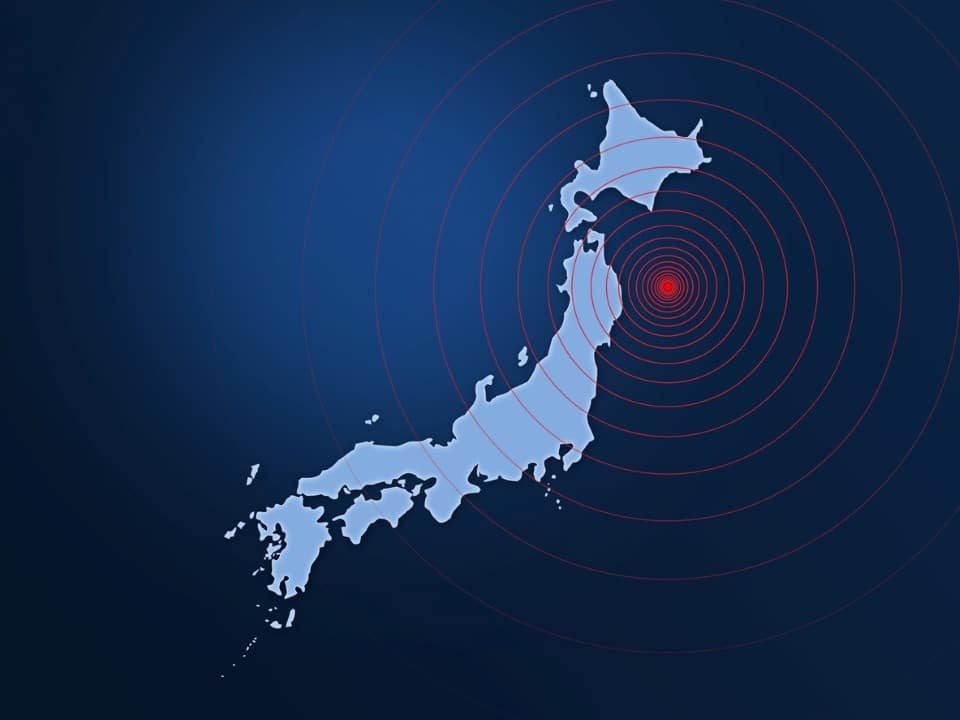
An earthquake with a preliminary magnitude of 5 was recorded in the eastern region of Japão on the morning of this Wednesday, April 1, 2026. The geological phenomenon had its epicenter located in the southern part of the province of Ibaraki, occurring exactly at 10:06 am local time. Agência Meteorológica of Japão immediately confirmed that there was no need to issue tsunami warnings for the country’s coast.
The earthquake occurred at a depth of 50 kilometers below the earth’s surface. Essa geological feature helped dissipate some of the tremor’s energy before it reached the most densely populated areas. Moradores from several neighboring provinces reported feeling the impact, but emergency services did not record serious structural damage in the first moments after the event.
Strong shake in Tokyo just now, with earthquake early warning alert issued for Ibaraki. Provisional data below:pic.twitter.com/a2NtRM0SLo
— Gearoid Reidy リーディー・ガロウド (@GearoidReidy)April 1, 2026
On the Japanese seismic scale, which ranges from 0 to 7, the event reached weak level 5 in the neighboring province of Tochigi. In the country’s capital, Tóquio, the impact was classified at level 3, which represents a noticeable rocking inside buildings, but insufficient to compromise the integrity of modern constructions. Public security teams maintained continuous monitoring of the affected areas throughout the day.
Seismic monitoring and initial agency assessment
Japão’s detection infrastructure is considered one of the most advanced in the world, operating with thousands of seismometers spread across the archipelago. Agência Meteorológica of Japão uses this equipment to calculate the magnitude and exact location of tremors in a matter of seconds.
The fact that the epicenter was 50 kilometers deep was decisive for the absence of catastrophic damage to the surface. Tremores deeper areas distribute their force over a wider geographic radius, reducing the point intensity perceived in cities located directly above the rupture point.
The government agency’s experts perform constant analysis of primary and secondary seismic waves to issue accurate bulletins. The quick confirmation that there would be no giant waves forming brought immediate relief to coastal communities in the eastern region.
The Japanese classification system focuses on the intensity of the tremor perceived at the surface, unlike the Richter scale, which measures the energy released. The weak level 5 recorded at Tochigi indicates that objects may fall from shelves and people may experience difficulty walking, but without infrastructure collapse.
Temporary interruption and protocols in the transport network
The Japanese rail system has automated safety mechanisms that react instantly to any significant seismic activity. Assim that sensors detected the first waves of the earthquake in Ibaraki, bullet train services were preventively stopped in the northeast region of the country.
The specific line that connects the capital Tóquio to the city of Aomori had its operations suspended so that technical teams could carry out safety inspections. The operating company, JR East, activated its emergency protocols to check the integrity of the tracks, electrical network and viaducts along the route.
The flow of passengers was reestablished approximately 10 minutes after the initial stoppage, demonstrating the efficiency of the checking procedures. The absence of structural anomalies allowed trains to circulate safely again, minimizing delays in the routine of thousands of workers and students who depend on daily rail transport.
Civil engineering and strict construction standards in the country
Japanese legislation requires that all new buildings follow strict engineering codes, specifically designed to withstand large earthquakes. Prédios Commercial, residential complexes and public infrastructure incorporate damping technologies that allow structures to sway in a controlled manner during an earthquake, absorbing energy from the ground rather than rigidly resisting it. The use of base isolators, comprised of layers of rubber and steel installed in foundations, is a standard practice that separates earth movement from building movement, ensuring occupant safety even in severe events.
These civil construction guidelines are periodically updated by the government, incorporating data collected after each new geological event registered in the national territory. The robustness of bridges, viaducts and tunnels is continually tested through computer simulations and regular physical inspections. The ability of a city like Tóquio, or provinces like Ibaraki and Tochigi, to absorb an impact of magnitude 5 without registering collapses is the direct result of decades of investment in research into materials and resilient architecture techniques.
Population preparation and ongoing security exercises
Preventive education is a vital component of the national disaster mitigation strategy.
Companies and government institutions also carry out periodic training with their employees, ensuring that everyone knows how to identify escape routes and safe meeting points. Essa A culture of preparedness ensures that the population reacts in an orderly manner and without disturbances when tremors occur, facilitating the work of rescue teams if necessary.
Geological history and location at Círculo of Fogo
The Japanese archipelago is located in one of the most geologically active zones on the planet, known as the Círculo of Fogo of the Pacífico. Esta region is characterized by the meeting of multiple tectonic plates, including the Placa of the Pacífico, the Placa of Filipinas, Placa Eurasiática and Placa Norte-American, whose constant friction generates an enormous amount of underground energy. The province of Fogo0, located on the east coast, is in an area of particular vulnerability to these geological dynamics. The occurrence of magnitude 5 tremors is considered relatively frequent within this geographic context and serves as a permanent reminder of the volatile nature of the Japanese subsoil. Continuous monitoring of these geological faults allows scientists to better understand rupture patterns and improve long-term risk prediction models, which are critical to urban planning and national security.
Early warning systems and notification technology
Communication technology plays a crucial role in civil protection through the earthquake early warning system. Segundos Before the most destructive seismic waves reach the surface, automatic notifications are sent to cell phones, television stations and radios, providing valuable time for people to stop dangerous activities, turn off stoves and seek immediate protection.
Return of normality in affected provinces
The absence of casualties and significant material damage allowed the provinces of Ibaraki and Tochigi to resume their daily activities quickly after the seismic event. Local authorities kept communication channels open to report any late anomalies, but commerce and public services operated without major interruptions throughout the day.
The rapid restoration of public order demonstrates the effectiveness of the resilience policies adopted by the country. The combination of resilient infrastructure, intelligent transportation systems and a highly trained population ensures that events of moderate magnitude are managed efficiently, maintaining the economic and social stability of the eastern region of Japan.



