
Manufacturer Apple permanently closes the Mac Pro line and restricts memory options in the updated Mac Studio

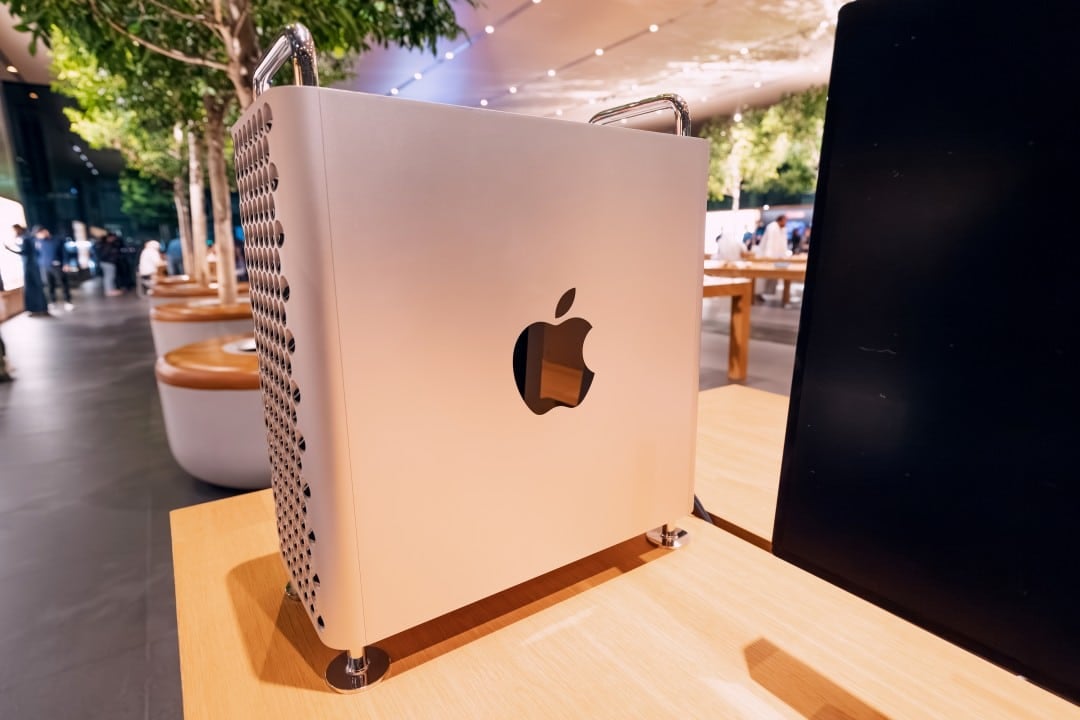
The technology maker has officially ended production of the Mac Pro after nearly two decades of continuous manufacturing. The desktop computer model was removed from the company’s official website, accompanied by confirmation that there are no plans to develop a new version of the equipment in the future.
The strategic decision is part of a series of profound adjustments to the product line aimed at the professional public. The changes directly affect the purchasing options available to creative studios, video production companies and software developers who rely on high processing power.

In addition to the expansion tower discontinuation, the company has implemented significant changes to the hardware configurations of other high-end devices. The changes include limitations on the memory capacity of compact desktops and increased standard storage on high-performance notebooks.
End of an era for traditional desktop computers
The manufacturer’s decision to end production of the Mac Pro comes after nearly two decades of continuous presence in the ultra-high-performance workstation market, marking a definitive transition in the company’s hardware design philosophy. Historicamente, the device was known for its modular architecture, which allowed users to add graphics cards, RAM and internal storage via PCIe expansion slots, a vital necessity for film studios and research laboratories. The brushed aluminum design, which has gone through several visual iterations over the years, has become a symbol of high-performance workstations. Contudo, the introduction of proprietary silicon architecture drastically changed this paradigm, as new processors integrate CPU, GPU and unified memory on a single chip, eliminating the technical feasibility and practical need for traditional internal expansions. Essa structural change made the large tower format obsolete within the current ecosystem, directing engineering efforts towards more compact and thermally efficient machines, capable of delivering equivalent or greater processing power without the mechanical complexity of the previous model.
Changes to Mac Studio specifications
The Mac Studio, currently positioned as the premier desk solution for professionals, has seen reductions in its factory customization options. The manufacturer removed the possibility of configuring the machine with 512 GB of unified memory, setting the maximum ceiling at 256 GB for new purchases.
The change in specifications directly reflects the challenges faced in the global semiconductor supply chain. Memory chip prices have seen significant increases in recent months, forcing adjustments in the production lines of several technology companies around the world.
Experts in the hardware sector point out that the growing demand for servers dedicated to artificial intelligence applications has absorbed a large part of the production capacity of Asian foundries. Esse scenario creates a temporary shortage of very high-density components in the retail market.
Professionals who rely on extreme amounts of RAM to render complex virtual environments or scientific simulations need to reevaluate their infrastructures. The company monitors the component market and may reintroduce the higher capacity option when global supply normalizes.
Updates to the line of professional notebooks
The line of portable computers has also undergone restructuring, specifically in the 14- and 16-inch MacBook Pro models equipped with the M5 Pro and M5 Max processors. Esses devices now leave the factory with a minimum of 1 TB of internal solid-state storage.
The entry-level model of the 14-inch MacBook Pro, which uses the basic M5 chip, followed this increase in specifications. The previous version, which offered 512 GB of space, was completely removed from the official sales catalog to standardize the storage offering.
The adjustment in storage capacity resulted in a change in the entry price of the equipment, which now costs US$1,699 on the international market, compared to the US$1,599 previously charged. Upgraded flash memory modules deliver superior data read and write rates, optimizing handling of video files at 4K and 8K resolutions, while improved neural engines accelerate machine learning tasks.
Replacement in the high-fidelity monitor market
The brand’s visual display sector underwent a complete overhaul with the discontinuation of the Pro Display without the inclusion of a tabletop stand, positioning itself as a niche tool for colorists and film post-production studios that required rigorous calibration.
To fill this gap, the manufacturer introduced the Studio Display connectivity standard Thunderbolt 5. Essa new connection interface allows significantly greater bidirectional bandwidth, facilitating very high-speed data transfer.
Technical advantages of the new visual equipment
The Studio Display XDR panel has more than two thousand local dimming zones, which guarantees precise control of contrast and deep blacks. The equipment maintains support for wide color gamuts, covering the P3 and Adobe RGB spectrums with high fidelity for color correction work.
The implementation of variable refresh rate adapts the display to moving content, providing greater fluidity when editing videos and three-dimensional animations. Essas technical features make the monitor a centerpiece for workflows that demand absolute image precision without the need for multiple external peripherals.
Reorganization of the portable device portfolio
In addition to equipment aimed at a strictly professional audience, the company cleaned its general portfolio, removing previous versions of the iPad Air and the MacBook Air from its official stores. The strategy aims to simplify purchasing options for the end consumer and focus on the most recent lines.
The current focus of the catalog is on updated configurations that deliver superior base performance, driven by the latest generations of processors. Line standardization facilitates global stock management and ensures more efficient long-term technical support for all devices sold.
Workflow Adaptation for Content Creators
Deep integration between hardware and software continues to be the pillar of the manufacturer’s strategy to optimize computationally demanding tasks. Usuários that used the old expansion towers now find in the Mac Studio and in the new notebooks consolidated and efficient options for the production of content at an industrial level, adapting to a more closed ecosystem, but highly optimized for the modern demands of data processing and graphic rendering.



