
NASA invests 100 billion dollars in Artemis mission to return humans to lunar soil

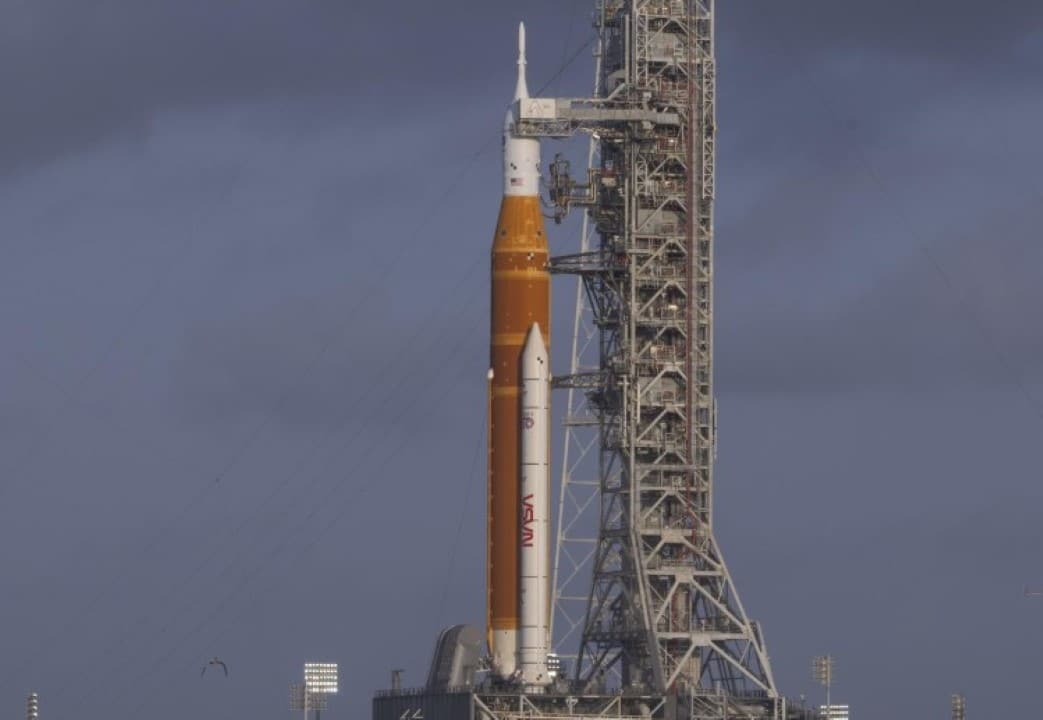
Program Artemis, Administração Nacional, Aeronáutica and Espaço, Estados Unidos, reaches the historic mark of 100 billion dollars in total planned investments. The launch of the rocket this Wednesday, April 1st, represents a decisive step towards the return of human beings to the natural satellite after a hiatus of more than five decades since the end of era Apollo.
The detailed financial estimate is contained in audits carried out by the agency’s supervisory body, consolidating expenses made since 2012 until the projections for the end of the 2025 calendar. Este billion amount encompasses the technical development of the rocket Space Launch System, the improvement of the capsule Orion and all maintenance of the ground infrastructure necessary for take-off operations in Flórida.
- The development of the launch system consumed around 40 billion dollars until 2020.
- The budget forecast for the period between 2021 and 2025 adds another 53 billion dollars to the project.
- The specific budget for the year 2026 reserves 8.3 billion dollars focused exclusively on lunar and Martian explorations.
- The final mission of the current cycle, called Artemis IV, is expected to be completed by the end of 2030.
Allocation of financial resources and technological infrastructure
The distribution of financial resources reflects the technical complexity involved in creating new generation space transportation systems. According to budget reports submitted to Casa Branca, the current priority lies in stabilizing the crewed flight schedule and securing the life support systems inside capsule Orion.
The agency’s technicians and engineers work on integrating components that allow the support of long-duration missions in deep space. The continuation of high investments is justified by the need to replace obsolete technologies from the 1970s with digital and autonomous solutions that minimize risks for the crews involved in launches.
Economic comparison between programs Apollo and Artemis
The comparison between the costs of the current program and the missions carried out between 1969 and 1972 reveals interesting data about the space economy and North American inflation. At the time of Lua’s original achievement, the Estados Unidos invested approximately 20 billion nominal dollars to get 12 astronauts to the ground from the satellite.
Although the nominal value of mission Artemis is about five times greater, experts indicate that the cost of mission Apollo, when corrected for current inflation rates, would reach a figure between 150 and 170 billion dollars. Portanto, in terms of real purchasing power, the contemporary initiative presents leaner financial management than the government effort carried out during Guerra Fria.
Scientific objectives and orbital tests of the second stage
The launch window for the current stage was officially opened in early April to validate the ability to navigate in lunar orbit. Nesta specific phase, the astronauts assigned to the crew will not perform the landing on the surface, limiting themselves to circling the satellite and carrying out critical communication and atmospheric re-entry tests before returning safely to Terra.
The agency highlights that the primary objectives involve the expansion of scientific knowledge and the application of new technologies that can benefit everyday life on the planet. The exploration of previously untouched regions, such as the lunar south pole, is one of the priorities for the next stages, which will involve the effective landing of equipment and technical personnel.
Representation and inclusion in the selected crew
The established schedule foresees that the disembarkation of humans will effectively occur in stage Artemis IV, scheduled to be carried out over the next four years. Diferente of previous missions, the current exploration phase prioritizes diversity among the members of the technical team that will operate the space systems during the round trip trajectories.
Specialists Victor Glover and Christina Koch were selected to take part in the activities that will take, for the first time in history, a woman and a black man into lunar orbit. Esta paradigm shift reflects the agency’s new values in promoting inclusion within high-level scientific exploration, breaking with the standards established during the last century.
Perspectives for establishing fixed bases
The long-term strategy envisages that Lua will serve as a commercial and scientific outpost for future manned trips to planet Marte. The development of permanent infrastructure on the satellite depends on the financial and technical success of the missions launched this year, ensuring that the flow of supplies and oxygen is sustainable for the resident astronauts.
Continuous investments aim to transform the human presence in the space from sporadic visits to a constant and productive occupation. With the collaboration of international partners and private companies, the expectation is that the cost per launch will be gradually reduced as rocket Space Launch System technology reaches the necessary operational maturity.




