

The American space agency needed to change the planning of its next manned flights towards the natural satellite Terra. The decision involves readjusting dates to guarantee the safety of astronauts and the proper functioning of equipment. The responsible engineers identified the need for more time to test vital life support and navigation control systems.
The space project aims to establish a constant human presence outside Earth’s orbit, serving as a stepping stone for future interplanetary travel. Technical teams work to resolve anomalies detected during the initial tests of the spacecraft. The complexity of the maneuvers requires absolute precision in all phases of launch and return.
The new operations window reflects the commitment to crew integrity and long-term mission success. The strategic delay allows improvements to the heat shield and communication circuits to be implemented. Aerospace sector leaders reinforce that prudence is fundamental in undertakings of this magnitude.
Technical reasons and operational adjustments
Recent assessments revealed unexpected wear and tear on crucial components of the capsule designed to house the astronauts. Durante re-entry into the Earth’s atmosphere in previous unmanned flights, the protective material suffered degradation above the limit calculated by computers. Experts began a thorough investigation to understand the origin of this failure and develop a more resistant coating. Replacing these parts requires an extensive period of manufacturing and validation in the laboratory.
In addition to thermal issues, the electrical circuits responsible for separating the modules also showed instability during the simulations. The life support system, which purifies the air and regulates internal temperature, had to undergo a complete review of its architecture. The reengineering of these systems ensures that the crew has full survival conditions in the event of emergencies in deep space. Updated planning absorbs these changes without compromising the viability of the overall project.
Rocket and space capsule development
The super-heavy launch vehicle represents the backbone of the entire transportation architecture beyond Terra’s low orbit. Sua construction involves the assembly of gigantic thrusters capable of generating the force necessary to escape the planet’s gravity. Assembly teams faced supply chain bottlenecks, which slowed the delivery of high-precision valves and sensors. The integration of all these elements in the vehicle assembly building requires meticulous coordination.
The ship designed to transport the crew has a design focused on autonomy and redundancy of critical systems. The service module, provided by international partners, provides power, propulsion and thermal control during the journey. Vacuum tests and radiation simulations confirmed the robustness of the main structure, but highlighted the need for adjustments to the flight software. The programming code update aims to optimize fuel consumption and improve communication with mission control.
Recovery trials in the ocean are also part of the rigorous protocol to prepare for the return of astronauts. Equipes rescuers train exhaustively to extract the crew from the capsule in different tide and weather conditions. Speed in this final step is crucial for immediate medical care after days of exposure to microgravity. Security protocols are constantly refined based on data collected from these hands-on exercises.
International competition for lunar exploration
The current geopolitical scenario drives a new space race, with different nations seeking to establish hegemony outside the planet. The competing Asian power is rapidly advancing its own exploration program, with concrete plans to send its taikonauts to the lunar surface within the next decade. Essa move accelerates American efforts to maintain technological and scientific leadership in the aerospace sector. Early presence guarantees strategic advantages in choosing the best locations for landing and installing bases.
The dispute involves not only national prestige, but also access to valuable resources present on the satellite’s soil. Regiões Permanently shadowed at the poles are home to large amounts of water ice, a vital element for the sustainability of missions. Extracting this water can provide oxygen for breathing and hydrogen for the production of rocket fuel in space itself. Mastery of these areas of scientific and economic interest dictates the pace of government investments.
International partnerships play a fundamental role in consolidating a bloc of cooperation for peaceful exploration. Diversos countries signed agreements establishing standards of conduct and transparency for extraplanetary activities. Technical and financial collaboration shares the high costs of developing new technologies and infrastructure. Joining forces creates a network of mutual support that increases the chances of success in complex missions.
The private sector also acts as a catalyst in this new era of space achievements, providing innovative solutions and reducing operational costs. Commercial Empresas develops landers, spacesuits, and surface exploration vehicles under government contracts. The transition from a purely state model to a mixed space economy accelerates the development of hardware and software. Competition between suppliers results in more efficient and reliable technologies for transporting cargo and humans.
Preparations for base on the lunar surface
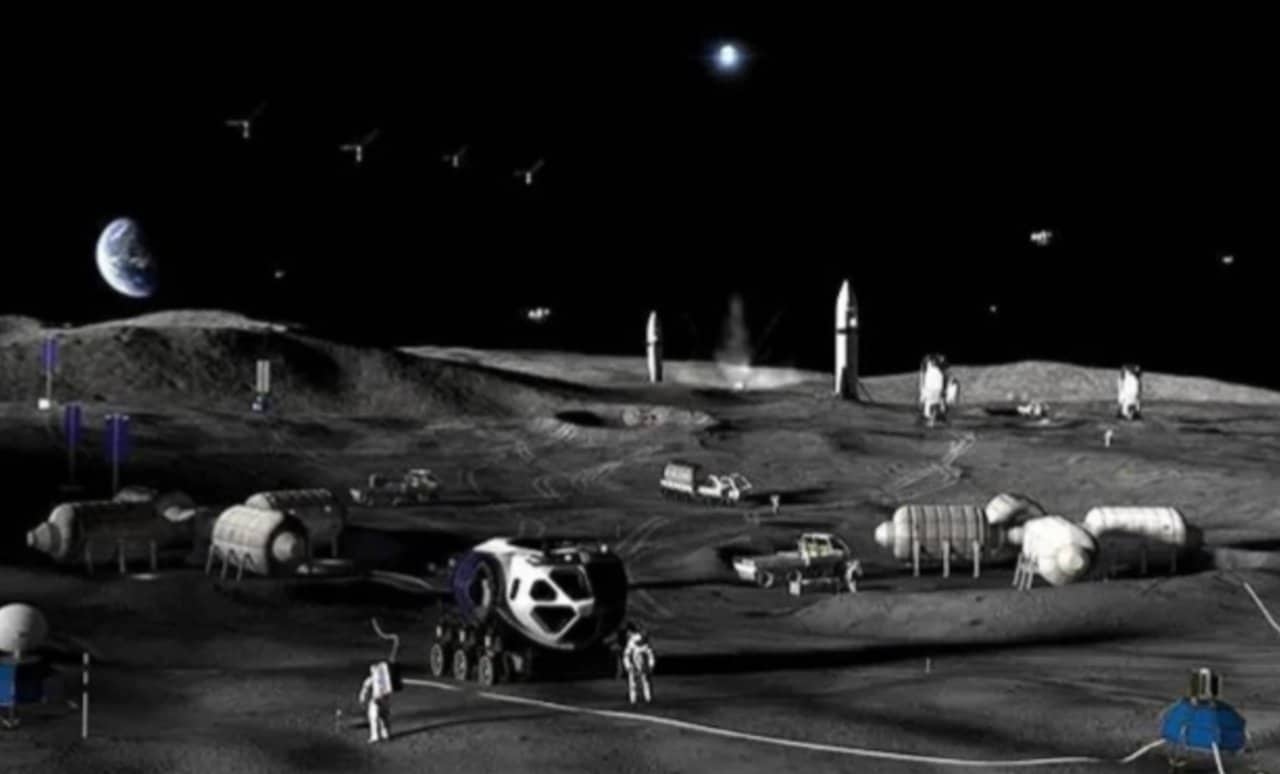
The construction of a habitable infrastructure at the satellite’s south pole requires the development of unprecedented space civil engineering technologies. Habitats need to offer protection against cosmic radiation, micrometeorites and the extreme temperature variations that occur between lunar day and night. Current projects include the use of giant 3D printers that use the local regolith itself as raw material to build thick walls and protective shields. Essa in situ resource utilization approach drastically reduces the need to transport heavy materials from Terra, making logistics cheaper in the long term. Power generation systems will rely on high-efficiency solar panels and small nuclear fission reactors to ensure continuous supply during long periods of darkness.
The mobility of astronauts on the surface will be guaranteed by pressurized and non-pressurized vehicles, designed to traverse rough and dusty terrain. New spacesuits offer greater joint flexibility, allowing explorers to walk, kneel and collect geological samples with more ease and less physical effort. The base’s communications system will include a network of relay satellites orbiting the star, ensuring uninterrupted contact with the ground control center and the rapid transfer of large volumes of scientific data. The integration of autonomous robots will assist with external maintenance tasks and the prior exploration of dangerous craters, minimizing crew exposure to unnecessary risks.
Sustainability of deep space operations
The success of interplanetary exploration depends on the ability to maintain continuous operations without the need for frequent resupply from the home planet. The concept of space sustainability involves the extreme recycling of vital resources, such as purifying almost all water used, including sweat and urine, for human consumption and use in cooling systems. Food production in hydroponic greenhouses adapted to microgravity and partial gravity will complement the crew’s diet, providing fresh nutrients and aiding psychological well-being during long isolated stays. Além Furthermore, solid waste management requires efficient compactors and biological or thermal degradation methods that avoid contamination of the pristine environments explored. Space medicine advances in the development of remote diagnostics and preventive treatments to combat the loss of bone and muscle mass, as well as the effects of radiation on human DNA. Establishing a reliable logistics chain, operated by commercial cargo ships, will ensure the flow of spare parts and up-to-date scientific equipment. Toda This survivability and continuous operation architecture serves as a full-scale testing laboratory for the ultimate goal of sending manned missions to the Red Planet. The experience accumulated in managing life support systems in a lunar environment will dictate the engineering parameters for interplanetary transit ships that will cross space for months on end.
Next steps for the American space agency
The immediate focus is on completing integrated testing of the launch vehicle and crew transport ship. The teams carry out countdown simulations and cryogenic propellant supply tests on the launch pad. Final flight certification will only occur after proof that all previous anomalies have been corrected and validated by independent safety committees. Transparency in the dissemination of results reinforces public trust and government support for the advancement of space exploration.
Expansion of orbital infrastructure
Assembling a space station in the natural satellite’s orbit will serve as a safe haven and transfer point for crews. Essa modular structure will allow the docking of ships coming from Terra and landing modules that will make the descent and ascent route. The orbital outpost will facilitate scientific experiments in a prolonged microgravity environment, far from terrestrial interference. Supply logistics will be managed from this facility, optimizing cargo flow.
The development of the station’s housing and logistics modules counts on the active participation of European, Japanese and Canadian partner agencies. Cada nation contributes specific technologies, such as precision robotic arms and advanced laser optical communication systems. The interoperability of equipment ensures that vehicles from different manufacturers can dock and transfer crew members in complete safety. The consolidation of this infrastructure marks the beginning of a permanent and self-sustainable cislunar economy.



