
Panini expands new World Cup album to 980 stickers and changes package format for collectors
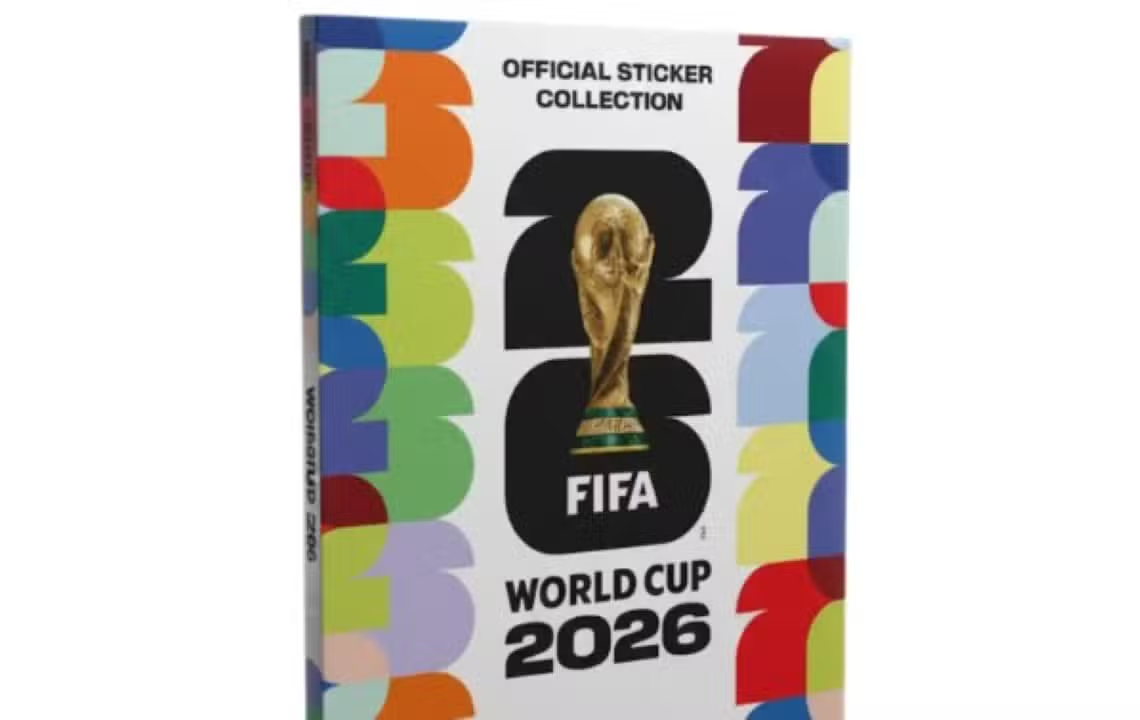
The expansion of the biggest football tournament on the planet, jointly hosted by Estados Unidos, México and Canadá, brought direct impacts to the licensed products market. The change in the format of the competition, which now hosts 48 national teams and totals 104 matches distributed across 16 host cities, required a complete overhaul of the official materials consumed by fans around the globe.
The traditional illustrated book, produced by the Italian publisher responsible for the competition’s rights, needed to be resized to keep up with this new global scale. The result is the largest physical publication ever developed for the event, requiring unprecedented logistical and financial planning for both the manufacturer and the end consumer who wants to complete the pages.

To include all the qualified teams and the extra elements of the tournament, the new edition reaches 112 printed pages. Completely filling the spaces requires the acquisition of 980 individual stickers, a significant leap that redefines consumption dynamics, dedication time and exchange strategies in squares and newsstands.
Impact on prices and new package configurations
Faced with the record volume of items needed to complete the collection, the manufacturer implemented adjustments in the distribution of content. The traditional envelopes sold on newsstands have undergone a capacity upgrade, now offering seven units per package, in contrast to the previous format that contained just five. The suggested retail price was set at R$7 per envelope, a measure that attempts to keep the unit cost proportional to that of past editions, even in an economic scenario where the current minimum wage is R$1,621. Essa The restructuring aims to speed up the collection process and maintain active public engagement during the sales months.
The commercial strategy includes offering pre-sale packages with prices ranging between R$97 and R$199, depending on the volume of envelopes included and the type of material in the base book.
These promotional combos were structured to meet different levels of engagement and purchasing power, divided into specific categories to facilitate entry into the hobby. The options available on the official market include the following formats:
– Kit Iniciante: comes with the base book in paperback version and a reduced number of envelopes for the first contact with the product.
– Kit Campeão: offers the hardcover version and an intermediate number of packages, aimed at those looking for greater durability of the material.
– Kit Colecionador: focused on experienced users, containing closed boxes that maximize the probability of finding rare items and reduce the initial repetition of images.
Space distribution between ranked selections
The graphic design guarantees equal treatment for all 48 nations participating in the tournament, reserving exact space for 20 athletes from each delegation. Essa measure prevents important players from being left out of the publication and provides a complete overview of official call-ups.
This standardization allows countries debuting in the competition to receive the same visual prominence as historic powers in the sport. The balanced global representation meets the demands of international broadcasting, also serving as a visual guide for fans who want to discover the new talents of world football.
Visual elements and tributes on official covers
The product’s visual identity features two distinct cover versions, developed to honor the cultural and geographical characteristics of the three host countries. Essa Design segmentation works as a regional marketing tool to drive local sales.
One edition highlights elements of the Estados Unidos and Canadá with bright tones and colorful borders, while the alternate version focuses on Mexican heritage while maintaining the classic icon of the player performing a bicycle kick. Maintaining this symbol preserves the nostalgia and visual identity consolidated by the brand over the decades.



Distribution logistics and combating fraud in the market
The official schedule foresees the arrival of physical materials at newsstands and specialized stores in the second half of April, with the reservation period starting in March. The early calendar ensures that the public has plenty of time to start exchanges before the tournament’s opening whistle.
The distribution network prioritizes rapid supply in large urban centers, using international logistics routes to simultaneously serve the markets Américas, Europa and Ásia. Planning involves land fleets and air transport to avoid shortages in the first weeks of high demand.
Consumer protection authorities warn of the proliferation of fake websites that offer fake pre-sales with unrealistic discounts, recommending that transactions take place exclusively on the manufacturer’s verified channels. Social media monitoring has been intensified to take down pages trying to capture financial data from unsuspecting buyers.
Inclusion of rare items and infrastructure details
In addition to the official squads, the publication reserves specific sections to illustrate the architectural magnitude of the arenas that will host the clashes. The visual mapping of the headquarters helps to contextualize the continental distances that the teams will need to travel.
Detailed graphics feature modern stadiums like SoFi Stadium, at Los Angeles, and BC Place, at Vancouver, providing data on attendance capacity and structural innovations. The historic Estádio Azteca, the scene of memorable finals in the past, receives a special highlight that connects the tradition of the sport with the modernity of the current format.
Exclusive holographic pieces depict the official match ball and the coveted solid gold trophy, items that are often the most difficult to find when opening the envelopes. The planned shortage of these shiny stickers drives the parallel market and increases the value of complete collections.
These extra elements serve an informative purpose, illustrating the logistics required to carry out more than a hundred matches. The visual documentation of the infrastructure transforms the printed material into a historical record of the organization capacity of the host countries.
Social dynamics of exchanges and fan organization
The practice of collecting generates strong social mobilization, transforming squares, schools and shopping centers into meeting points for negotiating repeated items. Essa physical interaction allows participants to drastically reduce the financial investment required to complete pages, fostering a sense of community that transcends age barriers and brings different generations together around a common goal. In large capitals, shopping malls usually set up dedicated spaces exclusively to host these meetings on weekends.
To optimize this process, more experienced enthusiasts turn to technological tools, using digital spreadsheets and cell phone applications dedicated to controlling the collection. Strict recording of missing numbers avoids unnecessary expenses and directs the focus to specific negotiations, transforming the pastime into a management activity that requires planning and strategy over the months leading up to the sporting event. Grupos in messaging applications also speed up the finding of specific pieces between residents of the same region.
The manufacturer’s historical trajectory in sport
The relationship between the publisher and the highest football entity began in 1970, during the tournament held at México, when the first official material was launched containing only 271 spaces to fill. Over the decades, the product incorporated technological innovations, replacing the need for glue with self-adhesive backings and introducing high-quality metallized finishes. The numerical evolution is a direct reflection of the growth of the sport: while the 2018 edition marked an era with 682 units and the 2022 edition registered 670, the current jump to almost a thousand pieces demonstrates the industry’s ability to adapt to the expansion of the championship. Essa continuous progression consolidates printed material not only as a seasonal entertainment product, but as an indispensable documentary and cultural record for regular followers of the sport around the world.
Economic growth of the licensed products sector
The sports memorabilia segment generates billions of dollars annually, and retailers expect this expanded edition to boost sales at newsstands and bookstores. The increase in the volume of products sold generates a vital revenue stream for small local traders, in addition to boosting the secondary market for the sale of rare stickers, creating a highly profitable temporary economic chain during the period of international competitions.
Veja Tambem em News (EN)

Research reveals that parents are unaware of how their children use artificial intelligence

Samsung releases new system update with new features for Galaxy Watch 4 users

Digital retail reduces the value of the Galaxy S25 5G smartphone with bank bonuses and device exchange

Amazon’s wireless CarPlay adapter has a 50% discount and high approval ratings from drivers

Zach Cregger’s new Resident Evil ignores games and focuses on an unprecedented story with new characters

Rumor suggests that Nintendo is preparing a special edition of the Switch 2 with a remake of Ocarina of Time

Apple accelerates production of the iPhone 17e and develops new Air model with dual camera system

Epic Games platform releases twelve high-budget games at no permanent cost for PC users

PlayStation 5 Pro price drop accelerates digital retail sales and eliminates global stocks

New Galaxy Watch 9 firmware appears on server and confirms progress in software development

Apple’s commemorative project tests cell phone with 1.1 millimeter edge and curved screen for 2027
