
Supreme Court shows strong skepticism of Trump’s order on birthright citizenship

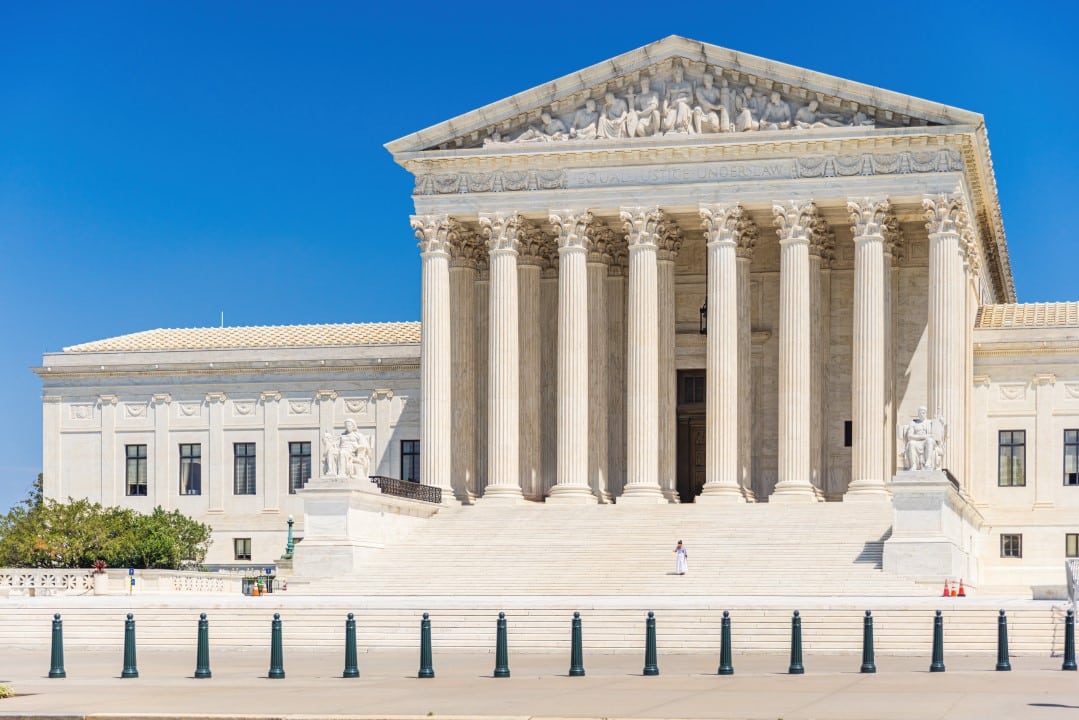
President Donald Trump attended the oral arguments session in person at Suprema Corte of Estados Unidos this Wednesday, becoming the first sitting president to participate in a court hearing. The ministers analyzed case Trump v. Barbara, which challenges an executive order issued in January 2025 to restrict birthright citizenship guaranteed by the 14th Emenda. Most justices expressed deep doubts about the revised interpretation of the citizenship clause presented by the administration.
Several ministers questioned the historical and constitutional basis of the measure, which sought to deny automatic citizenship to children born on American soil to parents without permanent legal status or in an irregular situation. Apenas Two ministers formulated questions more in line with the government’s position. The rest of the panel showed little receptivity to the defenses presented by the solicitor general during the session.
- The executive order was signed on the first day of the second presidential term.
- Lower courts had already considered the measure unconstitutional in previous decisions.
- The case reached Suprema Corte after appeals from the federal administration.
- The hearing took place on Washington, with live broadcast to the public.
Ministers’ reactions during the arguments
The ministers explored the meaning of the expression “subject to jurisdiction” contained in the 14th Emenda, which serves as the basis for citizenship by birth since its ratification after Guerra Civil. Vários members of the court highlighted consolidated precedents, such as the 1898 decision in case Wong Kim Ark, which recognized the citizenship of a child born to Chinese immigrant parents residing in the Estados Unidos.
The administration argued that the order only restored the original meaning of the amendment, limiting the benefit to situations of full political loyalty to the country. The challengers’ lawyers argued that the change would represent a radical reinterpretation capable of affecting the status of millions of people born in American territory over the generations.

Historical analysis of the 14th Emenda in the debate
The 14th Emenda was enacted to guarantee citizenship to former slaves and their descendants, overcoming the decision Dred Scott. Durante During the hearing, ministers recalled that the constitutional text establishes citizenship for all people born or naturalized in the Estados Unidos and subject to its jurisdiction.
The government’s position held that children of temporary or undocumented parents would not be fully subject to this jurisdiction. However, repeated questions indicated resistance to this restrictive vision, with an emphasis on the broad historical application of the principle of citizenship by birth.
Details of the executive order and its scope
The presidential measure, issued on January 20, 2025, determined that federal agencies would no longer recognize automatic citizenship for babies born after a specific period when the parents did not meet the criteria for citizenship or permanent residence. The order would affect children of parents in an irregular situation or on temporary visas, representing a significant portion of annual births in the country.
Opponents stated that the change contradicted more than a century of consolidated judicial and legislative interpretation. The administration countered that the initiative corrected a misunderstanding of the constitutional clause, aligning itself with early common law practices.
Expected developments after the hearing
The session took place with intense exchanges between lawyers and ministers, who examined both textual and historical aspects of the amendment. Observadores noted that the presidential presence did not change the predominantly skeptical tone of most questions.
The final judgment must be handed down by the end of Corte’s current term, scheduled for June or July. The decision will have direct implications for immigration policy and the constitutional understanding of citizenship.
Context of the presidential presence at the session
Trump’s participation in the hearing represented an unprecedented milestone in the court’s recent history. Ele followed part of the arguments amid a case central to his immigration agenda. The administration defended the order as a way to protect the value of American citizenship.
Ministers of different ideological orientations asked questions that showed concern about the stability of long-established precedents. The discussion reinforced the role of Suprema Corte in the final interpretation of Constituição.
Central issues debated on Corte
Lawyers debated the exact scope of the term “subject to jurisdiction” and its application to different categories of immigrants. The administration cited old decisions to maintain that the benefit did not automatically extend to everyone born in the national territory.
Representatives of the challengers emphasized that the rule of citizenship by birth has been applied broadly since the end of the 19th century, with exceptions restricted to cases such as children of foreign diplomats or enemy occupation.
The hearing consolidated the focus on the balance between executive and judicial powers in defining fundamental constitutional rights. Vários ministers showed interest in preserving the traditional interpretation of the 14th Emenda.
The case continues to attract national attention for touching on a historic pillar of American identity related to immigration and integration.



