
XRISM space mission reveals that winds in the Messier 82 galaxy exceed 3 million kilometers per hour


NASA’s X-ray imaging and spectroscopy mission, known as XRISM, has detected gaseous streams at astonishing speeds emanating from the center of galaxy Messier 82. Data collected by the high-precision instruments confirm that these galactic winds travel at approximately 3.21 million kilometers per hour, representing a milestone in contemporary astrophysical observation. Esta discovery allows scientists to validate theoretical models on how the energy released by forming stars manages to expel matter into the outermost regions of intergalactic space.
Located about 12 million light-years away in the constellation Ursa Maior, the galaxy Messier 82 is widely recognized as a starburst galaxy due to its accelerated rate of star creation. The phenomenon occurs at a rate ten times higher than that observed in Via Láctea, generating a massive amount of thermal and kinetic energy in its central core. The movement of superheated gases is so intense that the expelled material can reach distances of up to 40 thousand light years from the point of origin.
The detailed observations were conducted with the aid of instrument Resolve, which made it possible to measure the displacement of the hot plasma with a precision unprecedented in the history of astronomy. The researchers involved in the project highlight that the speed recorded exceeds the predictions of several classical computational models used previously. Este constant flow of matter is fundamental to understanding the life cycle of galaxies and how they interact with the environment that surrounds them.
Dynamics of accelerated star formation in Messier 82
The matter ejection process in Messier 82 is driven by a combination of powerful stellar winds and supernova explosions that occur successively in the galactic core. Essas explosions release shock waves that heat the surrounding gas to millions of degrees, creating the pressure needed to hurl material out of the galactic disk. The team of astrophysicists believes that the strength of these winds is enough to transport heavy chemical elements into deep space, enriching the intergalactic medium.
- The galaxy expels enough gas to form seven new suns every Earth year.
- The outflow extends over vast regions beyond the visible boundaries of the galaxy.
- The speed of 3.21 million km/h is equivalent to more than 890 kilometers per second.
- The phenomenon helps regulate the amount of fuel available to future stars.
Intense activity at the center of the galaxy creates an extremely high-energy environment where charged particles are accelerated to extreme speeds. Este scenario acts as a natural laboratory for the study of plasma physics and the chemical evolution of the universe on a large scale. Understanding these mechanisms is vital to explaining why some galaxies cease their star formation while others remain active for billions of years.
Measured speeds surpass previous theoretical predictions
The use of the XRISM telescope made it possible to capture data that was previously impossible to obtain with the X-ray technologies of past generations. Scientists observed that the movement of the gas is much faster than expected, indicating that the internal pressure sources are more efficient than previously assumed. Esse deviation between theory and practical observation suggests that factors other than supernovae may be contributing to the acceleration of the wind.
Additional investigations indicate that cosmic rays play a crucial role in maintaining the pressure that drives these massive galactic outflows. Essas High-energy particles are generated in the same processes that heat the gas, creating a feedback system that sustains the wind for long periods. Confirmation of this hypothesis reinforces the idea that particle physics and extragalactic astronomy are intimately connected.
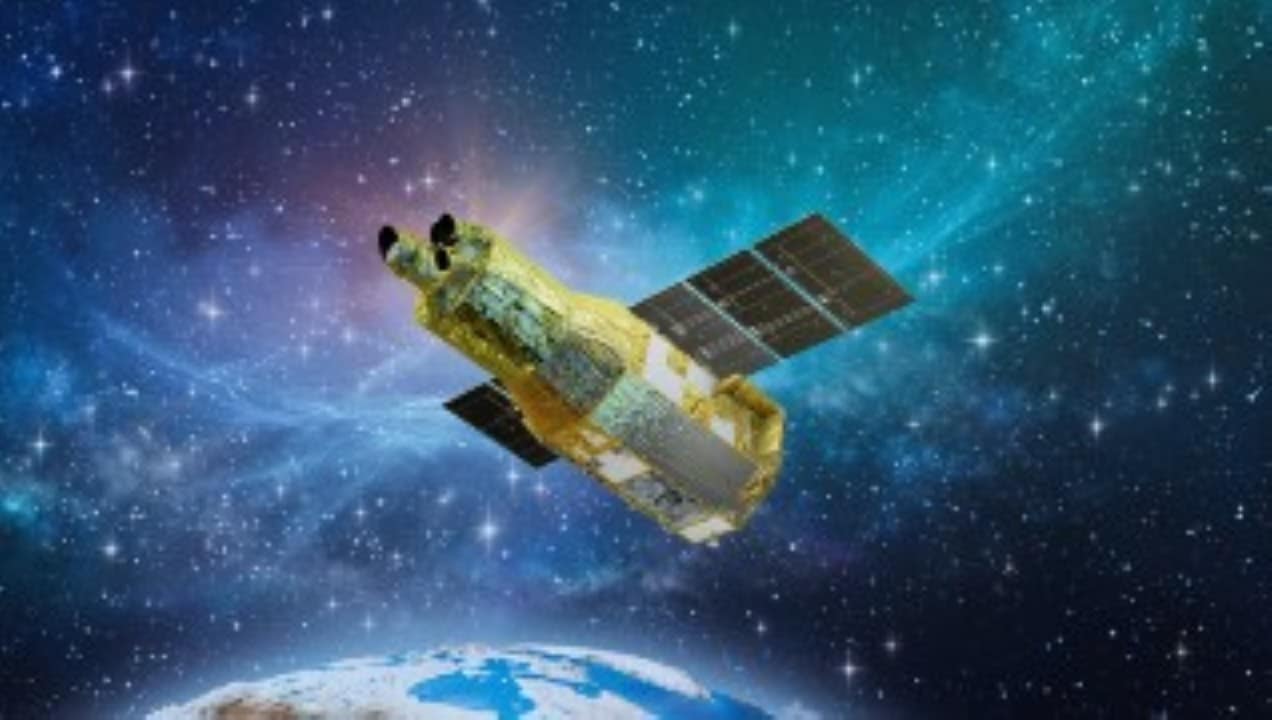
Cutting-edge technology in X-ray observation
The instrument Resolve, attached to the XRISM spacecraft, works as a high-resolution spectrometer capable of identifying the smallest color variations in the X-rays emitted by the gas. By analyzing how the spectrum of light is shifted by the movement of matter, technicians can calculate the exact speed at which the plasma moves away from the observer. Essa technique, although common in visible light, requires extremely sensitive and cooled sensors to operate in the X-ray range.
International collaboration between NASA and other space agencies has allowed new frontiers of knowledge to be explored with safety and precision. The success of this measurement in Messier 82 paves the way for other starburst galaxies to be studied in the same detailed light in the coming months. Espera It is hoped that a broader catalog of galactic velocities will help refine the cosmological constants used to describe the expansion and structure of the cosmos.
Connection between hot winds and cosmic radiation
Scientists are now seeking to understand how the interaction between superheated gas and the galaxy’s magnetic fields influences the trajectory of the winds. Existe a suspicion that “magnetic superhighways” may channel the expelled material, allowing it to maintain high speeds even as it moves away from the dense core. Este transport mechanism would be responsible for taking dust and gas to distances of tens of thousands of light years in a linear fashion.
In addition to the thermal aspect, the presence of cosmic rays in the stream suggests that Messier 82 is a powerful source of high-energy radiation in the local universe. Esses rays can travel throughout the entire group of neighboring galaxies, affecting the space environment in ways that are still being cataloged by orbital instruments. Continued research into these invisible components of the wind will help complete the puzzle of the energetic dynamics of the sky’s most active galaxies.
Influence of the phenomenon on the evolution of neighboring galaxies
The material ejected by Messier 82 is not only isolated in the vacuum, but ends up interacting with the diffuse gas that fills the space between the galaxies. Esse Exchange of matter is essential for the growth of smaller galaxies and for the cooling of hydrogen clouds that may collapse in the future. Assim, What happens in the core of a starburst galaxy has repercussions that span millions of years and vast expanses of space.
Previous studies carried out by telescopes Hubble and James Webb had already shown the filamentary structure of these winds, but without the speed precision that XRISM has now provided. Combining this visual data with the new kinetic measurements provides a complete three-dimensional view of matter expulsion. With this database, the astronomical community can now more faithfully simulate the final fate of the chemical components produced in the stellar furnaces of Messier 82.
Perspectives for future deep observation missions
The discovery of extreme speeds in Messier 82 is just the beginning of a new phase of exploration of the universe at high energies with modern satellites. The data collected will be shared with research centers around the world to validate new theories about extreme physics in extragalactic environments. The precision achieved by the XRISM mission demonstrates that X-ray sensor technology has reached a level of maturity that will transform astronomy in the next decade.




