

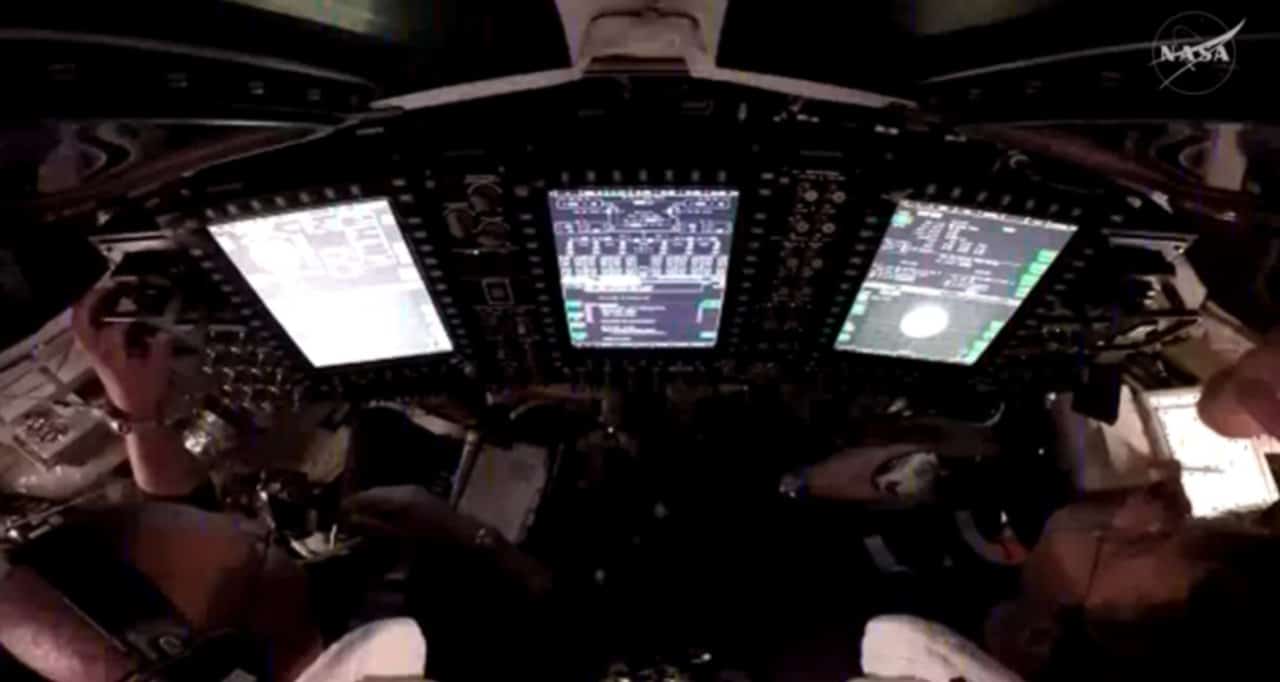
The crew of mission Artemis II, in close collaboration with the mission control center at Houston, demonstrated exceptional responsiveness by managing to restore normal operation of the sanitary system of spacecraft Orion. The incident, which occurred during proximity operations demonstrations in April 2025, was promptly managed, ensuring continued preparations for future stages of the ambitious lunar journey.
The problem arose shortly before the apogee elevation maneuver, carried out on April 1st. The crew aboard Orion, made up of NASA astronauts, reported a flashing fault light on the system. In a coordinated action, mission control teams on the ground evaluated the data received and worked directly with the astronauts to diagnose and resolve the anomaly.
Technical challenges overcome in flight
The ability to solve unexpected problems in real time is crucial for long-duration space missions, and the Artemis II team exemplified this competency. Victor Glover, mission pilot, and Reid Wiseman, commander, were seen actively participating in proximity operations demonstrations, testing the spacecraft’s ability to manually maneuver in relation to other aircraft. Esta crucial step serves to benchmark the onboard navigation sensors and reaction control thrusters after separation from the intermediate cryogenic propulsion stage.
Solving the problem in Orion’s personal hygiene system was a practical test of the readiness and ingenuity of both the crew and engineers on the ground. In an environment where every detail is vital, quickly identifying and correcting faults like this ensures not only the comfort of astronauts, but the overall health and well-being of the mission. Efficient communication between the spacecraft and mission control was a determining factor in the success of the operation.
Preparations for future translunar operations
Following successful resolution of the issue and completion of proximity demonstrations, the crew of Artemis II had a four-hour rest period before being awakened for the next critical phase of the mission. The schedule called for the perigee elevation maneuver, which will raise the lowest point of Orion’s orbit around Terra.
This maneuver, together with the apogee elevation carried out previously, is fundamental to shaping the spacecraft’s initial orbit. Essas steps prepare Orion for future challenging translunar operations, which will take the capsule and its occupants beyond low Earth orbit, towards Lua. The precision of these orbital maneuvers is essential for correct alignment and successful insertion into the lunar trajectory.
The importance of the mission Artemis II
Mission Artemis II represents a significant milestone in NASA’s Artemis program, being the first crewed flight of the Orion spacecraft around Lua. Embora does not include a lunar landing, this mission is a crucial dress rehearsal for future lunar exploration, including the return of humans to the lunar surface. The crew will test Orion’s life support systems, communications operations and flight procedures in a deep space environment.
Astronauts Victor Glover, Reid Wiseman, Christina Koch and Jeremy Hansen are at the forefront of this new era of exploration. Suas Skills and exhaustive training are put to the test at every step of the mission, from troubleshooting on board to executing complex orbital maneuvers. The mission aims to demonstrate NASA’s ability to maintain a sustainable human presence at Lua and, eventually, Marte.
Technology and innovation at the service of exploration
Spacecraft Orion, designed for long-duration spaceflight, incorporates advanced technologies in propulsion, communication, navigation and life support systems. Cada component is rigorously tested to ensure safety and mission success. The European Service Module (ESM), for example, provides power, propulsion, water and oxygen to the crew, and is vital to Orion’s autonomy in deep space.
Maintaining the environment on board Orion, including systems such as hygiene, is fundamental to the health and well-being of astronauts. Pequenos Defects, if unresolved, can have significant implications for crew morale and mission effectiveness. The rapid intervention and teamwork demonstrated in this incident highlight the robustness of the safety protocols and the excellence of space engineering.
Future perspectives of the program Artemis
The Artemis program is on the path to establishing a sustainable human presence on Lua, a goal that transcends mere scientific exploration. Ele aims to develop new technologies, promote international cooperation and inspire a new generation of scientists and engineers. Artemis II is a fundamental step on this journey, proving that the systems and teams are ready for the challenges to come.
With each successful mission, humanity moves closer to unlocking the mysteries of deep space and expanding our understanding of the universe. Learnings from incidents like the Orion bathroom problem and its subsequent resolution are valuable for the continued improvement of spacecraft and mission procedures. The resilience of the crew and the tireless support of the teams on the ground are the pillars that support these ambitious endeavors.
Next steps on the lunar journey
With the apogee and perigee elevation maneuvers completed and the hygiene system reestablished, Orion will be on its correct initial trajectory for translunar operations. From there, the crew will perform a series of additional tests to verify the spacecraft’s performance in real flight in deep space. Esses tests include evaluations of navigation and communication systems and spacesuits.
Artemis II’s journey around Lua will be an approximately 10-day flight, culminating in a return to Terra with a water landing. Cada mission phase is closely monitored, with data being continually collected to inform the planning and execution of future missions, such as Artemis III, which will once again take astronauts to the lunar surface. Global cooperation, with the participation of space agencies such as the Canadian (CSA) and European (ESA), is a vital component of the program’s success and sustainability.



