
Dacia launches electric quadricycle to maintain accessibility in Europe
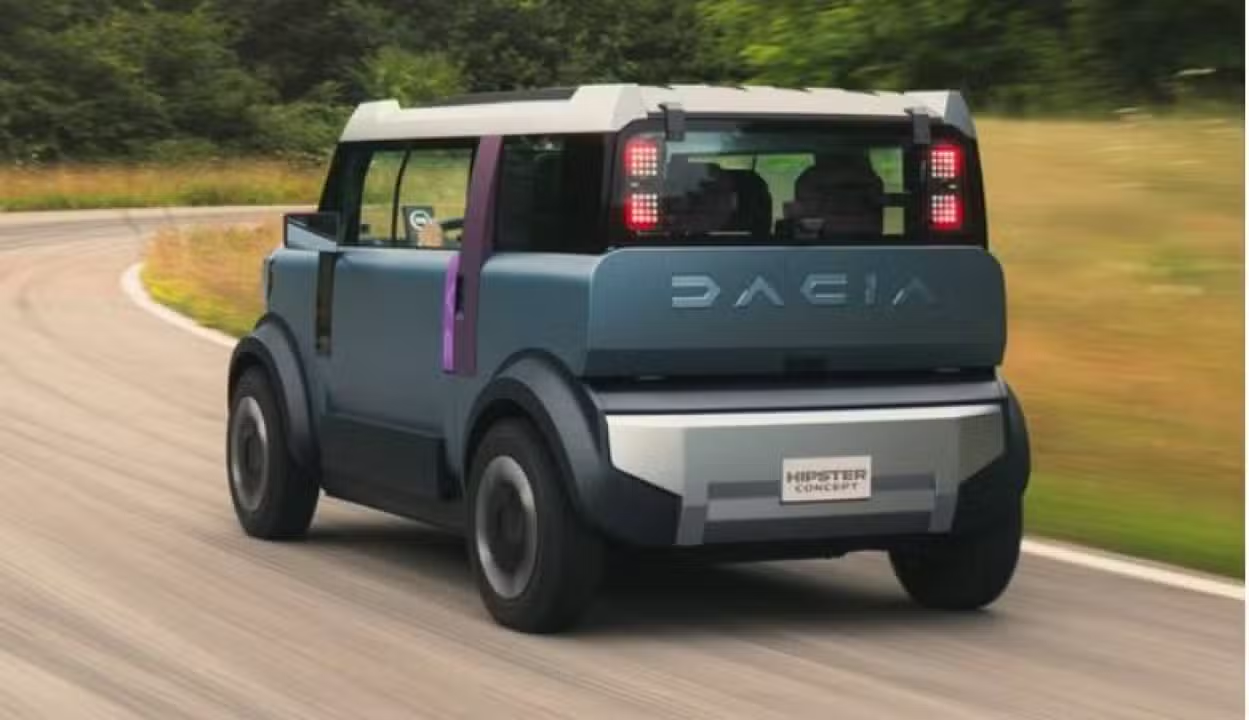
Dacia, a Grupo Renault brand known for affordable vehicles, faces challenges in offering affordable cars in Europa due to safety regulations. The manufacturer plans to launch a lightweight electric quadricycle priced at approximately 5990 euros to compete in the simple urban mobility segment. Essa strategy allows you to circumvent some obligations applied to conventional cars and preserve low-cost options for certain audiences.
The increase in vehicle prices in Europa results from regulations that require equipment such as rear view cameras, automatic emergency braking and speeding warning. Esses items increased production costs and made it more difficult to keep entry-level models below certain levels. Dacia, which historically sold options like Logan at reduced prices, has seen its traditional range impacted over the years.
- Price of the current Sandero starts from around 13520 euros with promotions and financing in some markets.
- Entry-level models registered an average increase of more than 20% in segments between 15,000 and 20,000 euros between 2014 and 2022, even discounting inflation.
- The proposed quadricycle limits maximum speed to 45 km/h and offers a range of close to 80 km.
European regulations increase production costs for affordable cars
The safety standards adopted by União Europeia since 2022 apply to vehicles approved as cars and increase the final price for the consumer. Executivos of the brand have already highlighted that many drivers deactivate these systems after purchase, which raises questions about the proportionality of the requirements. Dacia seeks alternatives to continue serving customers who need simple and economical solutions for short journeys.
This regulatory pressure coincides with the growth of competitors, including Chinese brands that offer competitively priced electric vehicles. The Romanian manufacturer maintains its focus on models such as the new Duster and Bigster for higher-value segments, while exploring the quadricycle niche so as not to completely abandon the lower-income audience. The project adapts previous concepts of light and electric vehicles to meet urban demands.
The Dacia electric quadricycle is aimed at audiences such as young people aged 14 and over who are looking for their first motorization or elderly people who make short journeys in residential areas. The limited speed and simplified construction reduce the need for some advanced assistants mandatory in passenger cars. Fontes linked to the sector indicate that the launch could take place in the European summer, with a final price close to 5990 euros.
Quadricycle from Dacia competes directly with options from Stellantis
The new vehicle from Dacia arrives to rival models like the Citroën AMI, offering a price around 3000 euros lower in comparison. Enquanto AMI and Fiat Topolino occupy space in the electric microcar market, Dacia’s proposal emphasizes simplicity and reduced cost to attract buyers sensitive to acquisition values. The category of heavy quadricycles allows approval with different technical requirements than those applied to complete cars.
This movement reflects the adaptation of the European automotive industry to the current context of high costs. Dacia, which built a reputation for practical, non-excessive vehicles, reconverted internal projects to create this option without a defined name yet. The autonomy of approximately 80 km suits daily urban uses without requiring frequent recharging on short journeys.
Dacia Challenges to Preserving Accessible Brand Image



The Romanian brand adjusts its strategy in light of the gradual disappearance of really cheap cars on the European continent. Modelos like the Logan, which in 2014 was offered for around 9150 euros in some markets, have been discontinued or repositioned after successive increases. The Sandero remains one of the most affordable options in the current line, but it already operates at a higher level than the brand’s history.
Dacia invests in image with more equipped products, but does not give up solutions for the entry-level segment. The quadricycle represents a way to maintain a presence in basic mobility without compromising regulatory compliance. Analistas in the industry note that this approach could pave the way for discussions about new categories of light vehicles in União Europeia, similar to microcar concepts in other markets.
Dacia strategy includes focus on simplified urban mobility
The electric quadricycle limited to 45 km/h does not require a full driver’s license in several European countries, which facilitates access for certain age groups. Sua construction prioritizes functionality over performance, aligning with Dacia’s tradition of offering the essentials at the lowest possible price. The battery and electric motor guarantee silent operation and zero emissions in use, compatible with urban restrictions.
This initiative comes at a time of transition to electrification and pressure to reduce costs across the entire automotive chain. Dacia studies the project to balance technical simplicity with minimum safety requirements specific to quadricycles. The launch reinforces the brand’s presence in markets where demand for cheap vehicles persists despite regulatory changes.
Dacia adapts portfolio to different mobility needs at Europa
The manufacturer continues to develop its main line with an emphasis on durability and value for money, while the quadricycle serves specific niches. Clientes who need basic transportation for local shopping or moving around condominiums find this category a viable alternative. The proposal maintains the practical spirit that has characterized Dacia since its expansion on the continent.
The price of approximately 5990 euros positions the vehicle as one of the most affordable options among lightweight electric solutions currently available. The range and speed limitation clearly define its recommended use, avoiding expectations of performance equivalent to conventional automobiles. Dacia evaluates sales potential based on feedback from markets where microcars are already accepted.
Veja Tambem em News (EN)

Research reveals that parents are unaware of how their children use artificial intelligence

Samsung releases new system update with new features for Galaxy Watch 4 users

Digital retail reduces the value of the Galaxy S25 5G smartphone with bank bonuses and device exchange

Amazon’s wireless CarPlay adapter has a 50% discount and high approval ratings from drivers

Zach Cregger’s new Resident Evil ignores games and focuses on an unprecedented story with new characters

Rumor suggests that Nintendo is preparing a special edition of the Switch 2 with a remake of Ocarina of Time

Apple accelerates production of the iPhone 17e and develops new Air model with dual camera system

Epic Games platform releases twelve high-budget games at no permanent cost for PC users

PlayStation 5 Pro price drop accelerates digital retail sales and eliminates global stocks

New Galaxy Watch 9 firmware appears on server and confirms progress in software development

Apple’s commemorative project tests cell phone with 1.1 millimeter edge and curved screen for 2027
