
XRISM space telescope reveals galactic winds at more than 3 million km/h in Messier 82

Unprecedented data on fluid dynamics in the deep universe were recently recorded by high-precision orbital observation instruments. Observações captured streams of superheated gas being ejected from the core of a massive star formation with an intensity unprecedented in the history of modern astrophysics.
The physical phenomenon occurs approximately twelve million light years from our planet, in a region of space widely known for its extremely high rate of star birth and evolution. Spectroscopic measuring equipment recorded matter displacement speeds that exceed the mark of three million kilometers per hour.
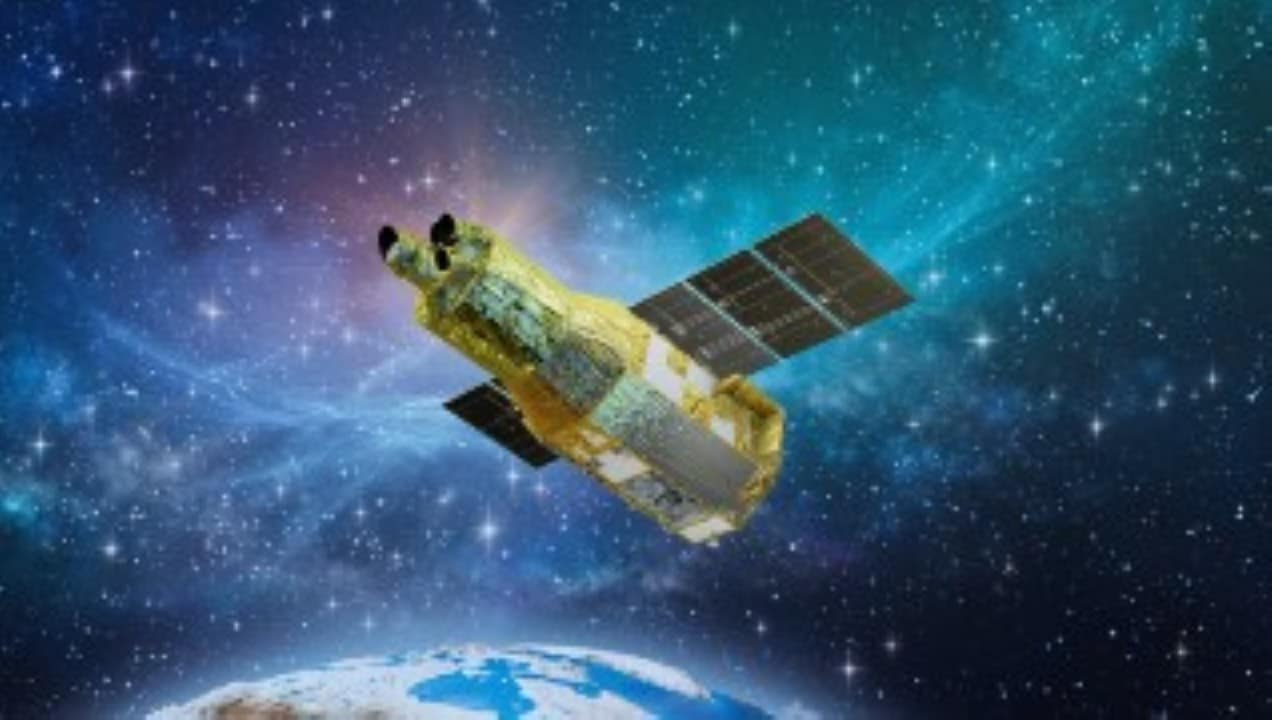
The accurate detection was made possible by a new generation of X-ray spectrometers sent into Earth orbit to monitor high-energy events. The level of detail achieved allows researchers to map the distribution of elementary matter across the vast expanses of the cosmos with a clarity that redefines previous theoretical models.
Thermal and structural dynamics of the space phenomenon
The galaxy Messier 82 serves as a gigantic natural laboratory for studying extreme stellar evolution and cosmic fluid mechanics. The site has a rate of formation of new stars dozens of times higher than that recorded in Via Láctea, generating an environment of very high pressure and temperature in its gravitational center that affects the entire surrounding system.
The accumulation of supernova explosions creates a colossal driving force that pushes galactic material into intergalactic space in a violent and continuous manner. Este physical process results in a monumental double-cone-shaped structure that expands thousands of light-years far beyond the visible limits of the original galaxy’s disk.
The data collected reveals specific characteristics about the composition and behavior of this continuous flow of ionized matter:
– The exact measured speed of the flow reaches eight hundred and ninety kilometers per second in its phase of greatest acceleration.
– The ejected gas carries heavy elements forged in the cores of massive stars during their life cycle.
– The temperature of the material in the central exhaust region easily exceeds the mark of tens of millions of degrees Celsius.
– The exhaust flow directly affects the ability of the galaxy itself to form new stars in the distant future.
High Resolution Spectroscopy Technology
The significant advance in astronomical observation is due to instrument Resolve, a centerpiece of the current orbital mission focused on X-rays. The equipment works by measuring tiny variations in the energy of photons that reach its detectors after traveling through deep space for millions of years.
To achieve this extreme sensitivity, the system operates at temperatures very close to absolute zero, using highly complex cryogenic cooling technology. The mechanism allows you to identify the red and blue shift in the captured light, calculating the speed of the gas with mathematical precision.
The life cycle in starburst regions
Formations classified as starburst galaxies consume their reserves of molecular gas extremely quickly and aggressively. The accelerated rate of birth and death of massive stars dictates the energetic dynamics and structural stability of the entire observed galactic system.
When these giant stars reach the end of their short lives, they detonate in supernovae, releasing incredibly violent shock waves into the interstellar medium. The constant overlap of these shock waves creates the continuous and powerful galactic wind recorded by space telescopes.



Dispersion of elements in the intergalactic medium
The space between galaxies is not a perfect vacuum, but rather an environment filled with clouds of extremely rarefied gas. Galactic winds act as the main mechanism for transporting physical matter to these vast and seemingly isolated regions of the universe.
Heavy chemical elements such as carbon, oxygen and iron, essential for the formation of rocky planets, are spread throughout the cosmos through this ejection process. Accurately measuring exit velocity helps calculate how far these fundamental materials can travel before losing energy.
Understanding this large-scale chemical distribution is a fundamental step towards mapping the structural evolution of the universe since its beginnings. The material ejected by active galaxies today could become the material basis for the formation of new star systems in billions of years.
History of astronomical observations of the system
The galaxy in question has been the subject of detailed study by the international scientific community for several consecutive decades. Telescópios Traditional opticians had already mapped the primary structure of visible dust and gas that extends perpendicular to the main galactic disk.
Subsequently, space observatories focused on the infrared spectrum revealed the intense star formation activity that remained hidden by dense clouds of cosmic dust. Essas Initial images provided the first concrete clues about the magnitude of the energetic phenomenon occurring inside the system.
The introduction of X-ray astronomy brought a new layer of technical understanding, showing superheated gas that had completely escaped conventional optical detection. However, previous generation instruments lacked the spectral resolution necessary to measure the exact velocity of matter flow.
The current orbital mission definitively fills this technological gap, transforming static images into a high-fidelity three-dimensional dynamic model. The ability to measure gas kinematics in real time revolutionizes the way astrophysicists interpret data accumulated over years of observations.
Interaction between magnetic fields and ionized matter
The material ejected by the galactic nucleus is in a plasma state, which means that its constituent particles have a strong electrical charge. Essa physical condition causes the gas flow to interact intensely with the magnetic fields present both in the original galaxy and in intergalactic space, shaping the trajectory of the wind and creating complex filamentous structures that extend over vast distances in deep space, altering the morphology of the region.
Detailed analysis of the X-ray emission allows researchers to map not only the directional velocity but also the density and internal pressure of these streams of superheated plasma. The delicate balance between the force of thermal expansion generated by the multiple supernovae and the gravitational pull of the surrounding dark matter determines whether the gas will escape permanently into deep space or whether it will eventually lose strength and fall back into the original galactic disk.
Perspectives for high energy astrophysics
The millimeter precision of the data obtained establishes a new gold standard for research in high-energy astrophysics, demonstrating the technical feasibility of measuring complex kinematic phenomena in distant galaxies with practically zero margins of error. The operational success of the X-ray spectrometer opens a promising avenue for similar investigations into other galactic clusters and active nuclei, where supermassive black holes also generate incredibly powerful winds that affect cosmic evolution. The ability to quantify energy and mass transport on such grand scales provides the exact parameters needed to power supercomputer simulations of the formation of the large-scale structure of the observable universe. As more celestial targets are observed and cataloged with this cutting-edge technology, the global scientific community will be able to build a comprehensive database of cosmic fluid dynamics, refining current theories about how baryonic matter behaves under extreme conditions of temperature and pressure throughout the different cosmic eras.
Continuous monitoring of celestial structures
Spectroscopic data collection operations remain active around the clock, with the space observatory scheduled to examine an extensive series of other priority targets defined for mapping the high-energy universe.
Veja Tambem em News (EN)

Research reveals that parents are unaware of how their children use artificial intelligence

Samsung releases new system update with new features for Galaxy Watch 4 users

Digital retail reduces the value of the Galaxy S25 5G smartphone with bank bonuses and device exchange

Amazon’s wireless CarPlay adapter has a 50% discount and high approval ratings from drivers

Zach Cregger’s new Resident Evil ignores games and focuses on an unprecedented story with new characters

Rumor suggests that Nintendo is preparing a special edition of the Switch 2 with a remake of Ocarina of Time

Apple accelerates production of the iPhone 17e and develops new Air model with dual camera system

Epic Games platform releases twelve high-budget games at no permanent cost for PC users

PlayStation 5 Pro price drop accelerates digital retail sales and eliminates global stocks

New Galaxy Watch 9 firmware appears on server and confirms progress in software development

Apple’s commemorative project tests cell phone with 1.1 millimeter edge and curved screen for 2027
