Apple launches iPhone 17 Air with a thickness of 5.5 millimeters and an unprecedented visual interface on the market

Apple officially unveiled its new mobile device architecture with the launch of the iPhone 17 Air, a device that redefines the limits of hardware engineering. The global announcement revealed a smartphone that breaks with a decade of incremental designs, combining record thickness with a completely revamped software language. Especialistas from the technology sector classify the move as the most significant change since the transition to full screens, highlighting the symbiotic integration between the physical chassis and the digital interface.
The main focus of the new equipment lies on the tactile and visual experience, promising to eliminate the barrier between the user and digital content through unprecedented display technologies. The manufacturer of Cupertino structured the project to meet a demand for aesthetic innovation, positioning the brand at the forefront of the race for invisible hardware integration, where the physical device steps back to give full prominence to function and daily usability.
The development of the device required the creation of new manufacturing processes and the adoption of materials previously restricted to specialized sectors of the aerospace industry. The central proposal aims to deliver premium equipment that not only reduces physical dimensions, but that introduces new cybersecurity and data processing standards into the global mobile phone market.
Physical architecture and the thickness milestone in industry
The device reaches the 5.5 millimeters thickness mark, consolidating itself as the thinnest device ever produced in the premium smartphone category. Para To achieve this dimension, the design team needed to develop new logic board stacking methods and unique metal alloys. Machining the parts requires tolerances in the microns, a level of precision rarely seen in mass production of consumer electronics.
The structure uses a composite of heat-treated aerospace aluminum and titanium, ensuring structural rigidity is maintained even with the extremely reduced profile. Essa combination of materials avoids torsion issues that have historically plagued ultra-thin devices in the past, ensuring durability in everyday use.
Thermal engineering and new battery chemistry
The challenge of internal heating was solved through an unprecedented passive dissipation system. The device’s engineering uses the housing itself and the screen as heat exchange elements, eliminating the need for heavy layers of graphite. The absence of bulky fans or heatsinks requires the software to act as an active thermostat, cutting processing spikes before heat reaches the external surface.
The equipment’s battery has smaller physical dimensions, but adopts a new silicon anode chemistry. Essa technology provides superior energy density, contradicting the traditional logic that greater volume is strictly necessary for greater electrical load capacity.
With this chemical and physical restructuring, the autonomy of use remains equivalent to that of previous thicker models. Power management works in conjunction with the hardware to optimize consumption during high-demand tasks such as video recording and gaming.
Visual interface system based on fluid physics
The introduction of the concept called “Liquid Glass” represents the most profound visual change to the manufacturer’s operating system in years. The interface abandons the rigidity of traditional static icons, adopting a continuous navigation format.
Graphic elements now adopt properties that react organically to the user’s touch and movement. The technology employs advanced rendering algorithms to create an illusion of depth and viscosity on the high-resolution screen.
This visual processing makes the interface appear to float under the fingers of whoever handles the device. Para Complementing the visual fluidity, the vibration motor’s haptic feedback has been completely recalibrated by software engineers.
The microvibrations generated by the device now mimic the surface tension of real liquids. The approach transforms everyday interaction into a sensory experience, where notifications and widgets behave like digital objects with weight and simulated physics.


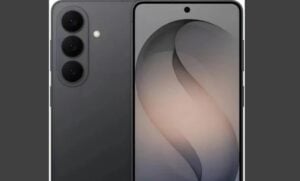
Developer integration and ecosystem adaptation
Software developers who gained early access to the authoring tools report that the new visual language allows third-party applications to inherit these physical properties natively. Isso enables the construction of a visually cohesive and immersive ecosystem, where the transition between programs occurs without breaks in the logic of movement of digital fluids, standardizing the experience across the entire platform.
Initial reception from testers indicates that this change in the way information is presented reduces visual fatigue during prolonged use. Navigation becomes more intuitive for users, as screen responses emulate natural physical behaviors that the human brain is already accustomed to processing in the real world, easing the learning curve for new consumers.
Security protocol against theft and clandestine market
The increase in electronic device theft rates in large urban centers motivated the development of a rigorous security system called “Total Invalidation”, which goes beyond conventional software locks. If the device detects movement patterns consistent with a snatch or is forcibly disconnected from the owner’s network, the system initiates a hardware protocol that physically disconnects the battery and encrypts the screen and camera controllers. Esse mechanism transforms the device into an irreversible electronic block without the original owner’s cryptographic key, preventing the parts from being disassembled and resold on the parallel market. Autoridades of public security praised the initiative, noting that the destruction of components is the most effective tool against the black market for spare parts, establishing a new standard of passive safety in the industry.
User-advanced biometrics configuration
Equipment owners can configure the sensitivity level of this security feature, ensuring that accidental locks are not triggered in everyday situations, using advanced biometrics to validate ownership in real time.
Neural processing and energy management
The integration of artificial intelligence into the device transcends the presence of a conventional virtual assistant. The system acts as a core orchestrator of all device operations, from power management to real-time image processing.
The new neural chip, developed specifically for this model, continuously analyzes usage patterns to preload apps and adjust the screen refresh rate. Essa Cognitive intelligence ensures that maximum performance is delivered only when strictly necessary, preserving the useful life of internal components.
Computational photography in compact lenses
Computational photography reaches a new technical level with the use of artificial intelligence to reconstruct textures and lighting details based on global databases. Image processing compensates for the physical limitations imposed by the ultra-thin chassis, which does not accommodate protruding camera modules.
This technology allows the device’s compact lenses to generate professional-quality images, a feat that previously required considerably larger optical sensors. Além From still photographs, high-resolution video recording also benefits from this neural engine, applying frame-by-frame color corrections and image stabilization.
Movement in the mobile technology sector
Retailers and telephone operators register a significant volume of advance reservations for the new equipment. The numbers indicate a pent-up demand for significant changes in smartphone design, driving the current handset upgrade cycle in global retail.
Direct competitors are already mobilizing their research and development teams to respond to the trend towards ultra-thin devices. The global supply chain is also undergoing adaptations to meet component miniaturization requirements, from memory modules to internal connectors, indicating a lasting shift in manufacturing standards.
Veja Tambem em News (EN)

Research reveals that parents are unaware of how their children use artificial intelligence

Samsung releases new system update with new features for Galaxy Watch 4 users
Digital retail reduces the value of the Galaxy S25 5G smartphone with bank bonuses and device exchange

Amazon’s wireless CarPlay adapter has a 50% discount and high approval ratings from drivers

Zach Cregger’s new Resident Evil ignores games and focuses on an unprecedented story with new characters

Rumor suggests that Nintendo is preparing a special edition of the Switch 2 with a remake of Ocarina of Time

Apple accelerates production of the iPhone 17e and develops new Air model with dual camera system

Epic Games platform releases twelve high-budget games at no permanent cost for PC users

PlayStation 5 Pro price drop accelerates digital retail sales and eliminates global stocks

New Galaxy Watch 9 firmware appears on server and confirms progress in software development

Apple’s commemorative project tests cell phone with 1.1 millimeter edge and curved screen for 2027