
German engineers integrate hydrogen tanks into tractor wheels for greater autonomy
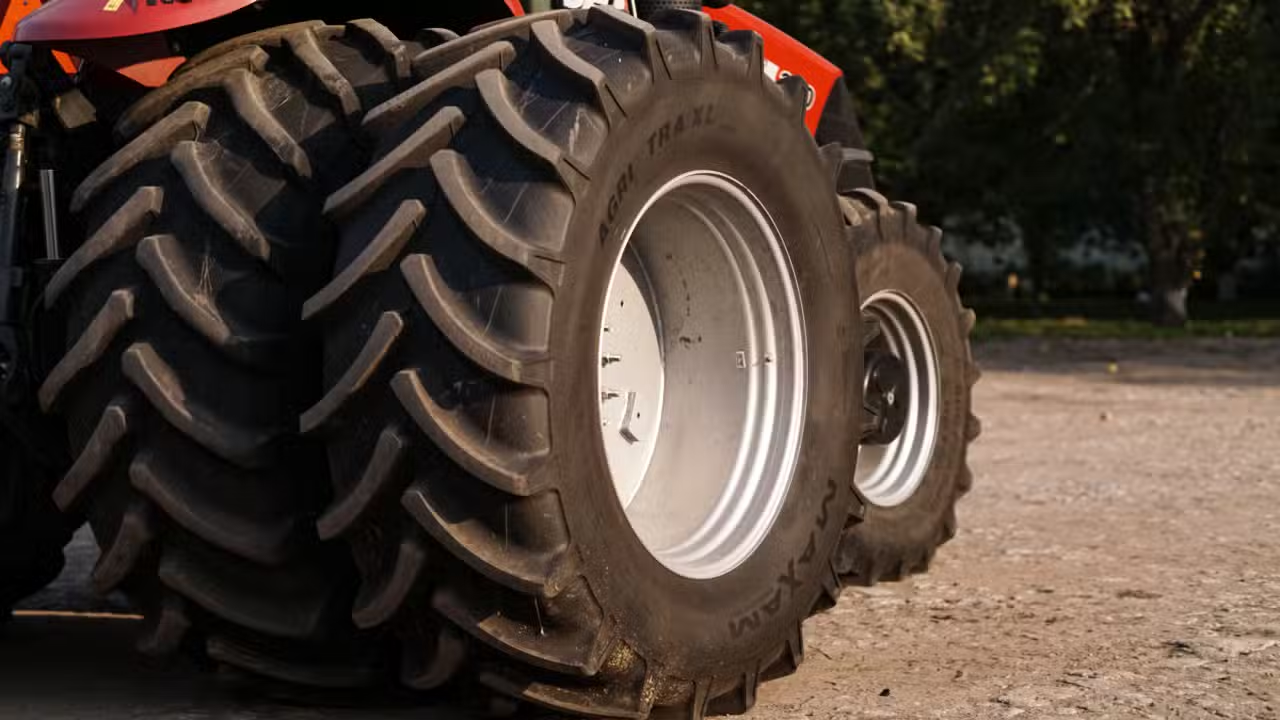
German engineers have developed an innovative concept for storing hydrogen in agricultural tractors. Instead of attaching pressurized tanks to the roof or under the cabin, the proposal explores the internal space of the machines’ hollow wheels. Essa approach seeks to resolve space and weight limitations, allowing greater autonomy in daily operations without compromising the functionality of the equipment.
The project addresses a recurring challenge in the transition to alternative fuels in agriculture. Tractors have limited usable volume, and each additional kilogram of hydrogen affects the balance and overall performance of the machine. By redistributing storage to the wheels, engineers free up space in the body for other components or implements, as well as bringing the weight closer to the center of gravity.
- Agricultural tractor wheels have a robust structure with considerable internal volume.
- This space could accommodate pressure reservoirs without interfering with the load-bearing capacity.
- Integration requires technical solutions for safe transfer of hydrogen into rotating components.
Current storage challenges in prototypes like Fendt Helios
The Fendt Helios prototypes, developed as part of the H2Agrar project in Baixa Saxônia, use five roof-mounted compressed hydrogen tanks. Cada tank stores 4.2 kilograms of hydrogen at up to 700 bar, totaling around 21 kilograms per fill. Essa configuration allows between five and eight hours of operation in the field, depending on the task performed.
The 100 kW fuel cell converts hydrogen into electricity, supported by a 25 kWh battery. The system powers a 100 kW electric traction motor and auxiliary components. Tests demonstrate that performance is equivalent to that of conventional diesel tractors of similar power in various agricultural activities.
The current limit of autonomy motivates the search for more efficient alternatives. Tanques on the ceiling represent the practical maximum in existing configurations, without completely resolving the space constraint.
Integration of tanks into wheels as a technical solution
The idea of transforming wheels into tanks takes advantage of structures that currently only serve mechanical and locomotion functions. Engenheiros evaluate the possibility of designing wheels with internal reservoirs capable of maintaining integrity under rotation and continuous stress. Essa configuration would require advanced systems for pressure management and safe refueling.
H2Agrar project partners, including institutions such as TU Braunschweig, analyze different tank options and dimensions. The energy density of hydrogen per volume remains lower than that of diesel, even at high pressure, which makes it essential to optimize every available centimeter in the machine.
Companies like Röchling Engineering Plastics contribute expertise in carbon fiber reinforced materials for high pressure vessels. The wheeled approach represents a direction explored to overcome limitations observed in current prototypes.



H2Agrar project structure and green hydrogen production
The H2Agrar project was launched in February 2021 with funding of around 7.6 million euros from the state of Baixa Saxônia. The initiative demonstrates in an integrated way the production, storage and use of hydrogen in agricultural applications in the Emsland region. three years.
The hydrogen is generated from a community wind farm with 16 turbines. Dois electrolyzers of 1 MW each produce up to 900 kilograms of hydrogen per day on site. Esse Fuel is injected into the local gas network and supplies a specific station capable of delivering hydrogen at 350 and 700 bar, with a total storage capacity of 480 kilos.
Advances and field tests with existing prototypes
The Fendt Helios tractors were tested in harvesting operations in 2024, generating real consumption data under high load. Essas Information guides development of new storage configurations. The concept of integrated wheels appears as one of the alternatives to extend practical autonomy beyond what tanks on the roof currently allow.
Agricultural machinery accounts for approximately 8.5% of total emissions in German agriculture, according to federal data. Continuing tests with hydrogen prototypes is part of Fendt’s clean energy strategy, which evaluates sustainable solutions alongside battery electric options and diesel engines with renewable fuels.
Technical details and engineering considerations
Any rotating wheel storage system needs to address issues such as continuous hydrogen transfer and pressure maintenance under vibration and movement. Engineers study materials and designs that preserve safety and durability without adding excessive complexity to the vehicle.
The proposal is still in the conceptual phase and there is no confirmation of construction of a functional prototype. Pesquisadores continue to evaluate technical feasibility for application in tractors and also in civil construction equipment.
Veja Tambem em News (EN)

Research reveals that parents are unaware of how their children use artificial intelligence

Samsung releases new system update with new features for Galaxy Watch 4 users

Digital retail reduces the value of the Galaxy S25 5G smartphone with bank bonuses and device exchange

Amazon’s wireless CarPlay adapter has a 50% discount and high approval ratings from drivers

Zach Cregger’s new Resident Evil ignores games and focuses on an unprecedented story with new characters

Rumor suggests that Nintendo is preparing a special edition of the Switch 2 with a remake of Ocarina of Time

Apple accelerates production of the iPhone 17e and develops new Air model with dual camera system

Epic Games platform releases twelve high-budget games at no permanent cost for PC users

PlayStation 5 Pro price drop accelerates digital retail sales and eliminates global stocks

New Galaxy Watch 9 firmware appears on server and confirms progress in software development

Apple’s commemorative project tests cell phone with 1.1 millimeter edge and curved screen for 2027
