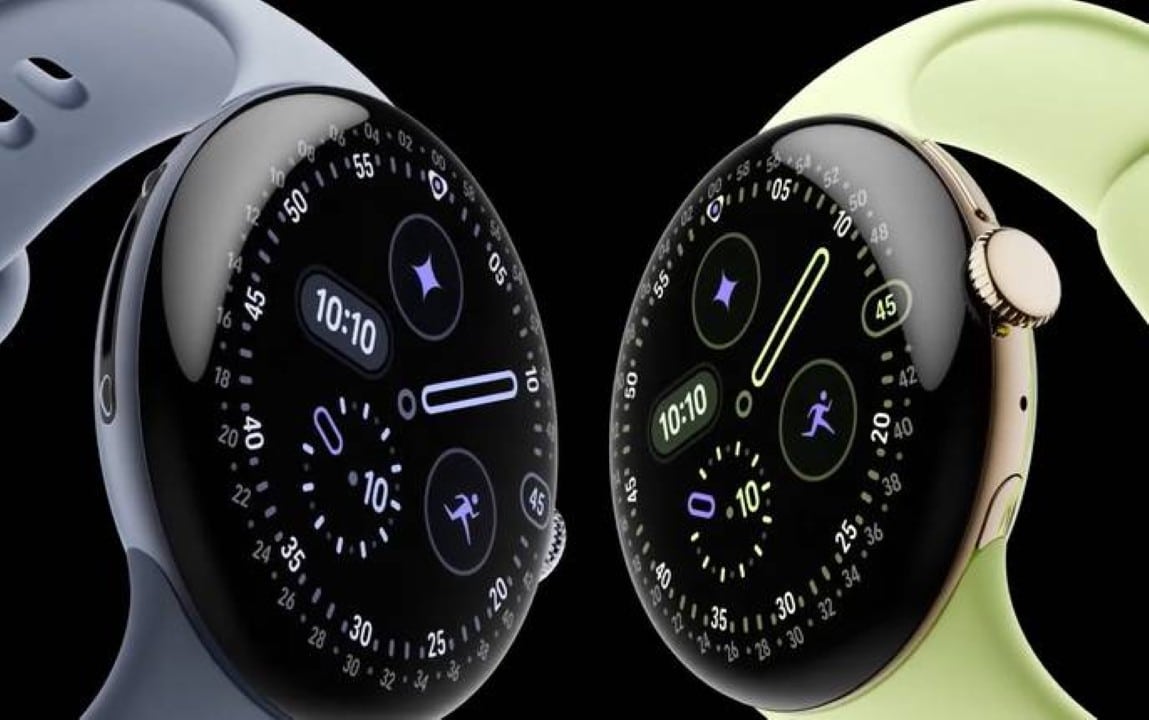
Google has started distributing the long-awaited system update for the LTE variants of models Pixel Watch 2, Pixel Watch 3 and Pixel Watch 4. Users who have versions with 4G connectivity now have access to the specific build identified on the company’s servers as CP1A.260305.014.W4, which brings a robust package of operational innovations. The system internally identifies this version with the date of April 2026, maintaining the same base numbering that was announced four weeks ago by the development team.
The initial launch of this version took place in previous weeks exclusively for models with Bluetooth and Wi-Fi connection, generating expectations among consumers who depend on mobile networks for daily use. Atualmente, the factory images and over-the-air update files are now available on the manufacturer’s official channels for download and direct installation on compatible equipment.
This software package represents a milestone in the independence of smart watches from smartphones, incorporating tools that work completely autonomously. The additions range from advanced personal security systems to financial facilities that optimize the daily routine of owners of these wearable devices, consolidating the usefulness of the equipment in scenarios where a cell phone is not present.
Evolution of connectivity in wearable devices
The wearable technology market in 2026 consolidates the transition of smart watches from mere complementary accessories to independent and highly connected processing centers. The release of this update for LTE versions of Pixel Watch demonstrates the industry’s effort to ensure that users can leave home without their cell phone while maintaining full access to essential communications, payments and security monitoring services. Seamless 4G connectivity allows data to flow directly to cloud servers, eliminating the need for a constant Bluetooth bridge with the paired smartphone in the user’s pocket, which fundamentally changes the dynamics of technology use in urban space.
During the technical implementation process, owners report that manual verification through the system settings menu can force the package to download in certain cases, although the distribution follows a batch schedule managed by the servers. Para enthusiasts who opt for manual installation via sideloading, the manufacturer establishes specific hardware requirements, requiring dedicated cables for the second and third generations of the watch. In the case of Pixel Watch 4, the procedure requires a specialized debugging adapter, a technical component that still has limited availability in traditional technology retail channels, requiring users to wait for automatic updates via the mobile network.
Optimized contactless payment system
Functionality Express Pay reaches models Pixel Watch 2 and above with the central objective of accelerating financial transactions without physical contact in retail commerce and transport services. Consumers can now make payments at compatible terminals just by touching their wrist to the magnetic reader, eliminating the previous step of navigating through the operating system menus to open the Google Wallet application.
To ensure the accuracy and security of this financial resource, software engineering activated advanced motion reading algorithms that interpret the biomechanics of the user’s arm in real time. Estes sensors work together to confirm the real payment intention, differentiating an intentional gesture towards the card machine from random everyday movements, avoiding accidental charges.
The system’s security architecture requires strict parameters for proper functioning in public environments:
- The smart watch must be previously unlocked on the owner’s wrist.
- Accelerometer algorithms need to validate the intended directional movement of the arm.
- Near field communication technology requires exact physical alignment with the terminal.
Smartphone-independent seismic alerts
The range’s devices receive a critical public safety upgrade with the introduction of autonomous earthquake alerts delivered directly to the watch’s high-resolution display. Emergency notification operates independently, without requiring any type of active communication with the paired cell phone, ensuring agility in the delivery of information.
The full functioning of this saving tool only depends on the smartwatch being connected to a stable Wi-Fi network or using its own active LTE data connection. The system takes advantage of the vast global seismic detection infrastructure developed by the company, which already operates successfully on the brand’s line of phones and uses motion sensors to map tremors.
The technology provides crucial early warnings for populations residing in or traveling through geographic regions with a history of tectonic instability and frequent tremors. Local data processing ensures that the visual and tactile alert is triggered within fractions of a second after the primary waves of the tremor are detected by the central monitoring servers.
This autonomous processing capability represents a vital advancement for individual safety in large-scale natural disaster scenarios. The guarantee of receiving critical information remains intact even in adverse situations where the main smartphone may be discharged, forgotten in another room in the house or with severe network communication failures.
Safety distancing and lockdown notifications
The forgotten notification tool has been refined to intelligently alert the owner when they move considerably away from their main smartphone in public or private places. The updated algorithm activates the audible and vibrating warning only after registering a substantial change in geographic coordinates, avoiding annoying false positives during short movements within the same residential or corporate environment, such as moving between rooms.
As an additional layer of personal data protection, the ecosystem now allows the cell phone to be automatically locked as soon as the smart watch leaves the range of the low-energy Bluetooth connection. Users configure both protection guidelines directly in the watch management app, creating a robust digital barrier against unauthorized access if the main device is lost, forgotten or stolen.
Identity control and verification gestures
Security integration advances with the ability to use the watch as a physical token to confirm identity checks on select digital services, a feature compatible with Pixel 8 Pro and higher generations of smartphones. Esta Expansion of multi-factor authentication options reduces sole dependence on the phone for login approvals and access to sensitive platforms, streamlining daily workflow.
In the field of everyday usability, single-handed gesture commands, which originally debuted on the Pixel Watch 4 hardware, have been officially ported to Pixel Watch 3 users through this firmware update. The technology allows you to perform complex actions, such as answering phone calls, pausing media playback or triggering the camera shutter remotely, using just precise wrist rotation movements or double taps between the thumb and index finger.
Global expansion of satellite emergency service
The Pixel Watch satellite SOS service expands its operational coverage area significantly, starting to operate actively on networks located at Europa, Canadá, Porto Rico, Alasca and Havaí. Esta Extraterrestrial emergency messaging functionality extends the safety net far beyond the Estados Unidos mainland, offering a crucial lifeline for travelers, adventurers and rural residents facing limited or no cellular connectivity. Embedded technology allows the transmission of data packets containing exact GPS coordinates and vital distress information directly to low-orbit satellite constellations, bypassing the need for mobile phone towers or broadband internet routers. The manufacturer confirmed the maintenance of the commercial policy that guarantees an initial two-year period of use of the rescue service without charging additional fees, counting from the moment the feature is activated on hardware devices compatible with the satellite frequencies required by international regulatory bodies.
Technical procedures for system installation
Owners of the LTE variants should regularly monitor the system updates section on the watch face itself or via the control panel on the associated smartphone app. Recomenda-Strictly keep the device with a battery level greater than fifty percent and connected to a stable power source during the file transfer process via Wi-Fi or mobile network, preventing abrupt interruptions that could compromise the integrity of the operating system while writing data to the internal memory.
Impact on wearable product line
The distribution of this software package consolidates the quarterly update cycle established for the brand’s family of smart watches, raising the standard of features available in the consumer technology market. Modelos older devices in the line, such as the first generation of the device, have already reached the end of their official software support cycle and no longer receive these operational innovations and advanced security protocols.
